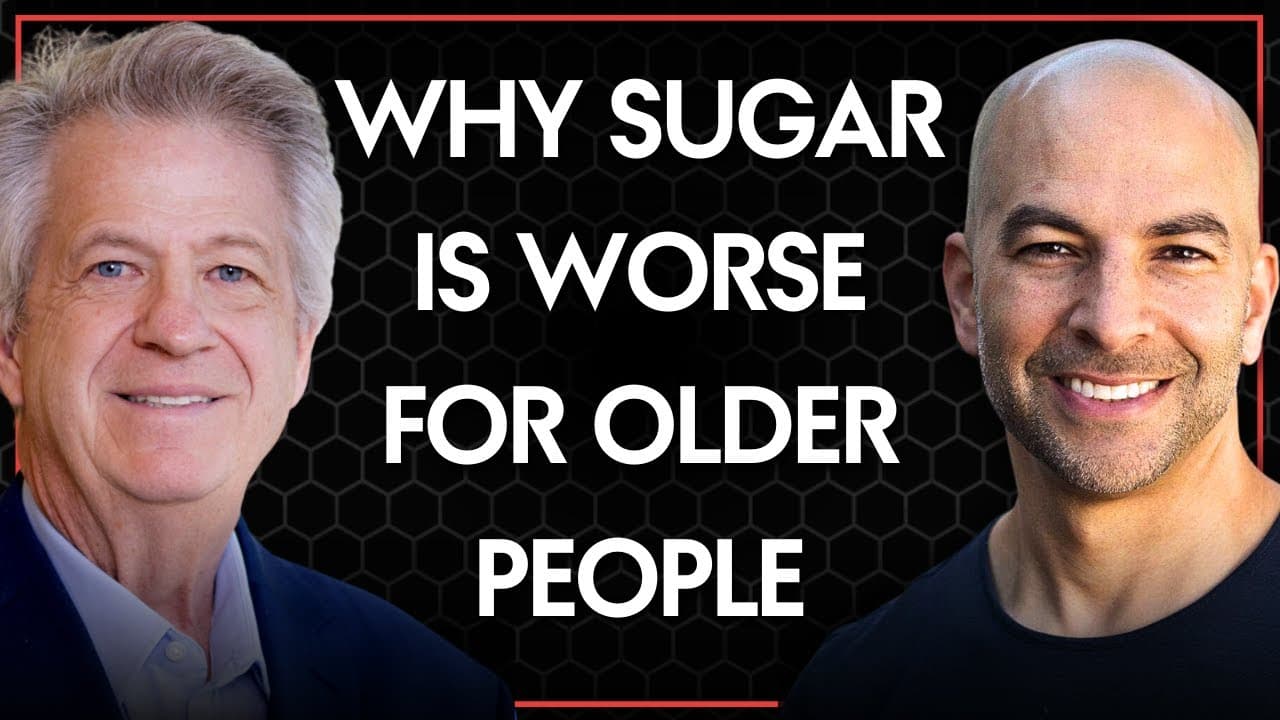
Why Does Sugar Affect Older Adults More Severely?
TL;DR
Aging decreases mitochondrial health, making older adults more vulnerable to sugar's negative effects. Chronic sugar exposure enhances the body's ability to absorb and metabolize sugar, increasing sensitivity over time. Menopause further elevates uric acid levels, which worsens fructose metabolism and increases the risk of metabolic diseases.
Transcript
before we go to the other two sources of substrate for making fructose you mentioned almost in passing that when you're young you can tolerate lots of high glycemic foods I think anyone listening to this can relate to that or probably 90% of people can relate to that I know I certainly can um what is it about just aging that alters our sens... Read More
Key Insights
- Healthy mitochondria in youth help mitigate the negative effects of fructose, but decline with age leads to increased vulnerability.
- Chronic sugar exposure enhances absorption and metabolic pathway activation, increasing sensitivity to fructose over time.
- Menopause raises uric acid levels, impacting fructose metabolism and increasing the risk of metabolic diseases.
- Mitochondrial oxidative stress is crucial for fat storage, but excessive stress can degrade mitochondrial function over time.
- Caloric restriction and fasting can enhance mitochondrial biogenesis, potentially reducing aging-related mitochondrial decline.
- The obesity paradox suggests that moderate fat stores may offer protective benefits against chronic diseases in older adults.
- High glycemic carbohydrates can convert to fructose in the body, contributing to weight gain despite sugar reduction efforts.
- Uric acid directly influences fructokinase activity and fructose metabolism, impacting metabolic health.
Install to Summarize YouTube Videos and Get Transcripts
Explore YouTube Video Summarizer or Get YouTube Transcript Extractor
Questions & Answers
Q: Why do younger individuals tolerate high glycemic foods better?
Younger individuals have healthier mitochondria, which are more resistant to oxidative stress caused by fructose. This allows them to metabolize high glycemic foods without showing adverse metabolic effects. As people age, mitochondrial function declines, reducing their ability to handle sugar efficiently, leading to increased sensitivity and vulnerability.
Q: How does menopause affect sugar metabolism in women?
Menopause leads to a decrease in estrogen levels, which results in increased uric acid levels. This change impacts fructose metabolism, making postmenopausal women more susceptible to obesity, diabetes, and heart disease. The protective effect of estrogen on uric acid excretion diminishes, altering metabolic responses and increasing disease vulnerability.
Q: What role does mitochondrial oxidative stress play in aging?
Mitochondrial oxidative stress is involved in fat storage but can lead to mitochondrial degradation if excessive. Over time, this stress reduces mitochondrial efficiency and number, decreasing ATP production and contributing to fatigue and aging symptoms. Managing oxidative stress through lifestyle interventions can help maintain mitochondrial health and mitigate aging effects.
Q: How does chronic sugar exposure increase fructose sensitivity?
Chronic sugar exposure enhances the body's ability to absorb and metabolize fructose by upregulating enzymes and transporters. This adaptation increases sensitivity to fructose over time, leading to more significant metabolic responses. The body's enhanced capability to handle sugar can contribute to metabolic syndrome and other health issues as exposure continues.
Q: What is the obesity paradox in the context of aging?
The obesity paradox suggests that having moderate fat stores may be protective against chronic diseases in older adults. A BMI of around 27 is associated with better outcomes in conditions like cancer and heart failure compared to lower BMIs. This paradox highlights the complexity of fat's role in health and disease as individuals age.
Q: How does caloric restriction impact mitochondrial health?
Caloric restriction can enhance mitochondrial biogenesis, promoting the production of new, healthy mitochondria. This process reduces oxidative stress and supports mitochondrial function, potentially slowing aging-related decline. By limiting calorie intake, individuals can improve mitochondrial health, which is crucial for maintaining energy production and reducing age-associated metabolic issues.
Q: What is the relationship between uric acid and fructose metabolism?
Uric acid directly influences fructokinase activity, impacting how the body metabolizes fructose. Higher uric acid levels upregulate fructokinase and enhance the effects of sugar, contributing to metabolic health challenges. Understanding this relationship is vital for developing strategies to manage conditions like obesity and diabetes, where fructose metabolism plays a significant role.
Q: Why does high glycemic carbohydrate consumption lead to weight gain?
High glycemic carbohydrates can convert to fructose in the body, contributing to weight gain even if sugar intake is reduced. This conversion activates metabolic pathways that enhance fat storage and increase energy availability, leading to weight gain. Managing carbohydrate intake and understanding its metabolic impact is crucial for effective weight management strategies.
Summary & Key Takeaways
-
The podcast discusses how healthy mitochondria in youth help mitigate fructose's negative effects, but decline with age increases vulnerability. Chronic sugar exposure enhances absorption and metabolic pathway activation, heightening sensitivity to fructose over time. Menopause raises uric acid levels, impacting fructose metabolism and increasing risks for metabolic diseases.
-
Mitochondrial oxidative stress is essential for fat storage, but excessive stress can degrade mitochondrial function. Caloric restriction and fasting enhance mitochondrial biogenesis, potentially reducing aging-related mitochondrial decline. The obesity paradox suggests moderate fat stores may offer protective benefits against chronic diseases in older adults.
-
High glycemic carbohydrates convert to fructose in the body, contributing to weight gain despite sugar reduction. Uric acid directly influences fructokinase activity and fructose metabolism, impacting metabolic health. The discussion highlights the complex interplay between sugar metabolism, aging, and chronic disease risks.
Read in Other Languages (beta)
Share This Summary 📚
Summarize YouTube Videos and Get Video Transcripts with 1-Click
Try YouTube Summary with ChatGPT & Claude or YouTube Transcript Generator
Explore More Summaries from Peter Attia MD 📚





Summarize YouTube Videos and Get Video Transcripts with 1-Click
Try YouTube Summary with ChatGPT & Claude or YouTube Transcript Generator