NATURE CAT | Do Animals Communicate | PBS KIDS
TL;DR
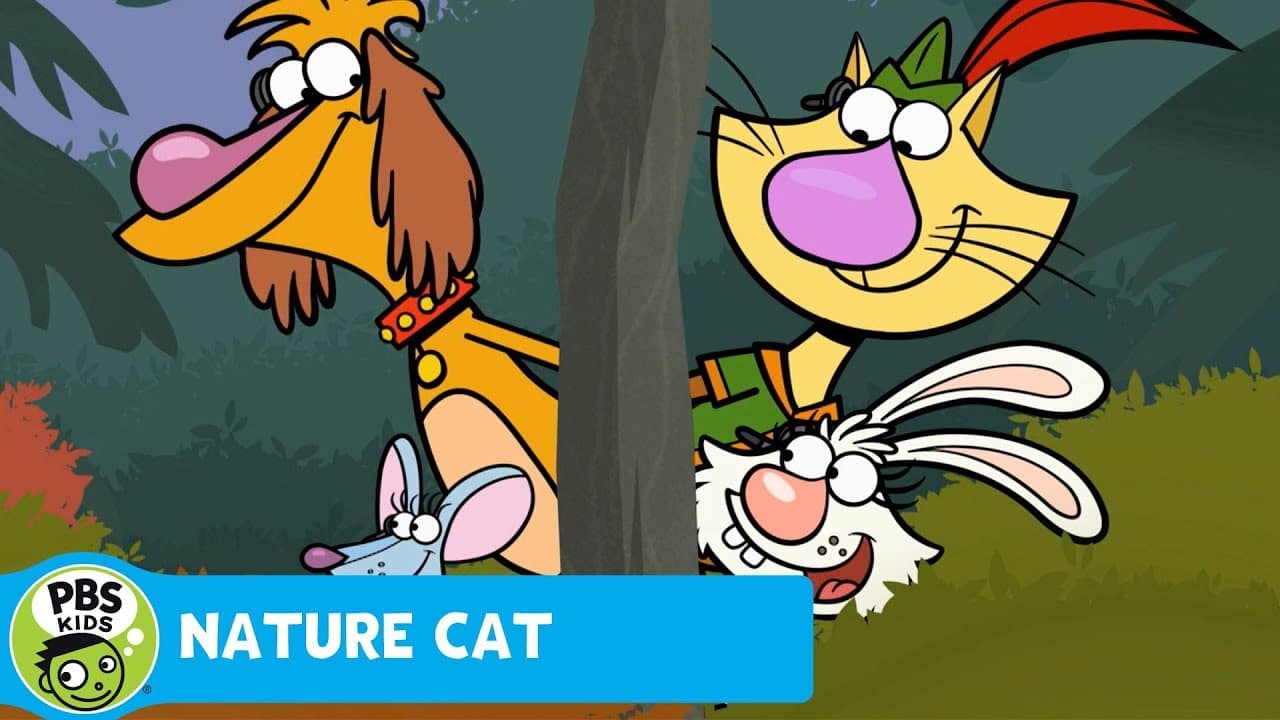
Yes, animals communicate in different ways: the beavers slap their tails on the water to warn the others that an intruder is near. Agent Hal initially misses the signal because the beavers make no sounds, but careful observation reveals why they dive underwater. A woodchuck’s warning sound also prompts a chipmunk to hide from a hawk. Read on to see how the agents uncover these signals.
Transcript
Look! Those beavers are building a lodge! Whoa! Very nice! But, do they communicate? I'll find out! Hello, Beavers! It's me, Hal! I'm on a very important case Hal: and I was wondering... (splashing) Okay Bye! Thank you! Good to see you! Stay in touch! Well, the beavers do not communicate at all so... They don't? Nope! They were worse than the duck... Read More
Key Insights
- 💦 Beavers have a specific way of communicating by slapping their tails on the water.
- ❓ Different species may have unique methods of communication that may not be immediately recognizable to humans.
- ❓ Observing and studying animal behavior is crucial for understanding their communication methods.
- 🤟 Animal communication can involve visual cues, vocalizations, and physical gestures.
- 🥺 Agent Squeeks' observation of the fox making noises led to the realization about beaver communication.
- 🖐️ Communication plays a vital role in the survival and coordination of animals.
- 💁 Animals may communicate to warn about potential threats or to convey other important information.
Install to Summarize YouTube Videos and Get Transcripts
Explore YouTube Video Summarizer or Get YouTube Transcript Extractor
Questions & Answers
Q: Do animals communicate?
Yes. The beavers communicate by slapping their tails on the water, while the woodchuck makes a sound that appears to warn a chipmunk about a nearby hawk.
Q: How do beavers communicate?
Beavers communicate by slapping their tails on the water. The agents observe that the other beavers dive underwater after hearing the loud splash.
Q: Why do beavers slap their tails on the water?
A beaver slaps its tail to warn the other beavers that an intruder is near. After the signal, the others dive underwater.
Q: Why did Agent Hal initially think the beavers did not communicate?
Agent Hal thought they did not communicate because they made no sounds at all. He expected their communication to be more like the sounds made by other animals.
Q: How did the agents discover the beavers’ communication signal?
The agents kept observing the beavers after Agent Hal concluded that they did not communicate. They noticed one beaver slap its tail and saw the others immediately dive underwater.
Q: What did Agent Squeeks conclude about the beavers?
Agent Squeeks concluded that the beavers communicate with their tails. The discovery earned Agent Squeeks the Golden Badge of Honor.
Q: Why did Agent Hal consider quitting the Agents of the Great Outdoors?
Hal felt that he did not understand animal communication and believed he would never earn the Golden Badge of Honor. His friends told him that he was a great agent and urged him not to quit.
Q: How did the woodchuck appear to communicate with the chipmunk?
The woodchuck made a sound when a hawk was nearby. The chipmunk appeared to hear the sound and then hid from the hawk, leading Hal to wonder whether it understood the warning.
Summary & Key Takeaways
-
Beavers were observed building a lodge, but it was unclear if they communicate.
-
The agents noticed that the beavers didn't make any sounds, but then observed a beaver slapping its tail to warn others about an intruder.
-
Agent Squeeks suggests that the beavers communicate with their tails, which is later confirmed.
Read in Other Languages (beta)
Share This Summary 📚
Summarize YouTube Videos and Get Video Transcripts with 1-Click
Try YouTube Summary with ChatGPT & Claude or YouTube Transcript Generator
Explore More Summaries from PBS KIDS 📚

Summarize YouTube Videos and Get Video Transcripts with 1-Click
Try YouTube Summary with ChatGPT & Claude or YouTube Transcript Generator