How Does charity: water Solve Global Water Access Challenges?
TL;DR
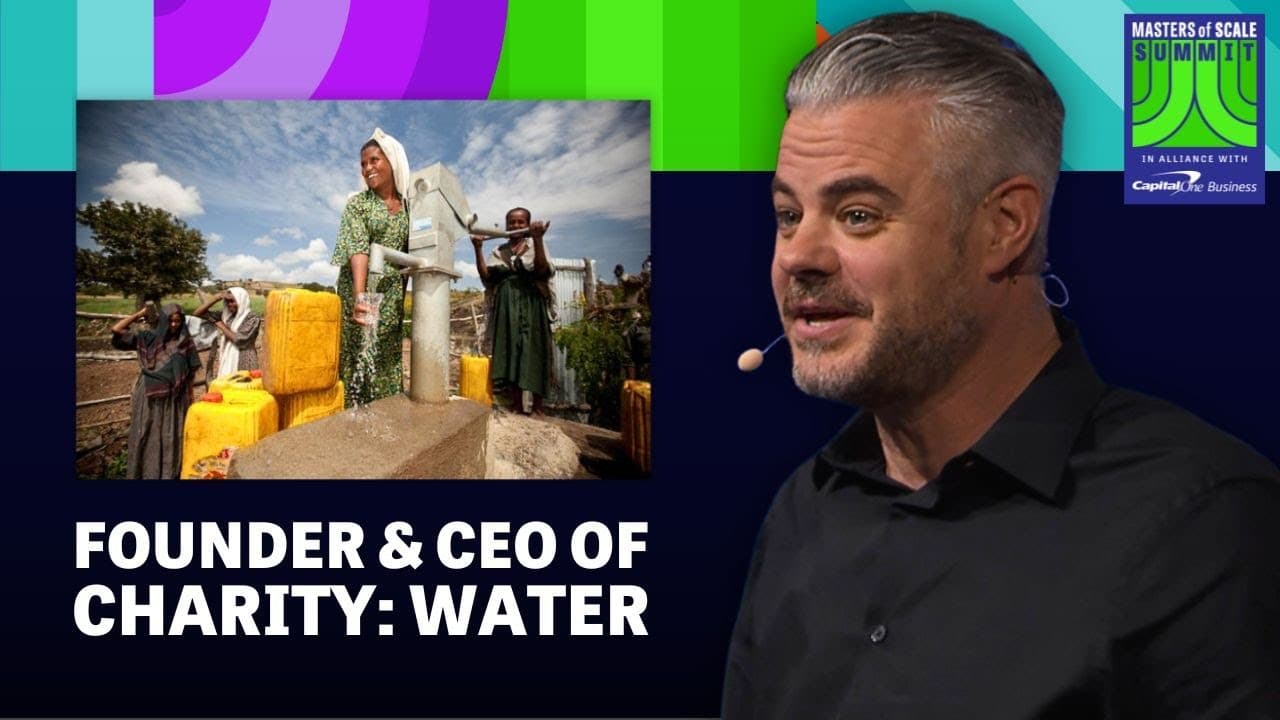
charity: water addresses global water access issues by providing clean water to millions, but faces challenges with broken wells. To combat this, the organization developed innovative solutions like volunteer well assessments and advanced water sensors to monitor well performance in real-time, ensuring maintenance and continued access to clean water.
Transcript
thanks all right well a tiny tiny bit of origin story so uh when I was 28 years old I went to Africa for the first time uh and it absolutely changed me before this trip uh my life looked completely different I was a nightclub promoter for 10 years in Manhattan I filled up 40 nightclubs my job was to get people drunk for a living uh convince them to... Read More
Key Insights
- Scott Harrison transitioned from a nightclub promoter to a humanitarian leader after witnessing the impact of dirty water in Africa, driving him to found charity: water.
- Charity: water has provided clean water to over 100,000 communities across 29 countries, impacting 15 million people, but faced challenges with broken wells.
- The issue of broken wells emerged as a significant challenge, affecting rural communities dependent on fragile water systems, prompting charity: water to innovate solutions.
- Charity: water initially addressed broken wells by sending volunteers to inspect and report on well conditions, revealing that 25% of wells in Africa were nonfunctional.
- Leveraging technology, charity: water developed water sensors to monitor well performance, a project initiated with a $5 million grant from Google.
- The development of water sensors faced challenges, including creating a durable, cost-effective design that could transmit data globally, which took several years to perfect.
- The successful implementation of water sensors enables real-time monitoring of water flow, allowing for timely repairs and ensuring communities maintain access to clean water.
- Charity: water's innovations include smart contracts to incentivize well maintenance, demonstrating a commitment to sustainable solutions for global water access issues.
- More videos with Scott Harrison:
Install to Summarize YouTube Videos and Get Transcripts
Explore YouTube Video Summarizer or Get YouTube Transcript Extractor
Questions & Answers
Q: What inspired Scott Harrison to start charity: water?
Scott Harrison was inspired to start charity: water after a transformative trip to Africa, where he witnessed the devastating impact of dirty water on communities. This experience motivated him to shift from his previous career as a nightclub promoter to a humanitarian leader, focusing on providing clean water access globally.
Q: How did charity: water initially address the issue of broken wells?
Charity: water initially tackled the issue of broken wells by recruiting volunteers to inspect and report on well conditions. Volunteers were tasked with traveling to rural areas, funded by their own means, to assess the functionality of wells, revealing that a significant percentage were nonfunctional and required repair.
Q: What role did technology play in charity: water's solution for broken wells?
Technology played a crucial role in charity: water's solution for broken wells by enabling the development of water sensors. These sensors, funded by a $5 million grant from Google, allow for real-time monitoring of well performance, facilitating timely repairs and ensuring continuous access to clean water for communities.
Q: What challenges did charity: water face in developing water sensors?
Charity: water faced several challenges in developing water sensors, including creating a device that was durable, cost-effective, and capable of transmitting data globally. The process involved extensive trial and error, with initial prototypes failing due to issues like water leakage and insufficient battery life, before achieving a successful design.
Q: How do water sensors improve well maintenance?
Water sensors improve well maintenance by providing real-time data on water flow, enabling charity: water to identify and address issues promptly. This proactive approach ensures that wells remain functional, reducing the likelihood of communities reverting to using unsafe water sources and maintaining consistent access to clean water.
Q: What future innovations is charity: water exploring?
Charity: water is exploring various innovations, including developing sensors for different types of wells and pipe systems, and implementing smart contracts. These contracts would incentivize local technicians to maintain wells by providing compensation based on well performance, further ensuring the sustainability of clean water access.
Q: How has charity: water impacted global water access?
Charity: water has significantly impacted global water access by providing clean water to over 15 million people in 29 countries. Their efforts have reduced the number of people without clean water, improved health outcomes, and empowered communities, particularly women and girls, who often bear the burden of collecting water.
Q: What lessons can be learned from charity: water's journey?
Charity: water's journey teaches the importance of addressing problems head-on rather than ignoring them. By innovating solutions for broken wells, they demonstrated how facing challenges can lead to unexpected benefits, such as improving infrastructure and creating sustainable systems that ensure long-term access to essential resources like clean water.
Summary & Key Takeaways
-
Scott Harrison, founder of charity: water, shifted from a career in nightlife to addressing global water issues after witnessing the dire need for clean water in Africa. His organization has since impacted millions by providing access to clean water across numerous countries.
-
Charity: water encountered the problem of broken wells, which led to the development of innovative solutions, including the use of volunteers to assess well conditions and the creation of water sensors to monitor well performance in real-time.
-
The journey to develop effective water sensors involved overcoming significant challenges, such as designing a durable, affordable device that could transmit data worldwide. The implementation of these sensors has improved well maintenance and access to clean water in rural communities.
Read in Other Languages (beta)
Share This Summary 📚
Summarize YouTube Videos and Get Video Transcripts with 1-Click
Try YouTube Summary with ChatGPT & Claude or YouTube Transcript Generator