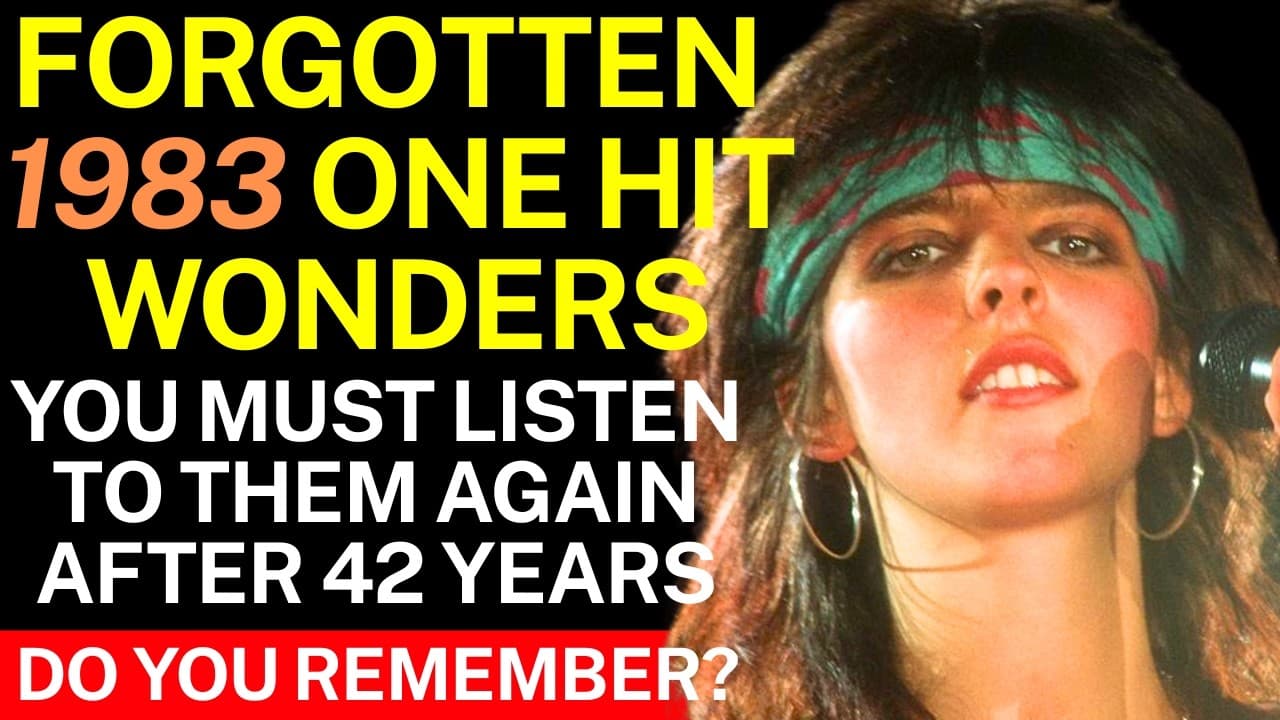
What Were the Forgotten One-Hit Wonders of 1983?
TL;DR
The 1983 countdown includes synth-pop, reggae-rock, soundtrack anthems, protest songs, and eccentric MTV favorites that often outlasted their artists’ later chart success. Featured tracks range from Eddy Grant’s politically inspired “Electric Avenue” and Nena’s nuclear-themed “99 Luftballons” to Michael Sembello’s number-one hit “Maniac” and Peter Schilling’s “Major Tom (Coming Home).”
Transcript
Hello and welcome back to Retro Rewind. Today we are going back to 1983, the year when synths took over. Cassettes ruled glove compartments and MTV decided who made it or didn't. Last night, New Wave flirted with the mainstream. Disco's ghost was still dancing and some voices soared once then disappeared. also ad. But one band may have ghosted us o... Read More
Key Insights
- “Electric Avenue” is a protest anthem inspired by the 1981 Brixton riots in London, even though its pulsating synth bass and reggae-rock sound made many listeners treat it as a party song. It reached number two in both the United States and United Kingdom.
- “99 Luftballons” is a bright synth-pop song built around a nuclear-war scenario in which balloons trigger a catastrophic international conflict. The English version reached number two in the United States, while the original German recording reached number one across Europe.
- “I Melt with You” is a sleeper hit whose cultural reach exceeded its initial number 78 position on the Billboard Hot 100. Modern English reportedly wrote it about a couple making love during nuclear fallout, and the recording later appeared repeatedly in advertisements, trailers, and romantic comedies.
- “Puttin’ on the Ritz” is Taco’s synth-pop reinterpretation of a 1920s Irving Berlin standard. The theatrical recording reached number four on the Billboard Hot 100, while its music video combined tuxedos, powdered wigs, and unusual cyber-vaudeville imagery that required edits before returning to MTV.
- “Maniac” is a Flashdance soundtrack anthem that began as a joke about a horror-movie killer before its lyrics were rewritten. Michael Sembello’s revised song reached number one on the Billboard Hot 100, but he never charted again and subsequently worked behind the scenes in Hollywood.
- “Break My Stride” is an optimistic, reggae-influenced pop song that reached the top five in 1983 and later experienced a TikTok revival. Matthew Wilder subsequently co-produced Disney’s Mulan and provided the voice heard on the demo version of “Reflection.”
- “She Blinded Me with Science” is a technology-minded new-wave song featuring vocal exclamations from British scientist Magnus Pike. It reached number five on the Billboard Hot 100, while Thomas Dolby later helped develop mobile-phone ringtones and taught technology at Johns Hopkins.
- “Safety Dance” is a protest against clubs banning pogo dancing, according to Men Without Hats frontman Ivan Doroschuk. Its synth-driven sound and medieval-themed video helped it reach number three on the Billboard Hot 100, although the band did not sustain comparable mainstream success afterward.
Install to Summarize YouTube Videos and Get Transcripts
Explore YouTube Video Summarizer or Get YouTube Transcript Extractor
Questions & Answers
Q: What are the 15 forgotten one-hit wonders from 1983?
The featured songs are “Words” by F.R. David, “Electric Avenue” by Eddy Grant, “99 Luftballons” by Nena, “I Melt with You” by Modern English, “Puttin’ on the Ritz” by Taco, “Maniac” by Michael Sembello, “Break My Stride” by Matthew Wilder, “She Blinded Me with Science” by Thomas Dolby, “Safety Dance” by Men Without Hats, “Jeopardy” by Greg Kihn Band, “Too Shy” by Kajagoogoo, “I Know There’s Something Going On” by Frida, “Suddenly Last Summer” by The Motels, “Der Kommissar” by After the Fire, and “Major Tom (Coming Home)” by Peter Schilling.
Q: What is the meaning behind “Electric Avenue” by Eddy Grant?
“Electric Avenue” was inspired by the 1981 Brixton riots in London and functioned as a protest anthem beneath its danceable surface. Its heavy synth bass and blend of reggae and rock helped it reach number two in both the United States and United Kingdom. Many listeners reportedly missed its political meaning and experienced it primarily as an energetic party track.
Q: Is “99 Luftballons” about nuclear war?
“99 Luftballons” presents a nuclear-war narrative through bright synth-pop music. Its story concerns a group of balloons that triggers a catastrophic international conflict. The English-language version, “99 Red Balloons,” reached number two in the United States, while the original German recording reached number one across Europe. The contrast between cheerful music and global panic defines the song’s impact.
Q: Why did “I Melt with You” remain popular despite its low chart position?
“I Melt with You” initially reached only number 78 on the Billboard Hot 100, but its dreamy sound, bittersweet lyrics, MTV exposure, and repeated use in later media gave it unusual longevity. Advertisements, movie trailers, and teen romantic comedies kept introducing the song to audiences. Modern English also re-recorded it more than once, although the original retained its distinctive low-fi character.
Q: How did “Maniac” become a Flashdance anthem?
“Maniac” began as a joke song about a horror-movie killer, but its darker original concept was rewritten for Flashdance. The resulting high-energy track complemented the film’s workout imagery, including leg warmers, sweatbands, and the famous water-splash sequence. It reached number one on the Billboard Hot 100, becoming Michael Sembello’s defining chart success before he moved into behind-the-scenes Hollywood work.
Q: What was “Safety Dance” protesting?
“Safety Dance” protested clubs that prohibited pogo dancing, according to Men Without Hats frontman Ivan Doroschuk. The song turned that disagreement into synth-pop defiance and reached number three on the Billboard Hot 100. Its music video added medieval characters, mimes, and other confusing imagery, making the visual presentation almost as memorable as the song’s central message about freedom to dance.
Q: Who originally recorded “Der Kommissar”?
Falco originally performed “Der Kommissar” in German. After the Fire, a British band, transformed it into an English-language American hit that peaked at number five. The adaptation retained passages in two languages and lyrics associated with Cold War tension, drug warnings, and specific street slang. That combination made the track distinctive even when listeners could not fully interpret every line.
Q: What happened to the artists after their biggest 1983 hits?
Several artists pursued substantial work outside later American chart success. Eddy Grant operated his own record label in Barbados, Matthew Wilder co-produced Disney’s Mulan, Thomas Dolby helped develop mobile-phone ringtones and taught technology at Johns Hopkins, and Greg Kihn became a horror novelist. Michael Sembello worked behind the scenes in Hollywood, while Nena returned to Germany and remained prominent there.
Summary & Key Takeaways
-
The countdown identifies 15 memorable songs associated with 1983: “Words,” “Electric Avenue,” “99 Luftballons,” “I Melt with You,” “Puttin’ on the Ritz,” “Maniac,” “Break My Stride,” “She Blinded Me with Science,” “Safety Dance,” “Jeopardy,” “Too Shy,” “I Know There’s Something Going On,” “Suddenly Last Summer,” “Der Kommissar,” and “Major Tom (Coming Home).”
-
Several selections paired upbeat or accessible music with darker subjects. “Electric Avenue” drew inspiration from the 1981 Brixton riots, “99 Luftballons” imagined balloons triggering a global conflict, and “I Melt with You” was reportedly written about lovers during nuclear fallout. Their inviting sounds helped political and apocalyptic themes reach mainstream audiences.
-
MTV imagery, films, and later media appearances contributed heavily to these songs’ longevity. “Maniac” became inseparable from Flashdance, “Jeopardy” featured a zombie-filled wedding video, and “Safety Dance” used medieval imagery. Other artists moved into production, technology, writing, or independent music work after their biggest American chart moments.
Read in Other Languages (beta)
Share This Summary 📚
Summarize YouTube Videos and Get Video Transcripts with 1-Click
Try YouTube Summary with ChatGPT & Claude or YouTube Transcript Generator