Why Is Epsom Salt Mostly Water and How Is It Extracted?
TL;DR
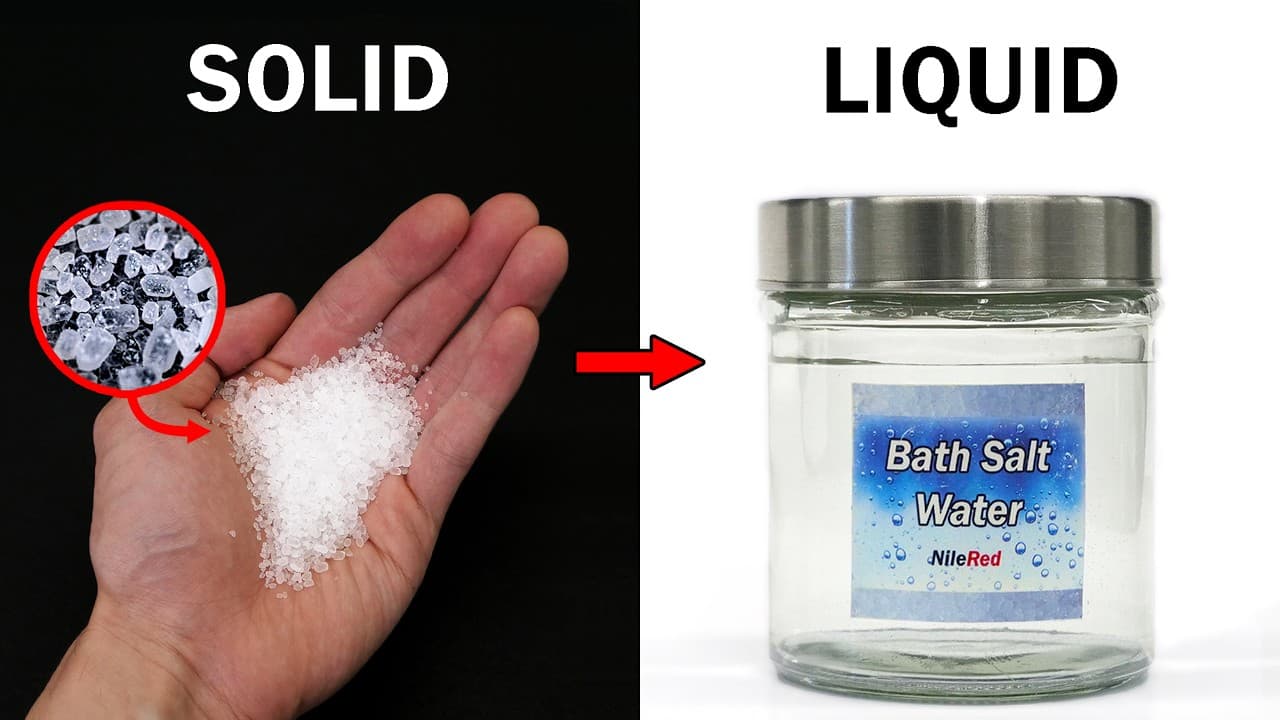
Epsom salt is composed of about 53% water by weight because it is magnesium sulfate heptahydrate, meaning it contains seven water molecules bound to each crystal. Using heat and distillation, approximately 1,900 milliliters of water can be extracted from 4 kilograms of Epsom salt, challenging the perception that the dry crystals do not contain a significant amount of water.
Transcript
this video has been sponsored by audible for a long time now i've been kind of fascinated by bath salts maybe surprisingly though i'm not talking about the drug that's commonly known as bath salts and i actually just mean the salt that you can get at the pharmacy to make a relaxing bath at least here in montreal the most common one is epsom salt an... Read More
Key Insights
- 💦 Epsom salt contains a significant amount of chemically bound water, making up around 53% of its weight.
- 👻 Heating Epsom salt allows the release and separation of water through distillation.
- 💦 The water content of Epsom salt can be extracted, although the process can be time-consuming and challenging.
- 💦 Epsom salt may have obtained its water from a natural source where it was mined.
- 😑 The water extracted from Epsom salt can be purified using activated charcoal and mixed ion exchange resin.
- 💦 The taste of the extracted water is generally unpleasant, with a sulfur-like smell.
- 💁 Epsom salt sold as the heptahydrate form has practical reasons due to safety concerns and clumping issues.
Install to Summarize YouTube Videos and Get Transcripts
Explore YouTube Video Summarizer or Get YouTube Transcript Extractor
Questions & Answers
Q: What is the chemical composition of Epsom salt?
Epsom salt is magnesium sulfate heptahydrate. The core compound is magnesium sulfate, but it has seven water molecules chemically bound to it. Because of that water, it is technically mostly water at around 53% by weight.
Q: Is Epsom salt really mostly water?
Yes. Despite looking completely dry, Epsom salt is about 53% water by weight. This water is not absorbed like a sponge; it is chemically part of the solid crystal structure, which is why the compound is called a heptahydrate.
Q: How is the water in Epsom salt bound to the crystals?
The seven water molecules are chemically bound into the solid crystal structure, so the water is no longer a liquid. However, this water is only loosely bound, so a bit of heating is enough to break the bonds and release it.
Q: Can you separate the water from Epsom salt, and how?
Yes. The method is to heat the Epsom salt to release the bound water, then distill it off to separate it from the salt using a heating mantle, a short path condenser, and cold water tubing. The vapor condenses back into liquid and drips out to be collected.
Q: Does Epsom salt melt when it is heated?
When heated, the salt releases its bound water and effectively liquefies, dissolving into the water it gives off. In the video the salt sank down, then a pool of boiling water appeared underneath, and within about five minutes it almost completely liquefied before the water boiled away.
Q: At what temperature does the water come out of Epsom salt?
The water only starts coming off at around 150 degrees Celsius, so it takes a while for the salt to heat up first. As heating continues to higher temperatures the remaining water is harder to remove, requiring more time and heat.
Q: How much water can you actually get from a large container of Epsom salt?
In theory, a 4-kilo container holds over 2 liters of pure water, almost enough to fill half the container. In practice the extraction is slow, taking hours of boiling and repeated top-ups, but the collected water steadily added up toward that amount.
Summary & Key Takeaways
-
Epsom salt, commonly used for relaxing baths, contains water that is chemically bound to the salt crystals.
-
The water content of Epsom salt is around 53% by weight, making it mostly water.
-
The video shows an experiment to extract the water from Epsom salt using heat and distillation.
-
(Content reviewed on 2026-08-27.)
Read in Other Languages (beta)
Share This Summary 📚
Summarize YouTube Videos and Get Video Transcripts with 1-Click
Try YouTube Summary with ChatGPT & Claude or YouTube Transcript Generator
Explore More Summaries from NileRed 📚
Summarize YouTube Videos and Get Video Transcripts with 1-Click
Try YouTube Summary with ChatGPT & Claude or YouTube Transcript Generator