What Is the Mechanism Behind Siphons in a Vacuum?
TL;DR
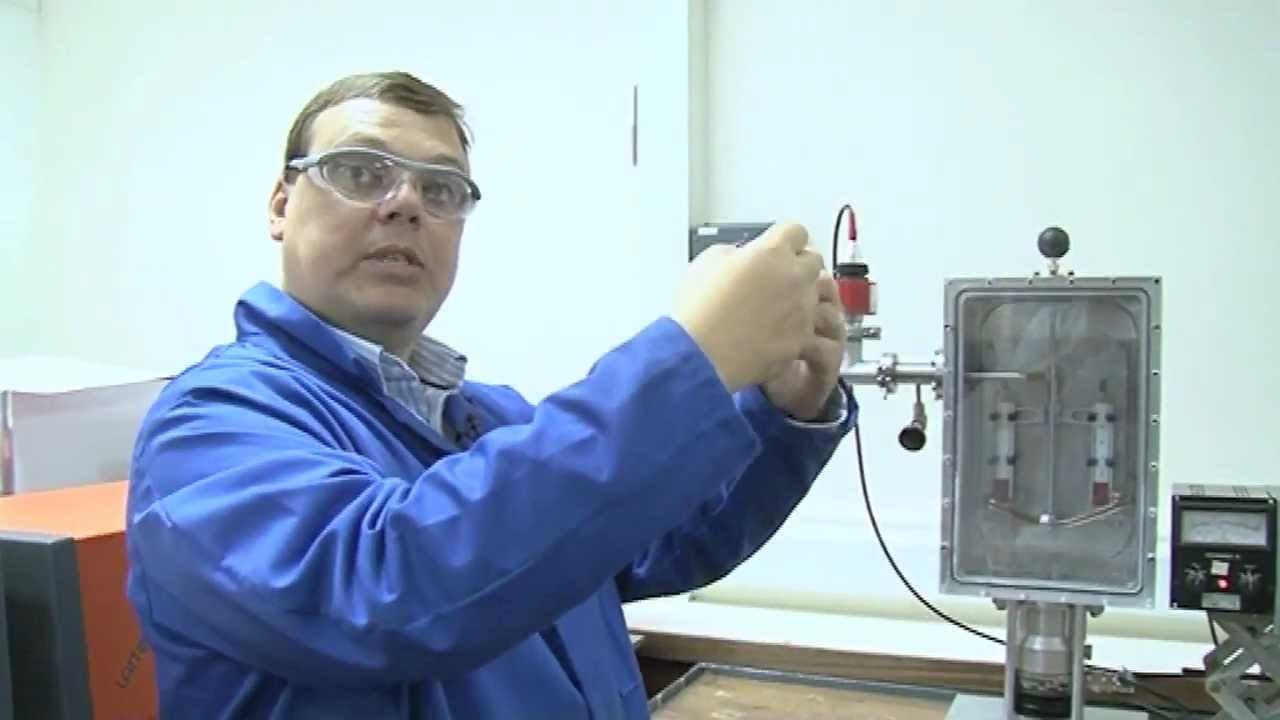
Siphons operate through molecular cohesion and gravity rather than atmospheric pressure, even in a vacuum. The experiments demonstrate that an ionic liquid's stickiness allows it to flow against gravity, debunking the myth that atmospheric pressure is necessary for siphoning. Therefore, siphons fundamentally work because of cohesive forces and not air pressure.
Transcript
well today we're going to show you something that has never been seen before really centers around siphons now we find siphons almost everywhere you've probably seen a petrol siphon you may have used a fish tank siphon in fact you probably used a siphon this morning when you flush your toilet it really started off as a bit of a suppose a hobby and ... Read More
Key Insights
- 🫗 Siphons are not reliant on atmospheric pressure, but rather on the cohesive energy of the liquid and the force of gravity.
- 🍳 The stickiness of the liquid prevents it from breaking apart in the siphon tube.
- 👱 Siphons can operate in extreme vacuums, devoid of any significant air pressure.
- 🫗 An ionic liquid, behaving like magnetized molecules, is used to demonstrate the functioning of siphons in a vacuum.
- ❓ The debunking of the atmospheric pressure misconception highlights the importance of molecular cohesion and gravity in siphons.
- 👨🔬 The research group's experiments were a successful marriage of their available equipment and liquids.
- 🫗 Siphons can be used to transfer liquid between containers in both directions repeatedly.
Install to Summarize YouTube Videos and Get Transcripts
Explore YouTube Video Summarizer or Get YouTube Transcript Extractor
Questions & Answers
Q: How do siphons work without relying on atmospheric pressure?
Siphons function through molecular cohesion and gravity. The stickiness of the liquid in the siphon tube and the force of gravity enable the liquid to flow from a higher reservoir to a lower one, even in a vacuum.
Q: Why do siphons require a liquid with strong bonding properties?
Siphons need a liquid with high cohesive energy, meaning the molecules stick together strongly. This prevents the liquid from breaking apart and forming droplets, ensuring a continuous flow.
Q: Can siphons work in the absence of any significant air pressure?
Yes, siphons can function in the absence of atmospheric pressure. Experiments conducted in ultra-high vacuums, where air is removed, prove that atmospheric pressure is not necessary for siphons to work.
Q: What role does gravity play in the functioning of siphons?
Gravity is a crucial force in siphons. It causes the liquid in the siphon tube to flow downhill and creates the suction required to pull the liquid up and over the highest point of the siphon.
Summary & Key Takeaways
-
Siphons, commonly seen in everyday objects like petrol pumps and fish tank filters, function by maintaining molecular cohesion and gravity in the absence of atmospheric pressure.
-
The misconception that atmospheric pressure drives siphons is debunked through experiments conducted in ultra-high vacuums.
-
An ionic liquid, which behaves like numerous tiny magnets stuck together, is used to demonstrate the functioning of siphons in a vacuum.
Read in Other Languages (beta)
Share This Summary 📚
Summarize YouTube Videos and Get Video Transcripts with 1-Click
Try YouTube Summary with ChatGPT & Claude or YouTube Transcript Generator
Explore More Summaries from Periodic Videos 📚

Summarize YouTube Videos and Get Video Transcripts with 1-Click
Try YouTube Summary with ChatGPT & Claude or YouTube Transcript Generator