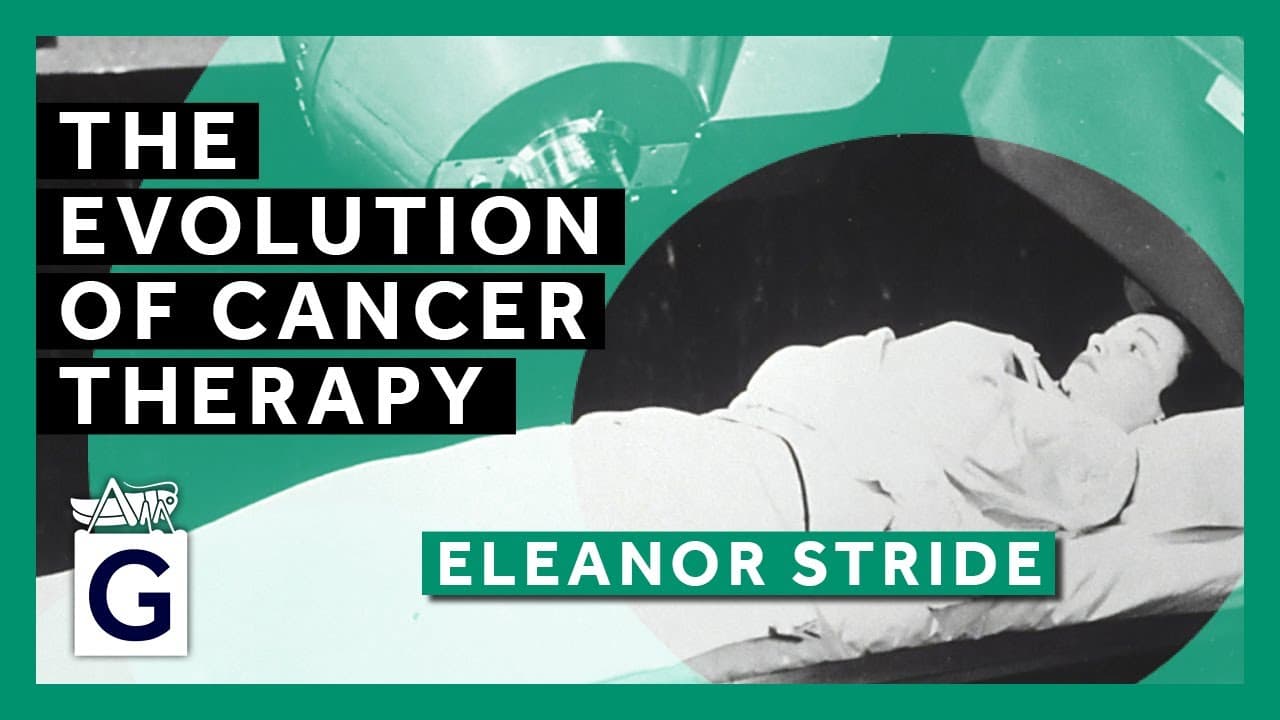
The Evolution of Cancer Therapy
TL;DR
Cancer therapy has evolved because cancer’s rapidly changing tumors resist drugs, restrict blood flow, spread through metastasis, and evade immune responses. Although worldwide cancer deaths increased alongside longer lifespans, the death rate dropped by 20% over the last 30 years after accounting for life expectancy. Read on to understand cancer’s ancient origins and the biological barriers that make treatment so difficult.
Transcript
- So this evening, I want to talk about the past, present, and future of cancer therapy. And to try to answer a few key questions. How old is cancer? Why is it so difficult to treat? Why did deaths from cancer sadly seem to be increasing? And how did a medieval religious miracle transform 21st century cancer therapy? First though, I should probably... Read More
Key Insights
- 🍝 Cancer therapy has made significant advancements in the past century, with the development of surgery, radiation therapy, chemotherapy, and immunotherapy.
- ✋ Challenges in cancer therapy include the complex nature of tumors, drug resistance, high costs, varying patient responses, and the need for preventive measures.
- ☠️ Preventive measures, such as early detection through screening programs, promoting a healthy lifestyle, and developing effective vaccines, can play a significant role in reducing cancer rates.
Install to Summarize YouTube Videos and Get Transcripts
Explore YouTube Video Summarizer or Get YouTube Transcript Extractor
Questions & Answers
Q: How has cancer therapy evolved?
The discussion traces the past, present, and future of cancer therapy, including efforts to improve chemotherapy delivery. It also examines how a medieval religious miracle helped transform 21st-century cancer therapy.
Q: Why is cancer so difficult to treat?
Tumors grow rapidly, develop a chaotic blood supply, and create high tissue pressure that makes delivering enough drug extremely difficult. Oxygen-deprived cancer cells can also change their metabolism and DNA, evade immune responses, and evolve resistance faster than surrounding healthy cells.
Q: What causes a cancerous tumor to form?
Cancer begins when something goes wrong with the DNA in cells and causes them to replicate uncontrollably. The normal self-destruction process called apoptosis is switched off, allowing corrupted cells to form a rapidly growing tumor that can choke nearby healthy tissue.
Q: Why do cancer cells spread to other parts of the body?
Some tumor regions receive too little oxygen because the tumor’s blood vessels are chaotic. Oxygen deprivation changes cell behavior and can trigger metastasis, in which cells break away, travel elsewhere, and establish new tumors.
Q: Why have worldwide cancer deaths been increasing?
Cancer deaths increased over the last 30 years partly because people live longer and are more likely to die from cancer instead of other diseases first. Global average life expectancy rose from 43 in 1940 to 73 in 2019; after accounting for that change, the cancer death rate actually fell by 20% over the last 30 years.
Q: How old is cancer?
Cancer is not a modern disease. Evidence includes cancer in a human toe bone from 1.7 million years ago and the first reported evidence of cancer in a 76-million-year-old dinosaur bone, published in 2020.
Q: How common was cancer in ancient and medieval populations?
Archaeological evidence includes breast cancer, prostate cancer, and bone tumors in remains from South America, Siberia, and ancient Egypt. Analysis of skeletons from medieval cemeteries found evidence of cancer in about 9% to 14% of them, although cancer may not have caused those individuals’ deaths.
Q: How do cancer cells evade the immune system and resist treatment?
Cancer cells can secrete chemicals or display surface molecules that switch off the immune response, effectively making them invisible to it. They also evolve faster than surrounding healthy cells, allowing them to become resistant to treatment more quickly.
Summary & Key Takeaways
-
Cancer is a complex disease that arises from the uncontrolled replication of cells due to DNA abnormalities, leading to the formation of tumors.
-
Treating cancer is difficult due to factors such as the rapid growth of tumors, chaotic blood supply, resistance to treatment, and the ability of cancer cells to evade the immune system.
-
The development of cancer therapies has evolved over time, including the use of radiation, chemotherapy, and more recently, immunotherapy.
-
Immunotherapy, particularly CAR T-cell therapy, has shown promising results in certain types of cancer but is limited by high costs and varying patient responses.
Read in Other Languages (beta)
Share This Summary 📚
Summarize YouTube Videos and Get Video Transcripts with 1-Click
Try YouTube Summary with ChatGPT & Claude or YouTube Transcript Generator
Explore More Summaries from Gresham College 📚
Summarize YouTube Videos and Get Video Transcripts with 1-Click
Try YouTube Summary with ChatGPT & Claude or YouTube Transcript Generator