Is January 6th an Insurrection or Just a Riot?
TL;DR
The debate evaluates whether the January 6 Capitol events qualify as an insurrection or merely a riot. Key arguments include legal definitions and historical context, emphasizing the absence of formal insurrection charges against participants, which complicates the discourse on political violence and accountability.
Transcript
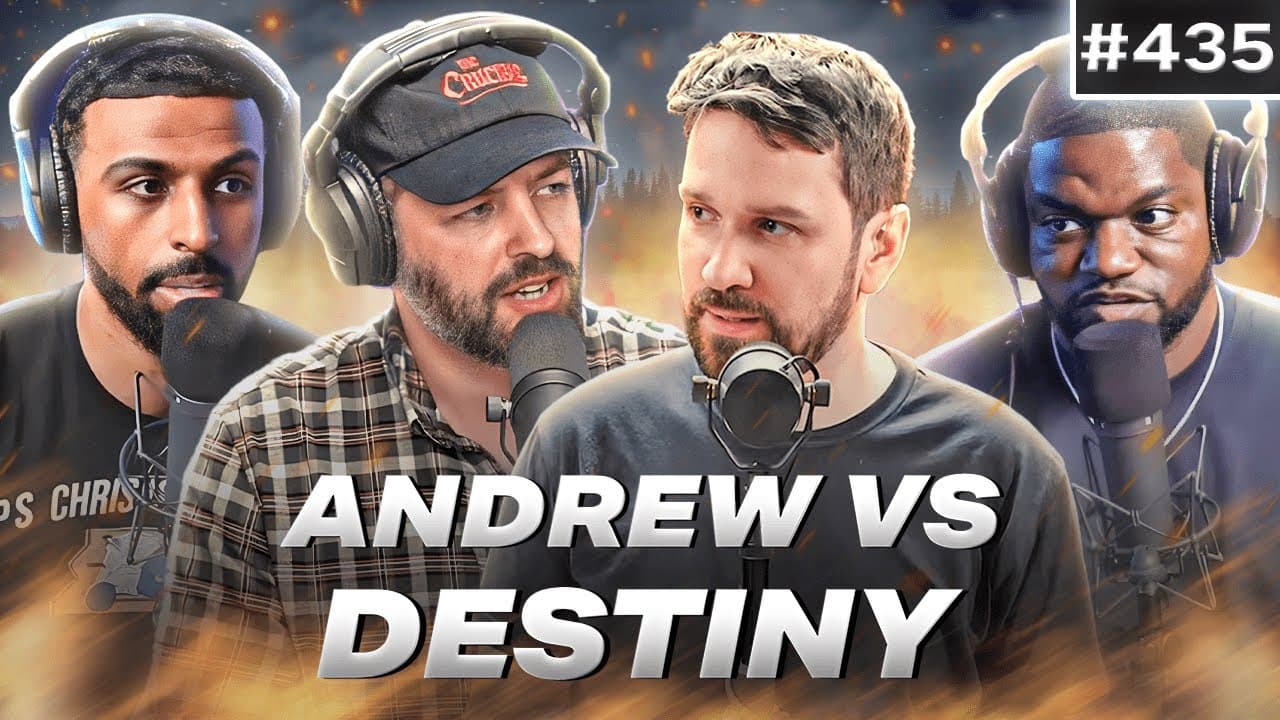
e e all right and we are live what's up guys welcome to the fresher podcast man I'm joined by two people that I call my buddies good guys um contrary to what people might say uh Andrew Wilson and Destiny today we're going to be I'm going to be hosting a debate between them on is was January 6 and Insurrection okay the way this debate is going to go... Read More
Key Insights
- ❓ The concept of insurrection remains legally and politically complex, often depending on definitions that vary across contexts and jurisdictions.
- ❓ The debate on January 6 reflects broader discussions about political violence, civil disobedience, and the boundaries of protest.
- 🤨 The absence of formal charges for insurrection linked to January 6 impacts the legal framing of the events, raising questions about accountability and interpretation of political actions.
- ❓ Perspectives on what constitutes a threat to democracy or government authority can differ widely between political ideologies, impacting dialogue surrounding events like January 6.
- 🖐️ Emotional and historical context plays a significant role in how individuals perceive the legitimacy of political actions and the narratives built around them.
- ✊ The framework through which events like January 6 are analyzed affects public opinion and political discourse, demonstrating the power of language in shaping narratives.
- 🥺 The debate illustrates the necessity of clear definitions in political discourse, as ambiguity can lead to misunderstandings and conflicting interpretations.
Install to Summarize YouTube Videos and Get Transcripts
Explore YouTube Video Summarizer or Get YouTube Transcript Extractor
Questions & Answers
Q: What are the main arguments for considering January 6 an insurrection?
Proponents argue that on January 6, a large group of people assembled with the intent to disrupt the certification of electoral votes, using intimidation and force in order to reverse the election outcome. These elements fit the criteria of an insurrection, according to historical legal definitions.
Q: Why did some argue that January 6 was not an insurrection?
Opponents argue that key elements such as clear political intent to overthrow the government were not present. They point out that the lack of formal charges of insurrection against any participants suggests that it may have been classified more accurately as a riot rather than a coordinated rebellion against authority.
Q: How do definitions of insurrection and riot differ in the context of this debate?
An insurrection typically involves a coordinated effort to overturn or disrupt government authority through intimidation or violence, while a riot may involve spontaneous acts of disorder and unrest without a unified intent to meet political goals.
Q: Did the debate reference any historical incidents to support their definitions?
Yes, both speakers cited historical instances of insurrection and riots to offer context and demonstrate how those terms were legally applied in the past, including examples such as the Whiskey Rebellion and various Civil Rights demonstrations.
Summary & Key Takeaways
-
The debate involved two speakers, Andrew Wilson and Destiny, discussing the classification of the January 6 Capitol incident, with each presenting arguments for and against the label of insurrection.
-
The discussion included the definitions of insurrection and riot, with emphasis on legal precedents, the lack of formal charges for insurrection against participants, and the implications of labeling the event as such.
-
Throughout the dialogue, both debaters drew upon historical context, legal definitions, and philosophical arguments regarding the nature and motivations of protests and violence in political contexts.
Read in Other Languages (beta)
Share This Summary 📚
Summarize YouTube Videos and Get Video Transcripts with 1-Click
Try YouTube Summary with ChatGPT & Claude or YouTube Transcript Generator
Explore More Summaries from FreshandFit 📚

Summarize YouTube Videos and Get Video Transcripts with 1-Click
Try YouTube Summary with ChatGPT & Claude or YouTube Transcript Generator