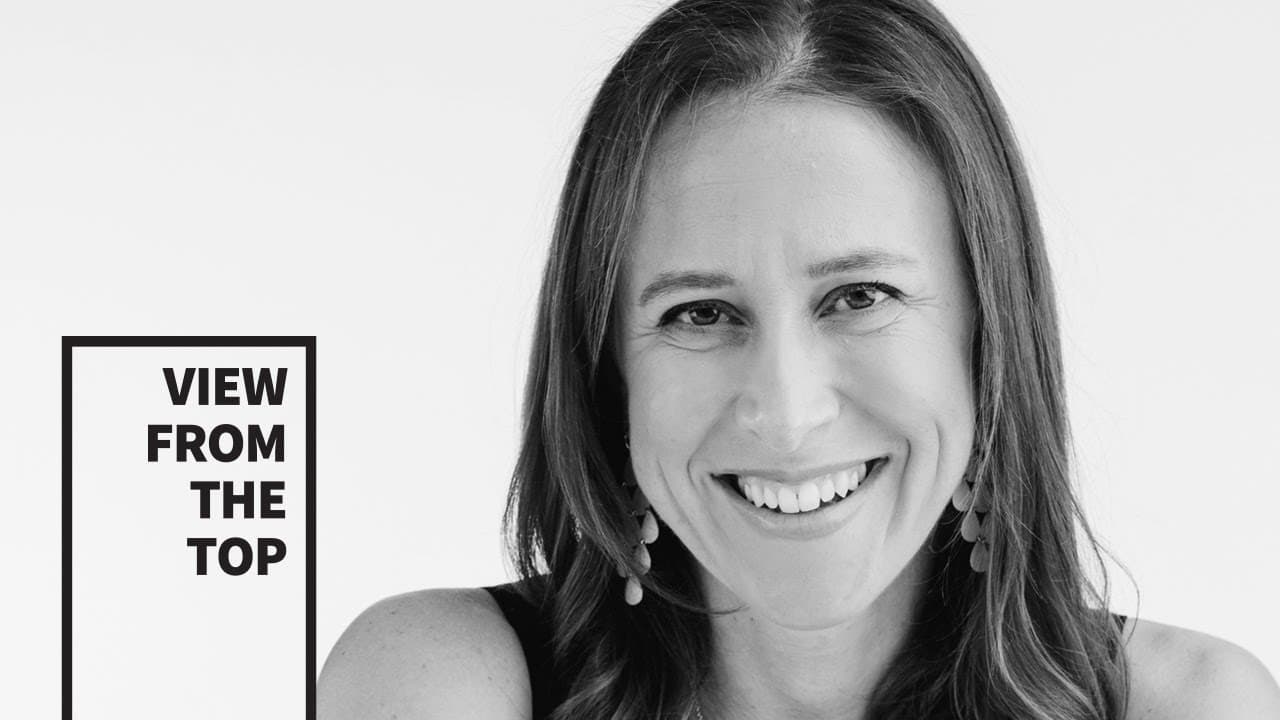
How Anne Wojcicki Built 23andMe and Approached Product-Market Fit
TL;DR
Anne Wojcicki explains that 23andMe began as a science-driven, highly technical product and struggled to establish a clear value proposition. Despite extensive media coverage and 1,000 kit sales on launch day, demand fell to 10–15 kits daily for the $1,000 test. She also describes healthcare as a fragmented system where users are not typically the paying customers. Read on for her lessons about marketing genetics and changing healthcare.
Transcript
[MUSIC] Anne, welcome to the GSB. We are so excited to have you here for View From The Top. >> So excited. >> Great, well, before we start, I want to do a quick poll. So please raise your hand if you have done a 23andMe test before. Wow, okay, you have a strong market base here at the GSB. >> But there's a lot more that could be. I see, no, I see o... Read More
Key Insights
- 🧑⚕️ Transparency and choice are vital in personal genomics and healthcare, enabling individuals to make informed decisions about their health.
- 💁 Data privacy and patient consent should be upheld while providing access to genetic information for research and healthcare purposes.
- 😌 The future of healthcare lies in virtual care, direct-to-consumer approaches, and empowering individuals to take ownership of their health.
- 😒 Genetic information has the potential to address racial inequality in healthcare, but careful considerations must be made to ensure ethical and responsible use.
Install to Summarize YouTube Videos and Get Transcripts
Explore YouTube Video Summarizer or Get YouTube Transcript Extractor
Questions & Answers
Q: How did Anne Wojcicki and her co-founders start 23andMe?
Wojcicki started 23andMe with two scientific co-founders from Stanford who had recently completed their PhDs. They built the product they personally wanted: a way to browse chromosomes, examine reports, and explore what genetic findings meant.
Q: How did 23andMe attract its first customers?
The company received extensive attention, including front-page coverage in The New York Times and a Wired cover story. Its earliest customers largely came from the quantified-self community, people eager to test and measure themselves who could also afford the $1,000 kit.
Q: How many DNA kits did 23andMe sell when it launched?
23andMe sold 1,000 kits on its first day. After that initial surge, sales fell to roughly 10–15 kits per day.
Q: Why did 23andMe initially struggle to achieve product-market fit?
The founders emphasized scientific depth but did not assess market demand or conduct marketing research. The $1,000 product was highly academic, its value proposition was unclear, and the company had no marketing team because it expected word of mouth to drive sales.
Q: What was 23andMe’s early DNA ancestry product like?
The early product used relatively technical PCA plots that were difficult for many customers to interpret. Wojcicki contrasts that approach with the company’s later product called Ancestry Composition.
Q: How does 23andMe make genetics relatable to customers?
23andMe uses approachable reports, such as its Neanderthal report, to make genetics and science interesting and fun. Wojcicki says these results encourage people to compare findings, discuss them socially, and ask what they mean.
Q: How large was 23andMe’s customer base at the time of the interview?
The interviewer described herself as one of 23andMe’s 12 million users. Wojcicki nevertheless said the company was still finding product-market fit.
Q: Why does Anne Wojcicki say healthcare is difficult to transform?
She describes healthcare as fragmented and fundamentally different from the technology industry. People use healthcare but are often not the paying customers, which makes change difficult; she also notes that the human genome had been sequenced 20 years earlier, yet doctors almost never recommended genome testing outside pregnancy or cancer.
Summary & Key Takeaways
-
Anne Wojcicki discusses the early days of 23andMe and the challenges they faced in convincing customers to buy DNA ancestry kits.
-
She highlights the potential of genetics to revolutionize healthcare and drug discovery, but also acknowledges the barriers and regulations that need to be overcome.
-
Wojcicki emphasizes the importance of data privacy, patient consent, and the need for individuals to have control over their own health information.
Read in Other Languages (beta)
Share This Summary 📚
Summarize YouTube Videos and Get Video Transcripts with 1-Click
Try YouTube Summary with ChatGPT & Claude or YouTube Transcript Generator
Explore More Summaries from Stanford Graduate School of Business 📚




Summarize YouTube Videos and Get Video Transcripts with 1-Click
Try YouTube Summary with ChatGPT & Claude or YouTube Transcript Generator