How Did Tyler Win the Cuttoe Forging Final?
TL;DR
Tyler won the Battle of the Branches championship and $50,000 after his Damascus cuttoe survived the kill, strength, and sharpness tests with a sharp, undamaged edge and comfortable handle. Gene’s blade remained sharp, but its forward-heavy balance, cylindrical polished handle, detached chain, and acquired bend made it harder to control effectively.
Transcript
Bladesmiths, congratulations. You fellas have made it into the final round of this competition. Now we're sending you back to your home forges to recreate this iconic weapon from history, General George Washington's lion-headed cuttoe Good luck, bladesmiths. We'll see you in four days. TYLER: So my billet's going to be made out of 1084 and 15N20. R... Read More
Key Insights
- Tyler’s winning blade was made from 1084 and 15N20, two steels selected to create strong visual contrast in a Damascus pattern. He accepted the added risk of cold shuts and stress fractures because he believed successful Damascus construction could distinguish his cuttoe from Gene’s entry.
- Gene’s blade-shaping method used a wood anvil, also described as a log method, to place a gentle arc in the blade. He chose the same log previously used for his Mameluke sword because that established process had already worked for him.
- Tyler’s heat-treatment adjustment used a tube as a long, hot oven to create more even and controlled heat. After quenching, he heard no cracks or pings and concluded that the blade had reached the condition he needed for the remaining work.
- The lion-head pommel was a major final-day challenge for both smiths. Tyler experimented with pewter before choosing a silver version for its appearance, while Gene carved a pommel for the first time by progressively profiling and refining the lion’s shape.
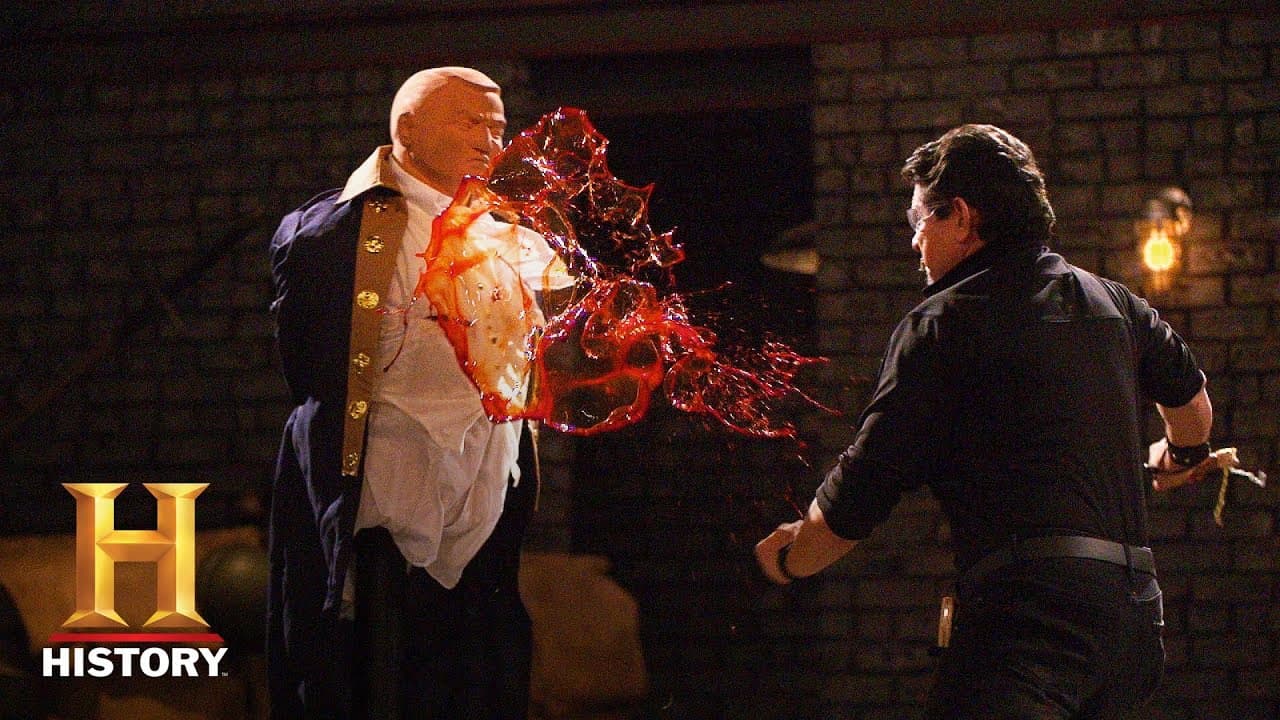
- Tyler’s cuttoe performed effectively in the pig-carcass kill test because its handle construction felt right and its edge was very sharp. The judge concluded that the sabre would kill, giving Tyler a strong result in the first evaluation.
- Gene’s cuttoe was difficult to control because it was heavy, forward heavy, and fitted with a cylindrical, nearly circular polished handle. When the blade met resistance, the handle twisted in the judge’s hand, and its chain detached during testing.
- Both blades retained sharp edges after chopping an ice block, but their fittings showed weaknesses. Tyler’s chain fell off without edge damage, while the rest of Gene’s chain detached and his blade acquired a bend, although it remained strong and sharp.
- Tyler won the Battle of the Branches championship because his cuttoe combined a sharp, durable edge with a comfortable handle and better overall test performance. His victory earned him $50,000 and recognized his representation of the Army in the competition.
Install to Summarize YouTube Videos and Get Transcripts
Explore YouTube Video Summarizer or Get YouTube Transcript Extractor
Questions & Answers
Q: How did Tyler win the Cuttoe forging final?
Tyler won by producing a Damascus cuttoe that performed consistently across the pig-carcass kill test, ice-block strength test, and Hessian charge sharpness test. Judges praised its sharp edge, comfortable handle, and sound handle construction. Although its chain detached and its weight limited cutting speed, the edge suffered no damage and remained sharp through every evaluation.
Q: What materials did Tyler use for his Damascus blade?
Tyler built his billet from 1084 and 15N20, which he described as good contrasting steels for Damascus. He knew Damascus construction introduced several possible failures, including cold shuts and stress fractures. Nevertheless, he believed the patterned blade could give him an advantage if it performed as expected, so he accepted the additional forging risk.
Q: How did Tyler improve the heat treatment of his blade?
Tyler changed his heating method by using a tube as a long, hot oven. He had experienced problems obtaining even heat during an earlier build, so the tube was intended to provide a more even and controlled temperature along the blade. After the quench, he heard no cracks or pings and believed the process had succeeded.
Q: How did Tyler make the lion-head pommel?
Tyler treated the lion-head pommel as his largest final-day obstacle. He placed it in plaster of Paris and considered casting it in pewter because pewter required less heat and could resemble silver. After deciding the pewter result looked poor, he chose the silver version, then polished, sharpened, reduced weight, and assembled the weapon.
Q: How did Gene shape and finish his cuttoe?
Gene used a wood anvil, also called the log method, to introduce a gentle arc into his blade. He reused the same log that had worked for his Mameluke sword. On the final day, he carved a pommel for the first time by profiling the lion’s head, removing more material, and refining the form with a rotary tool.
Q: What problems affected Gene’s cuttoe during testing?
Gene’s cuttoe was heavy and very forward heavy, while its cylindrical, nearly circular polished handle was difficult to grip securely. The weapon twisted in the judge’s hand when it struck resistance, its chain came off, and it acquired a bend during the ice-block chop. Its sharp edge survived, but control problems reduced the effectiveness of its slashing cuts.
Q: How did both cuttoes perform in the ice-block strength test?
Both cuttoes kept sharp edges after chopping the ice block. Tyler’s chain fell off, but the edge showed no damage and the judge found the handle comfortable. Gene’s remaining chain also detached, and his blade picked up a bend. Even so, the judge said Gene’s weapon remained strong and retained its edge, while criticizing the slippery polished handle.
Q: What happened during the Hessian charge sharpness test?
Tyler’s cuttoe had a sharp edge along its full length and successfully cut the dummies, although the weapon’s weight prevented the judge from moving very quickly. Gene’s sharp edge also produced cuts, but maintaining a secure grip was difficult. As a result, several strikes created impact damage and deep nicks instead of complete slashes through the targets.
Summary & Key Takeaways
-
Tyler and Gene returned to their home forges with four days to recreate General George Washington’s lion-headed cuttoe. Tyler chose 1084 and 15N20 steels for a contrasting Damascus blade, despite the danger of cold shuts and stress fractures. Gene shaped his blade using the same log method that had worked previously.
-
Tyler used a tube as a long oven to achieve more even, controlled heating before quenching his blade. He cast a lion-head pommel, rejected a pewter version because of its appearance, and finished a silver version. Gene carved his first pommel by profiling and refining the lion’s head with a rotary tool.
-
Both cuttoes passed the pig-carcass kill test, ice-block strength test, and Hessian charge sharpness test. Tyler’s weapon retained its edge, remained comfortable to handle, and delivered effective cuts despite its weight and detached chain. Gene’s weapon stayed sharp, but its balance, polished handle, bend, and chain failures reduced control. Tyler won $50,000.
Read in Other Languages (beta)
Share This Summary 📚
Summarize YouTube Videos and Get Video Transcripts with 1-Click
Try YouTube Summary with ChatGPT & Claude or YouTube Transcript Generator
Explore More Summaries from HISTORY 📚






Summarize YouTube Videos and Get Video Transcripts with 1-Click
Try YouTube Summary with ChatGPT & Claude or YouTube Transcript Generator