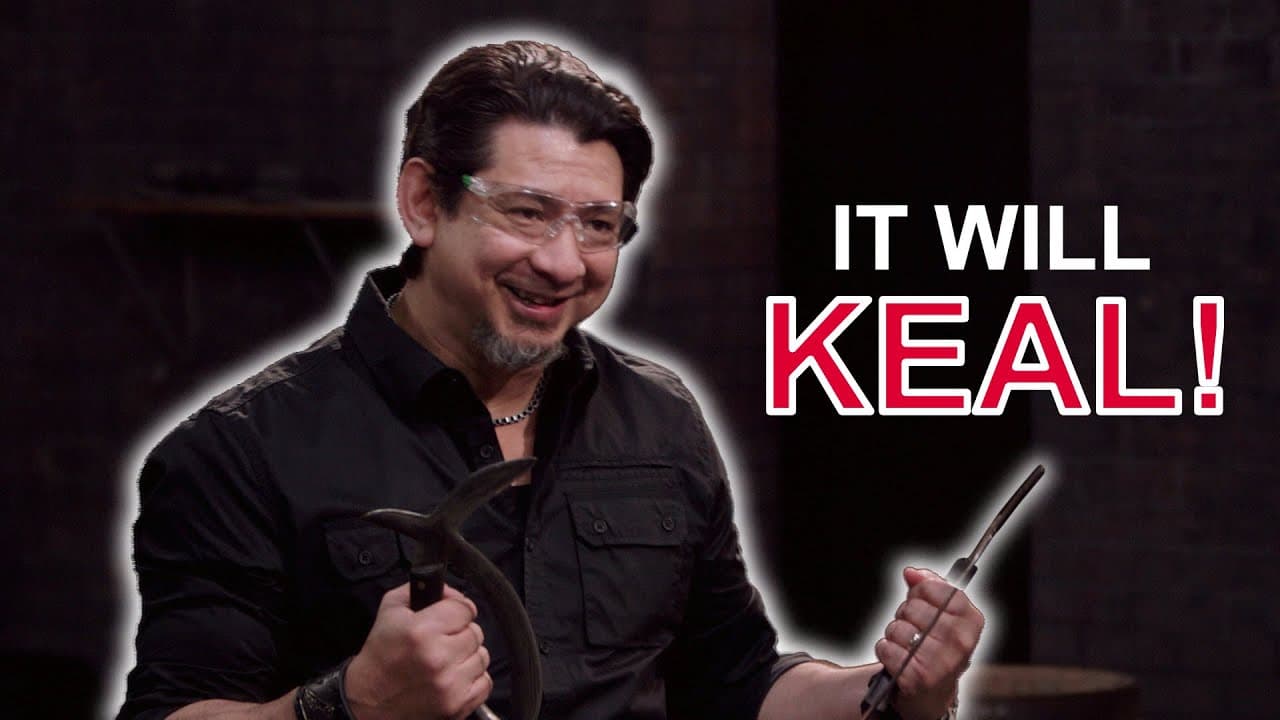
Forged in Fire Season 4: How Were Steve and Nick’s Deer Horn Knives Forged and Tested?
TL;DR
Deer horn knives are forged by shaping steel into a curved, double-bladed form, then heat-treating, grinding, handling, and sharpening each weapon before testing it for lethality, sharpness, and strength. Steve and Nick had five days to create matching pairs, which survived staff strikes with 2,000 pounds of force. Nick won $10,000 because his knives paired strong performance with cleaner construction. Read on for the methods, tests, and deciding flaws.
Transcript
Steve, Nick, congratulations. The strength of your work, coupled with your competitors' failures to perform, have secured you both a place in the third round, where we will send you home to recreate an iconic blade from history. Are you ready to see what that weapon is? Yes, I am. Oh, yeah. Yeah. Your final challenge is deerhorn knives. Whoa. NARRA... Read More
Key Insights
- Deer horn knives are double-bladed weapons with four horn-shaped points, designed as extensions of the body for countering, disarming, slashing, and seizing an opponent while being wielded in both hands.
- The final challenge required Steve and Nick to recreate two deer horn knives within five days, forcing each bladesmith to reproduce an unfamiliar weapon whose many curves differed substantially from ordinary straight blades.
- Nick’s construction method used one piece of steel for strength, with a slit cut down the center of the bar so the handle and front blade could be spread into the weapon’s antler-like shape.
- Steve’s construction process used a butt weld to join separately cut crescents in a flat alignment, but a crack later appeared through both ends of one blade and forced him to restart on day five.
- Heat treatment was a critical stage because the unusual shape could warp during quenching, yet both smiths reported successful hardening without their weapons twisting or suffering visible warpage.
- The lethality test showed that both pairs could kill, with Steve’s tips supporting cuts and thrusts while Nick’s sharp blades and chosen angles produced deep lacerations in the pig carcass.
- The strength test applied a staff strike with 2,000 pounds of force to the center of each blade, and both pairs survived without visible edge rolling or other damage, while Nick’s weapons broke both staffs.
- Nick’s victory was decided by finishing quality rather than basic performance, because Steve’s weapons had incomplete handle scales, gaps, and visible marks left from cutting the steel open.
Install to Summarize YouTube Videos and Get Transcripts
Explore YouTube Video Summarizer or Get YouTube Transcript Extractor
Questions & Answers
Q: What are deer horn knives and how are they used?
Deer horn knives are double-bladed weapons unique to the 19th-century martial art Bagua Zhang. Used in both hands as extensions of the body, their four horn-shaped points support slashing, seizing, countering, and disarming techniques.
Q: How did Nick forge his deer horn knives?
Nick forged each deer horn knife from one piece of steel because he considered it the strongest method. He cut a slit down the center of a steel bar and spread the handle and front blade apart to form the antler-like shape, then hardened, ground, handled, and sharpened the weapons.
Q: How did Steve construct his deer horn knives?
Steve cut the crescent-shaped pieces apart and joined them flat with a butt weld so the edges would align. After successfully hardening the unusual shapes without warping, he ground the bevels but discovered a major crack in one blade.
Q: Why did Steve have to restart his deer horn knives?
Steve found a crack running through both ends of one blade while grinding its bevels after heat treatment. Unable to save it, he restarted on day five and faced roughly three days of work in 10 hours.
Q: How were the deer horn knives tested for lethality?
The lethality test used multiple slashes and thrusts against a pig carcass. Steve’s points cut and thrust effectively, while Nick’s sharp blades and angles produced deep lacerations; both weapons were judged capable of killing.
Q: How was the sharpness of the deer horn knives evaluated?
The judges delivered multiple slashes and stabs into a ballistic bag fitted with two poles that simulated blocks or blows from pole weapons. Steve’s points made clean lacerations, while Nick’s penetrated deeply and lacerated outward; both pairs were judged capable of cutting.
Q: How strong were the finished deer horn knives?
Each knife was clamped into a contraption and struck once at its center by a staff with 2,000 pounds of force. Steve’s pair showed no visible damage or edge rolling, while Nick’s knives broke both staffs, remained undamaged, and stayed razor-sharp.
Q: Why did Nick win the Forged in Fire deer horn knife challenge?
Nick won the competition and $10,000 because his pair performed well and had cleaner overall construction. Steve’s knives were lethal, sharp, and strong, but their incomplete handle scales, gaps, and visible cutting marks separated them from Nick’s more finished pair.
Summary & Key Takeaways
-
Steve and Nick received five days at home to recreate pairs of deer horn knives, double-bladed weapons associated with the 19th-century martial art Bagua Zhang. Their curved, horn-shaped geometry presented an unfamiliar challenge that required careful forging, heat treatment, grinding, sharpening, and handle construction across two matching weapons.
-
The smiths followed different construction paths while managing serious risks. Nick forged from one piece of steel by cutting and spreading a bar, while Steve used a butt weld. Both achieved successful hardening without warping, but Steve discovered a major crack and had to restart with only one day remaining.
-
Both completed pairs passed lethality, sharpness, and strength tests. Their points cut and penetrated the targets, and neither pair suffered visible damage under staff impacts delivered with 2,000 pounds of force. Nick ultimately won because his finished handles and overall construction were cleaner than Steve’s rushed, incomplete work.
Read in Other Languages (beta)
Share This Summary 📚
Summarize YouTube Videos and Get Video Transcripts with 1-Click
Try YouTube Summary with ChatGPT & Claude or YouTube Transcript Generator
Explore More Summaries from HISTORY 📚





Summarize YouTube Videos and Get Video Transcripts with 1-Click
Try YouTube Summary with ChatGPT & Claude or YouTube Transcript Generator