How to Skip Rocks: The Physics of Speed, Spin, and the 20-Degree Angle
TL;DR
To skip a rock more times, throw a flat, lightweight stone fast, add stabilizing spin, and aim for a 20-degree angle to the water. Water pushes the moving stone upward, while ripples, drag, wind, and waves drain its momentum; although 88 skips has been achieved and an expert suggested more than 300 may be possible, real conditions make that extremely difficult. Read on for the physics and its connection to Orion’s re-entry.
Transcript
Thanks to Brilliant for supporting this SciShow video! As a SciShow viewer, you can keep building your STEM skills with a 30 day free trial and 20% off an annual premium subscription at Brilliant.org/SciShow. The world-record holder at skipping rocks kinda sucks at skipping rocks. So do you, and so does everybody. Not to come screaming in with ... Read More
Key Insights
- 🐎 The physics of skipping stones involve speed, angles, and rotation to maintain momentum and stability.
- 👻 Forces exerted by the water on the stone allow it to skip, while also creating drag that slows its momentum.
- 🖐️ Stone shape, environmental conditions, and the physics of spin and angle play crucial roles in the number of skips achieved.
- 🥵 Applying skipping stone physics to spacecraft re-entry has enabled more accurate landings, reduced heat and speed, and improved crew safety.
- ✋ Factors like stone shape and environmental conditions make achieving a high number of skips difficult in practice.
- 👾 Understanding the physics of skipping stones has broader applications beyond recreational activities, contributing to advancements in space exploration and re-entry techniques.
- 💨 Researchers continue to explore ways to maximize the number of skips by overcoming various forces and factors.
Install to Summarize YouTube Videos and Get Transcripts
Explore YouTube Video Summarizer or Get YouTube Transcript Extractor
Questions & Answers
Q: How do you skip rocks successfully?
Choose a flat, lightweight stone, throw it fast, and give it spin by placing your forefinger on its leading edge. Aim for a 20-degree angle to the water so the stone loses less energy and keeps skipping longer.
Q: What is the best angle for skipping a rock?
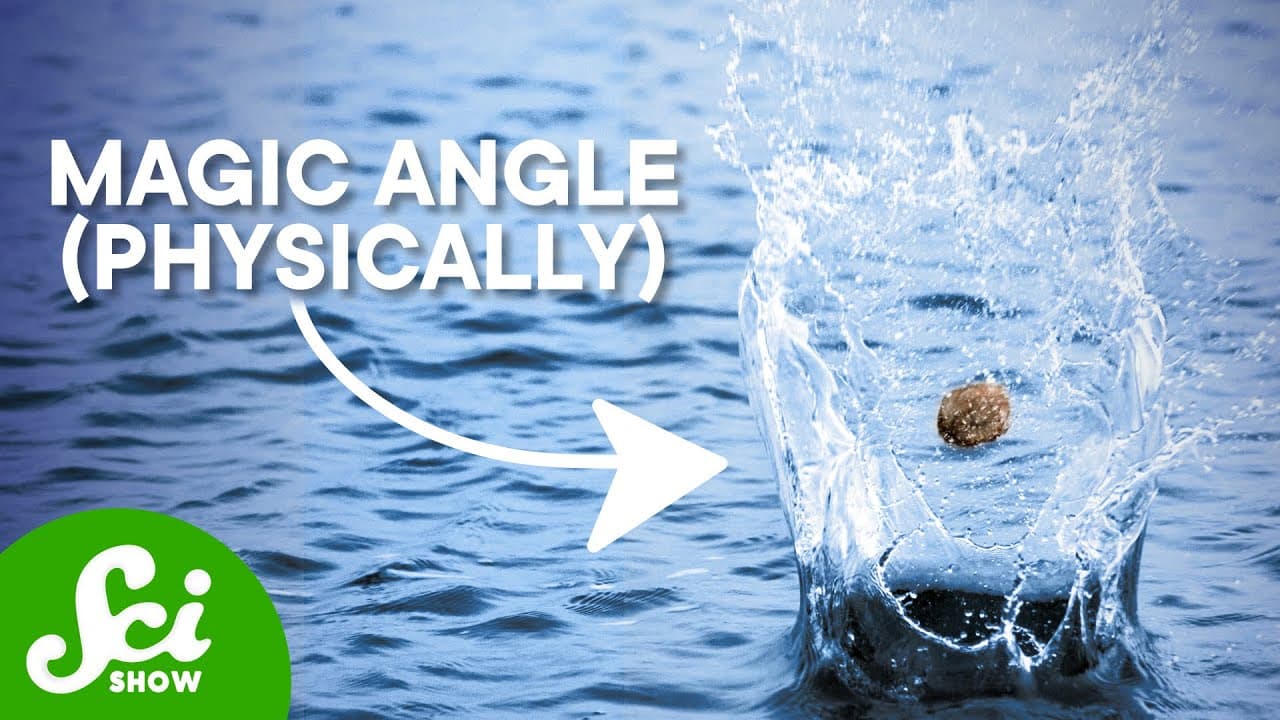
A 2004 Nature paper identified 20 degrees to the water as the magic angle. The researchers found that this angle minimizes energy loss and maximizes the number of skips.
Q: Why does a rock skip instead of sinking immediately?
When the moving stone collides with the water, the water pushes upward and causes it to skip. The stone must have enough momentum to continue after contact, and the upward force must be greater than the stone’s weight or it will sink.
Q: Why does a skipping rock need to spin?
Rotation stabilizes the stone while it travels through the air. You create that spin by holding the stone with your forefinger on its leading edge as you throw.
Q: Why does a rock eventually stop skipping?
Each collision creates ripples and adds resistance, reducing the stone’s momentum. Its skips become more frequent and shorter until it no longer has enough energy to continue.
Q: Why is achieving more than 88 skips so difficult?
The throw requires speed, spin, accuracy, and the correct angle at the same time. Natural stones are not perfectly flat and round, while wind and waves introduce additional forces that simplified models often neglect.
Q: Could a rock theoretically skip more than 300 times?
An expert cited in the transcript suggested that more than 300 skips should be possible. In practice, uncontrolled stone shapes, wind, waves, and the required power and precision make totals far beyond 88 unlikely without a controlled environment and possibly a robot.
Q: How did rock-skipping physics influence NASA’s Orion spacecraft?
During its return in December 2022, Orion dipped in and out of Earth’s atmosphere before re-entry, changing its trajectory much like a skipping maneuver. This helped it land more accurately, slow down, and reduce heat generated during its high-speed entrance.
Summary & Key Takeaways
-
Skipping stones involves speed, angles, and rotation, with the stone needing enough momentum to continue skipping after making contact with the water.
-
The stone experiences forces from the water, which push it up and create ripples, slowing its momentum.
-
Achieving a high number of skips is challenging due to the need for speed, accuracy, finding the perfect stone, and accounting for factors like wind and waves.
Read in Other Languages (beta)
Share This Summary 📚
Summarize YouTube Videos and Get Video Transcripts with 1-Click
Try YouTube Summary with ChatGPT & Claude or YouTube Transcript Generator
Explore More Summaries from SciShow 📚

Summarize YouTube Videos and Get Video Transcripts with 1-Click
Try YouTube Summary with ChatGPT & Claude or YouTube Transcript Generator