How Do Upside-Down Jellies Sting Without Touching?
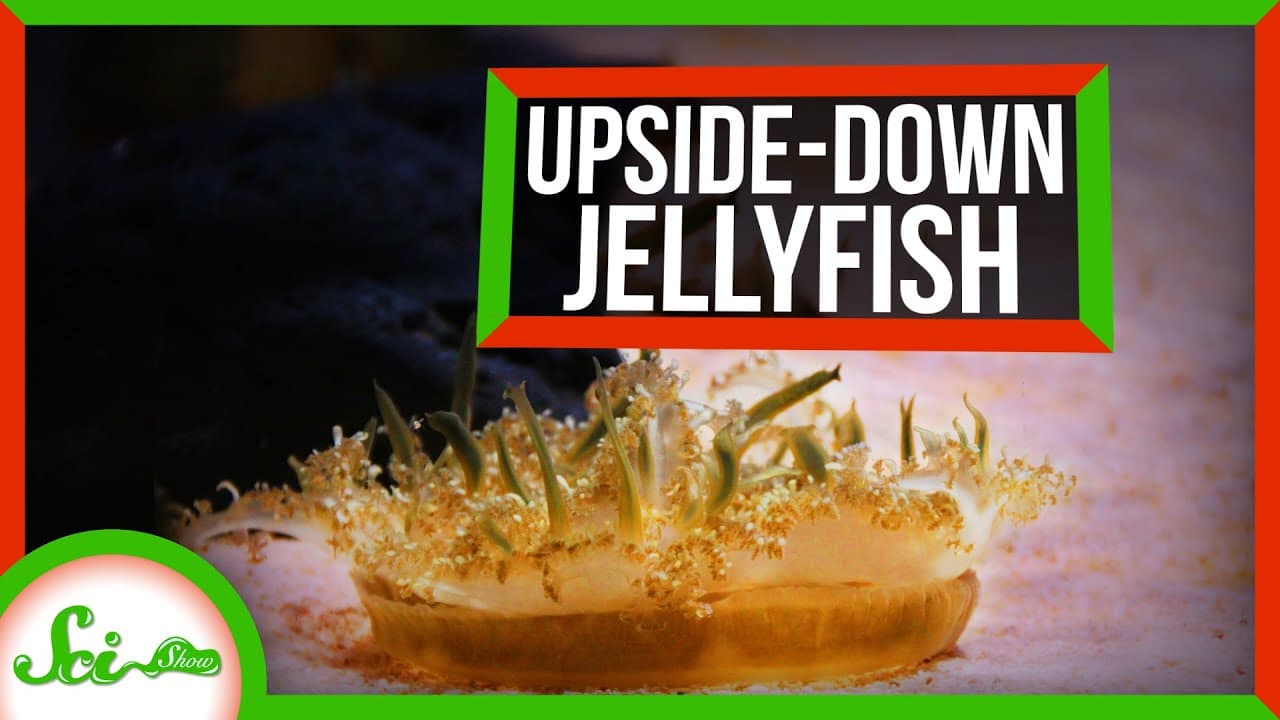
TL;DR
Upside-down jellies, known as Cassiopea xamachana, can sting without direct contact by releasing tiny structures called cassiosomes from their mucus. These cassiosomes contain stinging cells and can swim to kill small prey like brine shrimp, allowing the jelly to feed from a distance. This long-range stinging capability explains reports of 'stinging water' experienced by swimmers nearby.
Transcript
[♩INTRO] I don’t think you’re ready for this jelly. Sure, it looks kind of unassuming, what with it’s strange habit of hanging out, wrong-way up on the seafloor. But it can sting you without actually touching you. That’s all thanks to the stinging snot rockets it launches into the water above. Yes, I said stinging snot rockets. I told you you weren... Read More
Key Insights
- 🙃 The upside-down jelly, Cassiopea xamachana, anchors itself using its bell and relies on symbiotic algae for nutrition.
- 👻 It possesses stinging cells called nematocysts that allow it to catch prey.
- 🧡 Cassiosomes, swimming structures found in the jelly's mucus, act as long-range weapons to kill prey.
- 💦 The presence of cassiosomes in the mucus explains the phenomenon of stinging water reported by swimmers.
- 🪼 Other species of jellies related to the upside-down jelly also possess cassiosomes.
- ❓ Cassiosomes are believed to have evolved in the Rhizostomeae lineage to provide extra firepower.
- 🪼 Upside-down jellies are part of the most diverse order of true jellies.
Install to Summarize YouTube Videos and Get Transcripts
Explore YouTube Video Summarizer or Get YouTube Transcript Extractor
Questions & Answers
Q: How does the upside-down jelly anchor itself to the seafloor?
The jelly uses its bell as a suction cup to attach itself to the bottom, similar to a sea anemone.
Q: What role do the symbiotic algae play in the upside-down jelly's life?
The algae, called zooxanthellae, provide food for the jelly through photosynthesis and receive a safe habitat in return.
Q: How do the stingers of the upside-down jelly help it catch prey?
The jelly can send stinging cells called nematocysts towards its prey, such as brine shrimp, immobilizing them for consumption.
Q: What are cassiosomes, and how are they used by the upside-down jelly?
Cassiosomes are tiny structures found in the jelly's mucus that contain stinging cells and are used as a long-range weapon to kill prey. They are released into the water to create a cloud of stinging snot rockets.
Summary & Key Takeaways
-
The upside-down jelly anchors itself to the seafloor using its bell and relies on symbiotic algae for food.
-
It possesses potent stinging cells called nematocysts that it uses to catch small critters like brine shrimp.
-
Scientists discovered the presence of tiny structures called cassiosomes in the jelly's mucus, which act as long-range weapons to kill prey.
Read in Other Languages (beta)
Share This Summary 📚
Summarize YouTube Videos and Get Video Transcripts with 1-Click
Try YouTube Summary with ChatGPT & Claude or YouTube Transcript Generator
Explore More Summaries from SciShow 📚


Summarize YouTube Videos and Get Video Transcripts with 1-Click
Try YouTube Summary with ChatGPT & Claude or YouTube Transcript Generator