Why Do Tigers Attack Humans but Never Eat Them?
TL;DR
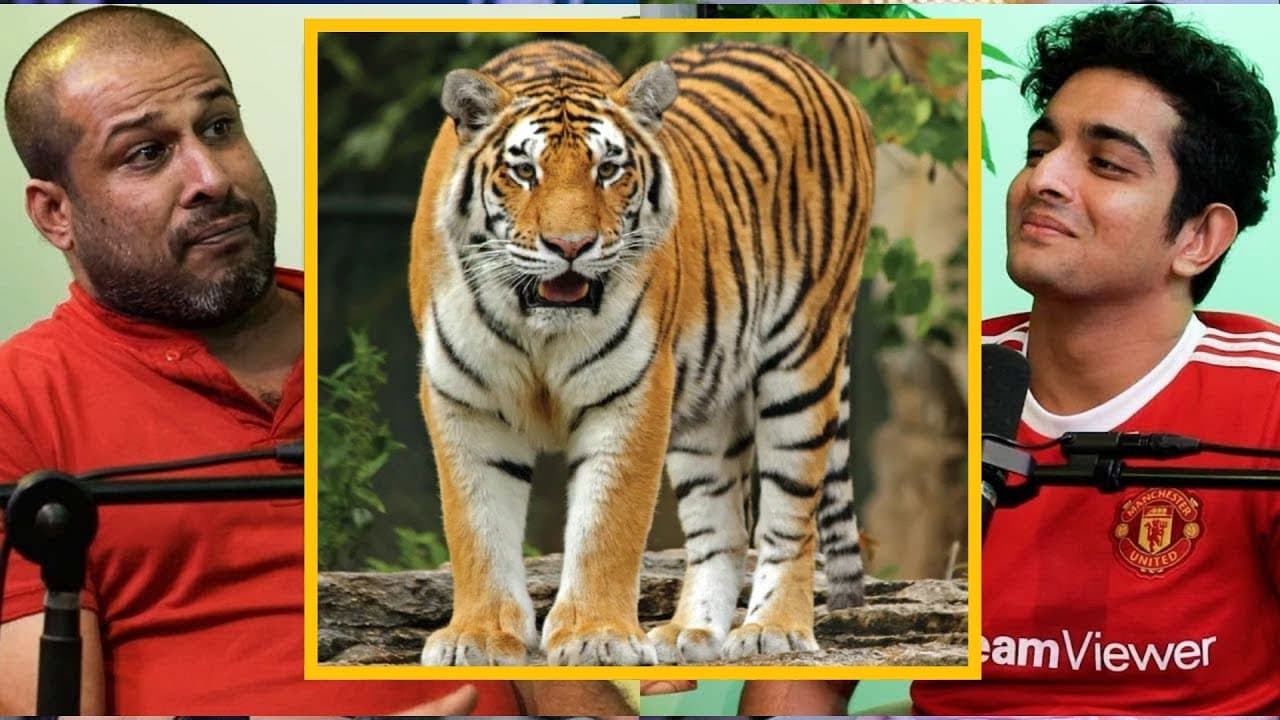
Tigers typically attack humans out of surprise or mistaken identity, but they rarely consume their victims. Genetic instincts and evolutionary history suggest that tigers have developed a fear of humans and prefer larger prey, making human flesh unappealing. Most attacks are labeled as conflict-related incidents rather than man-eating behavior.
Transcript
welcome to trs clips india's fastest learning portal make sure you subscribe make sure you hit that bell icon what's the closest encounter to a tiger that you had and just be candid about this oh dude very close what had happened like once we but i i was helping the forest department track a conflict tiger the tiger killed like seven people man-eat... Read More
Key Insights
- 🐯 Most tiger attacks do not involve consumption of the human victim, redefining the narrative around "man-eating" tigers.
- 😨 The evolution of human beings has impacted the behavior of large predators, instilling a fear of humans in species like tigers and lions.
- 👊 Tiger attacks often occur due to circumstances where humans appear as unexpected threats or potential prey to these predators.
- 🥺 Misunderstanding tiger behavior can lead to rural communities feeling unjustly threatened by wildlife, emphasizing the need for education on animal behavior.
- 🐯 The idea of hunting large prey like deer is fundamental to a tiger's dietary requirements, making humans an unappealing target.
- 🐯 The dynamics of wilderness encounters suggest that tigers tend to avoid human contact, furthering their role as elusive apex predators.
- ⌛ Evolutionary pressures have transformed both prey and predator behaviors over time, demonstrating a delicate balance within ecosystems.
Install to Summarize YouTube Videos and Get Transcripts
Explore YouTube Video Summarizer or Get YouTube Transcript Extractor
Questions & Answers
Q: What is the difference between a "man-eating tiger" and a "conflict tiger"?
A "man-eating tiger" suggests that a tiger actively seeks out humans for food, which is a misconception. In reality, the majority of attacks are classified as "conflict tigers." This term refers to situations where a tiger kills a human, often due to misjudgment or surprise. In most cases, the tiger does not consume the human, indicating that they do not see us as prey but may react defensively.
Q: Why don't tigers eat humans after killing them?
The primary reason tigers typically do not eat humans after an attack is related to their dietary habits and preferences. Tigers usually hunt large prey, like deer or wild boars, which provide a significant amount of meat. Humans offer little nutritional value compared to animals like sambar deer, as the account suggests that a human's muscle tissue is not as appealing or substantial as the prey tigers normally hunt.
Q: How do mistaken identities contribute to tiger attacks on humans?
Mistaken identity plays a significant role in human-tiger conflicts. When humans crouch down to pick forest produce, they may resemble the silhouette of a langur, a common prey of tigers. This momentary confusion can lead to an unexpected attack, as the tiger reacts instinctively to what it perceives as a threat or potential prey rather than targeting humans deliberately.
Q: What lessons do tigers and lions potentially learn from their encounters with humans?
Tigers and lions might instinctively associate humans with danger due to their evolutionary history and encounters with humans as they became dominant hunters. Over generations, big cats likely developed an innate fear of humans, helping them avoid conflict. This instinctual behavior is reflected in their tendency to steer clear of humans whenever possible.
Summary & Key Takeaways
-
The speaker shares a close encounter with a tiger, emphasizing that most tiger attacks on humans do not result in consumption, labeling them as conflict-related incidents instead.
-
The discussion includes the reasons why tigers might attack humans, such as startled reactions or mistaken identity, particularly when humans resemble tiger prey in certain positions.
-
The conversation also touches on the evolutionary history of tigers and their development of a fear of humans, highlighting how human evolution has affected the dynamics of predator and prey relationships.
Read in Other Languages (beta)
Share This Summary 📚
Summarize YouTube Videos and Get Video Transcripts with 1-Click
Try YouTube Summary with ChatGPT & Claude or YouTube Transcript Generator
Explore More Summaries from TRS Clips 📚





Summarize YouTube Videos and Get Video Transcripts with 1-Click
Try YouTube Summary with ChatGPT & Claude or YouTube Transcript Generator