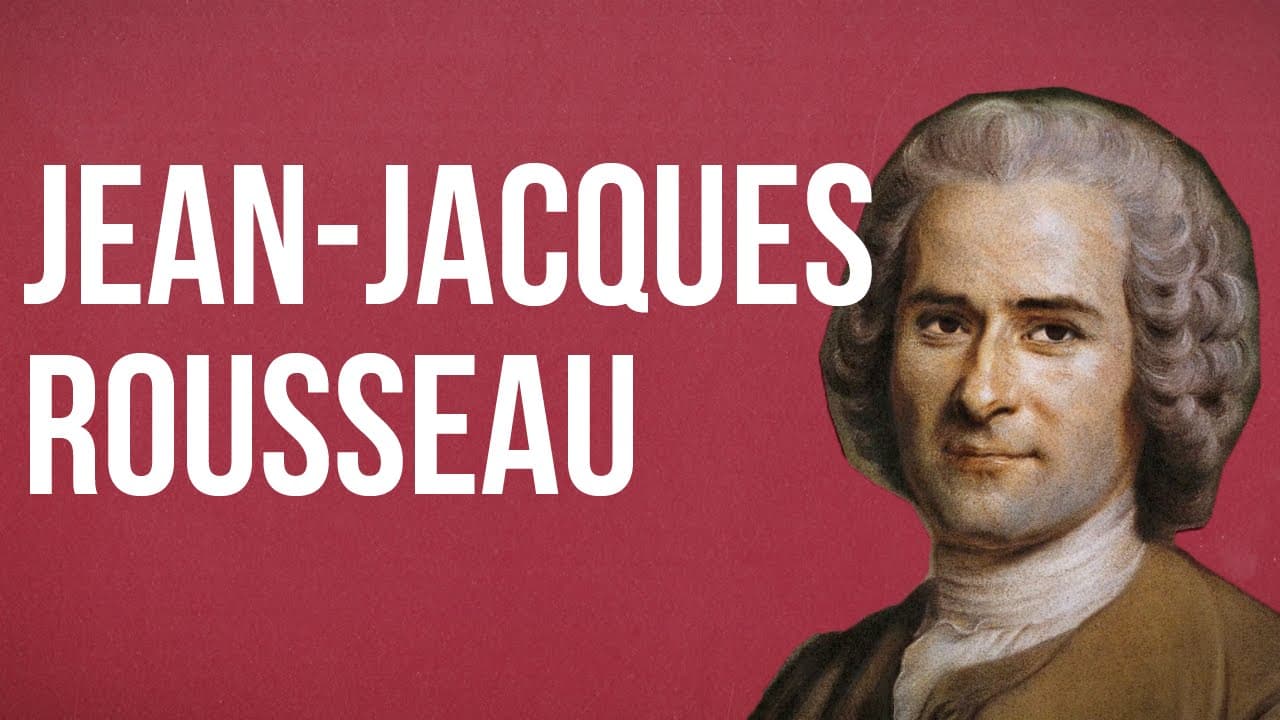
What Did Rousseau Mean by Civilisation Corrupts?
TL;DR
Rousseau argued that humans are innately good in the 'state of nature' and that civilisation breeds corruption and vice. He identified 'amour-propre', a harmful self-love driven by societal comparisons, as a key factor in moral decline, contrasting it with the innocence of natural living. His ideas on child-centred education and the power of genuine emotions continue to influence modern thought.
Transcript
Modern life is deeply attracted to the idea of progress in the 18th century as European societies became ever richer and more technological, the conventional view was that mankind was firmly set on a positive trajectory from savagery and ignorance toward prosperity and civilization. But there was at least one eighteen century philosopher who violen... Read More
Key Insights
- 🥺 Rousseau's critique of civilization suggests that technological progress may lead to moral degradation rather than improvement.
- 🛟 His concept of the "state of nature" serves as a philosophical ideal contrasting contemporary societal norms and behaviors.
- 🤳 The notion of "amour-propre" reveals how societal pressures can distort authentic self-identity and moral values.
- 👶 Rousseau pioneered child-centered education, recognizing the importance of preserving children's innate goodness from corruptive societal influences.
- 🖐️ His reflections on emotional experiences in his autobiographical writings laid the groundwork for modern self-exploration literature.
- ❓ Rousseau's advocacy for breastfeeding not only connected to his educational theories but also highlighted societal progress concerning motherhood and childrearing practices.
- ❓ His romantic portrayal of intense feelings and individual experiences emphasized the worth of personal emotions over social conventions or material success.
Install to Summarize YouTube Videos and Get Transcripts
Explore YouTube Video Summarizer or Get YouTube Transcript Extractor
Questions & Answers
Q: What is Rousseau's main thesis regarding civilization and morality?
Rousseau's main thesis is that civilization does not enhance human morality; rather, it corrupts it. He believed that as people transitioned from the "state of nature" to organized societies, they lost their innate goodness and became vulnerable to pride and envy, which eroded their moral fabric.
Q: How did Rousseau's early life experiences influence his philosophical outlook?
Rousseau experienced instability and isolation from a young age, beginning with his family's flight from Geneva. His exposure to the opulence in Paris contrasted sharply with his humble beginnings, leading him to question societal values and the impact of wealth and luxury on human character, shaping his skepticism towards civilization.
Q: What is "amour-propre," and how does it fit into Rousseau's critique?
"Amour-propre" is Rousseau's term for a self-love that emerges from societal comparison, fostering jealousy, pride, and vanity. He argued that this unhealthy form of self-love developed in urban environments and contributed to the moral decline of individuals, as they began to define themselves by status and possessions rather than personal values.
Q: In what ways did Rousseau influence modern education?
Rousseau's belief in the inherent goodness of children led him to advocate for child-centered education in his work "Émile." He proposed that children should be nurtured in ways that prevent societal corruption, emphasizing nature and play. This perspective reshaped educational practices, encouraging a holistic approach to child development even today.
Q: What role did the "noble savage" concept play in Rousseau's philosophy?
The "noble savage" concept reflects Rousseau's belief that pre-civilized humans lived in a state of innocence and moral clarity. He contrasted this with modern society, suggesting that technological and cultural advancements have distorted human nature, leading to moral decay and societal fragmentation.
Q: How did Rousseau's ideas contribute to the Romantic Movement?
Rousseau's emphasis on emotion, individual experience, and the innate goodness of humans established foundational ideas for the Romantic Movement. His rejection of Enlightenment rationalism prioritized feelings and personal connection over societal norms, inspiring artists and writers to value the primitive and emotional aspects of humanity.
Q: Why did Rousseau advocate for breastfeeding, and how did it reflect his philosophies?
Rousseau advocated for breastfeeding as a means to foster natural bonds between mothers and their children, believing it would awaken innate morals and sentiments in both. This idea not only highlighted the importance of nurturing but also demonstrated his overall philosophy that returning to natural practices promotes authentic human connection and morality.
Q: How did Rousseau's writings influence his legacy after his death?
Rousseau's writings gained prominence posthumously, influencing the French Revolution and inspiring numerous artists and thinkers. His ideas about individuality, emotional depth, and criticism of societal values continue to resonate, solidifying his status as a pivotal figure in philosophy and literature, particularly associated with Romantic ideals.
Summary & Key Takeaways
-
Jean-Jacques Rousseau posited that human beings were inherently good in a "state of nature," arguing that civilization induces corruption and vice.
-
He conceptualized "amour-propre," a destructive self-love driven by societal comparisons, which leads to vanity and loss of genuine self-identity.
-
Rousseau's work emphasized child-centered education and the natural goodness of children, influencing parenting and educational philosophies even in modern times.
Read in Other Languages (beta)
Share This Summary 📚
Summarize YouTube Videos and Get Video Transcripts with 1-Click
Try YouTube Summary with ChatGPT & Claude or YouTube Transcript Generator