How Does Schweitzer's Reagent Dissolve Cellulose?
TL;DR
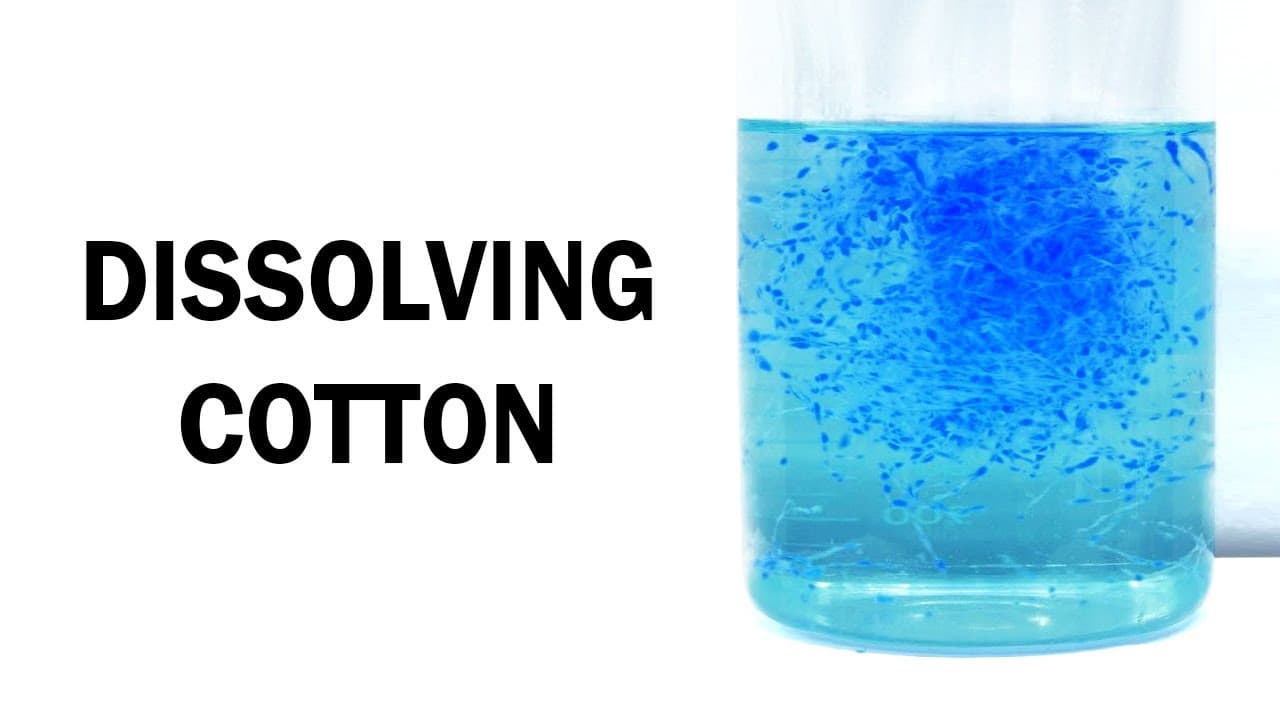
Schweitzer's reagent, a combination of copper hydroxide and ammonia, effectively dissolves cellulose, the key component in plant materials like cotton, paper, and sawdust. The dissolution process varies based on the cellulose source, with precipitated cellulose resulting from neutralizing the reagent with acid. This versatile method allows for the conversion of different cellulose forms into a viscous solution.
Transcript
cellulose is the world's most abundant organic polymer and it is the main structural component of most plant cells it's used to make a lot of things that we use daily like clothing paper and even cellophane wrap the polymer of cellulose is a long string of individual d-glucose units on its own glucose is normally very easy to digest but the way tha... Read More
Key Insights
- 🌱 Cellulose is the most abundant organic polymer and is found in plant cells.
- 💄 The polymer structure of cellulose makes it difficult for mammals to digest.
- ❓ Schweitzer's reagent, made from copper hydroxide and ammonia, can dissolve cellulose.
- 🏮 Different sources of cellulose, like cotton, paper, clothing, and sawdust, can be dissolved using Schweitzer's reagent.
- ❓ Neutralizing Schweitzer's reagent results in precipitated cellulose.
- 🛩️ Dissolved cellulose from various sources can have different characteristics, such as long fibers or smaller particles.
- ⌛ The dissolution process can vary in time and efficacy depending on the source of cellulose.
Install to Summarize YouTube Videos and Get Transcripts
Explore YouTube Video Summarizer or Get YouTube Transcript Extractor
Questions & Answers
Q: What is cellulose, and why is it difficult for mammals to digest?
Cellulose is an organic polymer found in plant cells and is the main structural component of plants. It is difficult for mammals to digest because of the way glucose units are connected in its polymer structure, making it hard to break down.
Q: What is Schweitzer's reagent, and how is it made?
Schweitzer's reagent is a complex formed between copper hydroxide and ammonia. To make it, copper hydroxide and aqueous ammonia are mixed together in water. The resulting solution can dissolve cellulose.
Q: Can different sources of cellulose be dissolved using Schweitzer's reagent?
Yes, various sources of cellulose like cotton, paper, clothing, and sawdust can be dissolved using Schweitzer's reagent. However, the dissolution process may vary in terms of time and efficacy depending on the source.
Q: How is cellulose precipitated from the dissolved solution of Schweitzer's reagent?
Cellulose is precipitated by introducing the cellulose-containing solution into a dilute acid solution, such as hydrochloric acid, nitric acid, or sulfuric acid. The acid reacts with the ammonia in Schweitzer's reagent, causing the cellulose to precipitate.
Summary & Key Takeaways
-
Cellulose is a widely abundant organic polymer found in plant cells and is used to make various daily use items.
-
Cellulose is difficult for mammals to digest due to the way glucose units are connected in its polymer structure.
-
Schweitzer's reagent, made from copper hydroxide and ammonia, can dissolve cellulose, and different sources of cellulose like cotton, paper, clothing, and sawdust can be dissolved and precipitated using this reagent.
Read in Other Languages (beta)
Share This Summary 📚
Summarize YouTube Videos and Get Video Transcripts with 1-Click
Try YouTube Summary with ChatGPT & Claude or YouTube Transcript Generator
Explore More Summaries from NileRed 📚


Summarize YouTube Videos and Get Video Transcripts with 1-Click
Try YouTube Summary with ChatGPT & Claude or YouTube Transcript Generator