Behold—Poisonous Snakes! (Yes, You Read That Right)
TL;DR
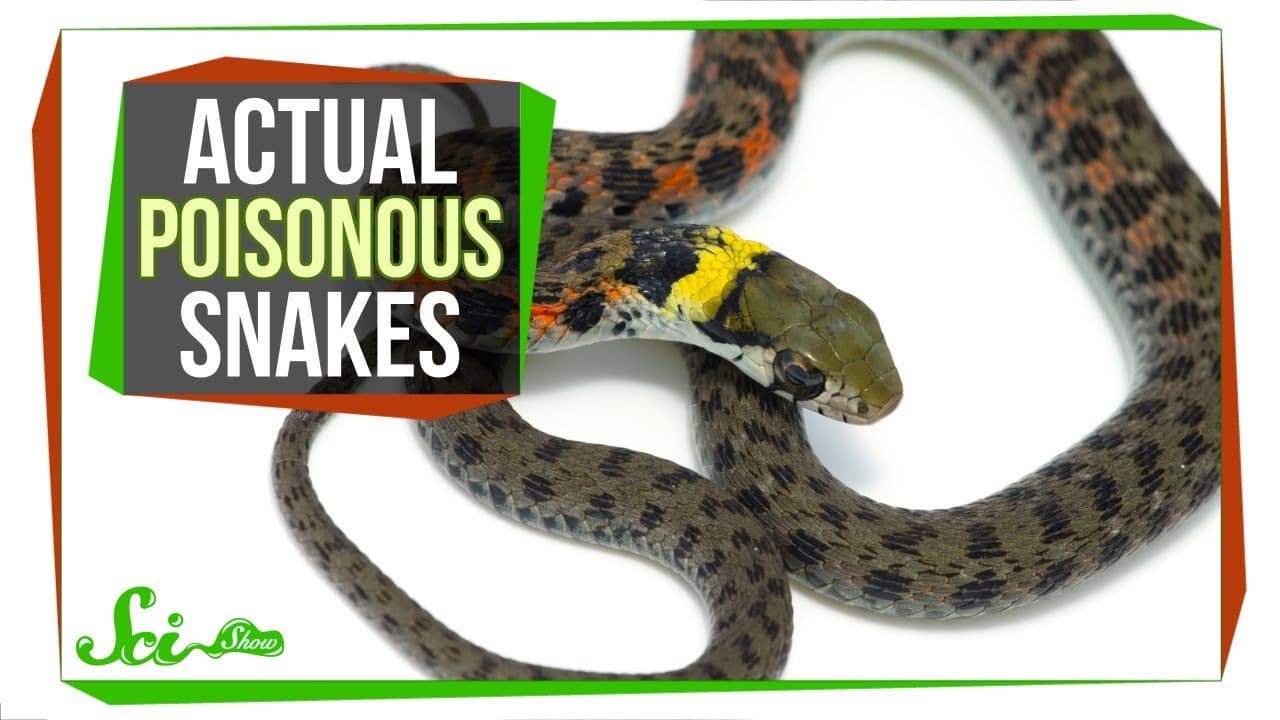
The tiger keelback snake possesses both venom and poison, making it a unique and deadly predator.
Transcript
[♪ INTRO] If you’ve ever called snakes “poisonous” around a herpetologist or, you know, that friend of yours, you know which one I mean, there’s a good chance you’ll receive a lecture about the difference between venoms and poisons. And it’s true that most snakes aren’t considered poisonous. But nature loves an exception. Meet the tiger keelback. T... Read More
Key Insights
- 💀 Venom and poison have distinct differences, with venom being actively injected and poison being passively ingested or absorbed.
- 💀 Tiger keelbacks possess both venom and poison, making them a unique snake species.
- 😒 The tiger keelback primarily uses venom for hunting prey, but can also defend itself with a stinky, toxic pus.
- 💀 The snake's poison is obtained from toxic toads and can be passed along to offspring.
- 🐍 Other snake species may possess similar poisons or toxins from consuming poisonous prey. Further research is needed to explore the potential toxicity in other snake species.
- 🐯 Snake bites from tiger keelbacks can be dangerous to humans, but timely administration of antivenom is usually effective.
- 🐍 Snakes generally prefer to avoid confrontation with humans and reserve their venom for prey.
Install to Summarize YouTube Videos and Get Transcripts
Explore YouTube Video Summarizer or Get YouTube Transcript Extractor
Questions & Answers
Q: What is the difference between venom and poison?
Venom is actively injected into the body, while poison is passively ingested or absorbed. Venom is used for offense, while poison is primarily for defense.
Q: How do tiger keelbacks use their venom?
Tiger keelbacks primarily use their venom to hunt and capture fish, tadpoles, frogs, and toads. They rarely bite humans but can cause hemorrhaging and excessive bleeding if they do.
Q: How do tiger keelbacks defend themselves without using venom?
Tiger keelbacks have nuchal glands on their necks that can release a stinky, toxic pus when pressure is applied. They can also assume an arched posture and swing their neck at attackers, known as a "neck butt."
Q: How do tiger keelbacks obtain their poison?
Tiger keelbacks obtain their poison by ingesting toxic toads. The toxins are either absorbed by the embryos through eggshells or passed along by the mother snake.
Summary & Key Takeaways
-
The tiger keelback snake has both venom and poison, which it uses for defense and hunting.
-
Venom is actively injected into prey or threats, while poison is passively ingested or absorbed.
-
Tiger keelbacks primarily use venom to capture fish, tadpoles, frogs, and toads. Snake bites can be dangerous for humans, but antivenom treatment is usually effective.
Read in Other Languages (beta)
Share This Summary 📚
Summarize YouTube Videos and Get Video Transcripts with 1-Click
Try YouTube Summary with ChatGPT & Claude or YouTube Transcript Generator
Explore More Summaries from SciShow 📚


Summarize YouTube Videos and Get Video Transcripts with 1-Click
Try YouTube Summary with ChatGPT & Claude or YouTube Transcript Generator