How to Start Programming with Python Online
TL;DR
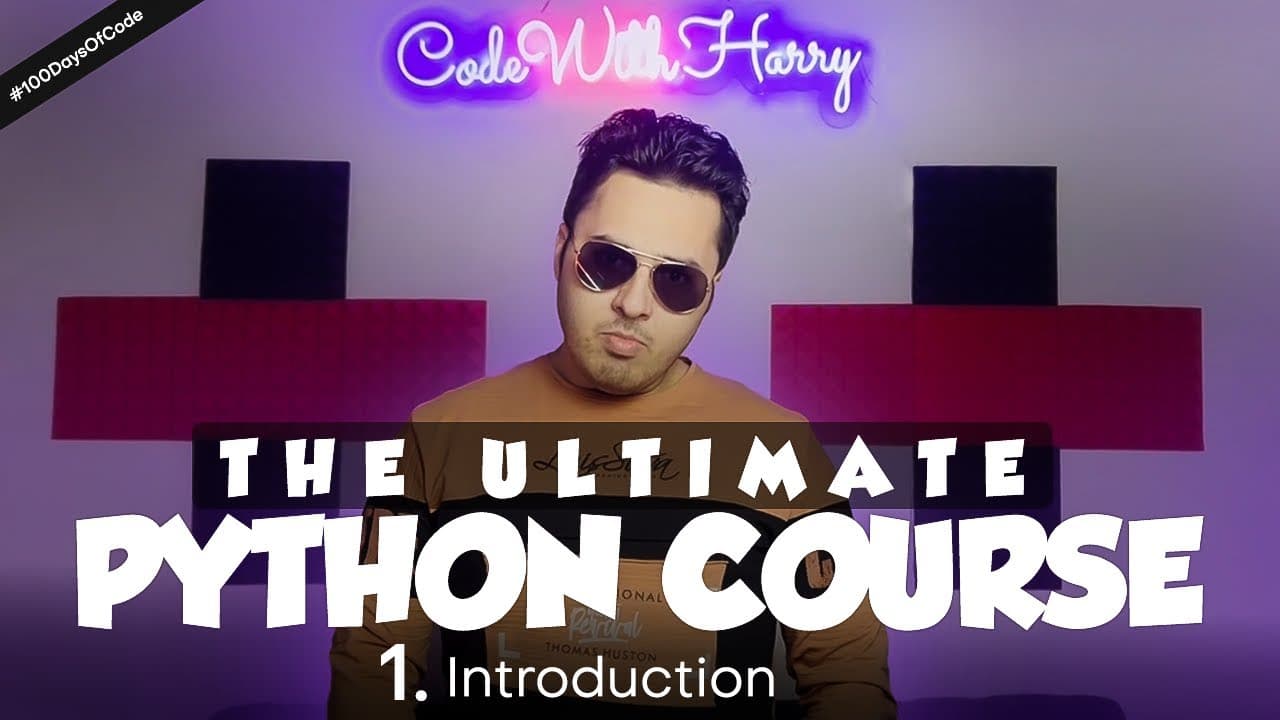
Programming tells computers what to do through languages such as Python. Beginners can start by installing Python from python.org or using Replit in a browser, then run simple statements such as print("Hello World"). Python is presented as a simple, open-source, platform-independent language with applications in databases, data science, machine learning, web development, and mathematical operations.
Transcript
Welcome to 100 days of code guys In 100 days of code, we are going to learn Python programming From zero to job ready Which means here if you gave your 100 days Dedicated 100 days So in byte sized lesson I will tell you Python programming We will take it from 0 to advance In start you will feel that, It is so easy. Python is a kid's game. And after... Read More
Key Insights
- Programming is a way to tell computers what to do by writing instructions in a programming language. It is particularly useful when tasks, such as multiplying large numbers, would take a person longer to complete than a computer.
- Python is presented as a dynamically typed, interpreted, high-level, general-purpose programming language. It supports both the object-oriented paradigm and a functional approach, although those concepts are reserved for later lessons in the course.
- Python development began when Guido van Rossum started working on the language in 1989. The transcript emphasizes that Python emerged over several years, which explains why dates including 1989, 1991, and 1992 may appear in discussions of its creation.
- Python's name is connected to Monty Python's Circus, a television show Guido van Rossum was watching while working on the language. According to the lesson, the language was named Python because of that show.
- Python is platform independent according to the lesson, meaning code written on Windows, macOS, or Linux can be run on another supported platform. The instructor also describes Python as open source, so users do not need to pay to use it.
- Python has extensive library support created through the work of many programmers. Existing libraries can let someone reuse work that may have taken another developer a long time, while community sites such as Stack Overflow may help users find solutions to familiar errors.
- Python can be applied to databases, data science, machine learning, web applications, complex business applications, and mathematical operations. The lesson also says that Python can be integrated with other programming languages relatively easily.
- Replit is a collaborative, browser-based development environment that provides an online way to write and execute Python. Because execution occurs on Replit's servers, a learner with a slow computer can follow the course using only a browser tab.
Install to Summarize YouTube Videos and Get Transcripts
Explore YouTube Video Summarizer or Get YouTube Transcript Extractor
Questions & Answers
Q: What is programming and why is it useful?
Programming is a way to tell computers what to do by giving them instructions through a programming language. It becomes useful when a computer can perform a task faster than a person, such as multiplying very large numbers. Languages including Python, C, C++, and Java provide ways for people to communicate instructions to computers.
Q: What is Python according to this beginner lesson?
Python is described as a dynamically typed, interpreted, high-level, general-purpose programming language. It supports object-oriented programming as well as a functional approach. The lesson presents Python as especially simple to learn while also supporting serious work involving databases, data science, machine learning, web applications, complex business applications, and mathematical operations.
Q: Who created Python and when did its development begin?
Guido van Rossum created Python and began working on it in 1989. The lesson explains that the language was developed over a period of years rather than on a single date. This is why references to Python's creation may mention 1989, 1991, or 1992, although the course identifies 1989 as the starting point.
Q: Why is the programming language called Python?
The lesson says Guido van Rossum was watching a television show named Monty Python's Circus while he was working on the programming language. He decided to call the language Python after that show. The name therefore came from the program he was watching during development, according to the account provided in the transcript.
Q: How can a beginner install Python on a computer?
A beginner can visit python.org and download the available Python version for the computer's platform. The lesson shows this process on macOS and describes local installation as straightforward. Windows users are specifically advised to select the option that adds Python to the path variable, because otherwise Python might not work through the terminal.
Q: How can beginners write Python without installing it locally?
Beginners can use Replit, which the lesson describes as a collaborative, browser-based development environment. A user can create or open a Python repl, write code in a file such as main.py, run it, and view the output in the console. Since the code executes on Replit's servers, even a slow computer can be used through a browser tab.
Q: What is the Python REPL and how do you use it?
REPL stands for Read-Evaluate-Print Loop. The lesson demonstrates opening it from a terminal with the Python 3 command on macOS or Linux, then using Python interactively like a calculator. Commands can be entered and evaluated immediately. To leave the REPL, the user can enter exit. Replit's term repl is described as deriving from this name.
Q: What are the main features and uses of Python?
Python is presented as simple, platform independent, open source, and supported by a large collection of libraries. Code can be used across Windows, macOS, and Linux, and users do not need to pay for the language. The lesson identifies databases, data science, machine learning, web applications, complex business applications, and mathematical operations as Python application areas.
Summary & Key Takeaways
-
Programming provides a way to instruct computers to perform tasks, particularly calculations and operations that computers can complete faster than people. Different programming languages support this communication, including Python, C, C++, and Java. The course focuses exclusively on teaching Python gradually through short lessons, exercises, quizzes, challenges, and increasingly complex projects.
-
Python is introduced as a dynamically typed, interpreted, high-level, general-purpose language that supports object-oriented and functional programming. Guido van Rossum began working on it in 1989, with development continuing over several years. Its name came from the television show Monty Python's Circus rather than from the snake.
-
Beginners can install Python locally from python.org or write code online with Replit. Replit executes code on its servers, displays the output in a browser, and remains usable on slower computers. The first demonstration runs simple print statements, while the terminal demonstration introduces Python 3 and the Read-Evaluate-Print Loop.
Read in Other Languages (beta)
Share This Summary 📚
Summarize YouTube Videos and Get Video Transcripts with 1-Click
Try YouTube Summary with ChatGPT & Claude or YouTube Transcript Generator
Explore More Summaries from CodeWithHarry 📚

Summarize YouTube Videos and Get Video Transcripts with 1-Click
Try YouTube Summary with ChatGPT & Claude or YouTube Transcript Generator