Why Is Cancer So Difficult to Cure?
TL;DR
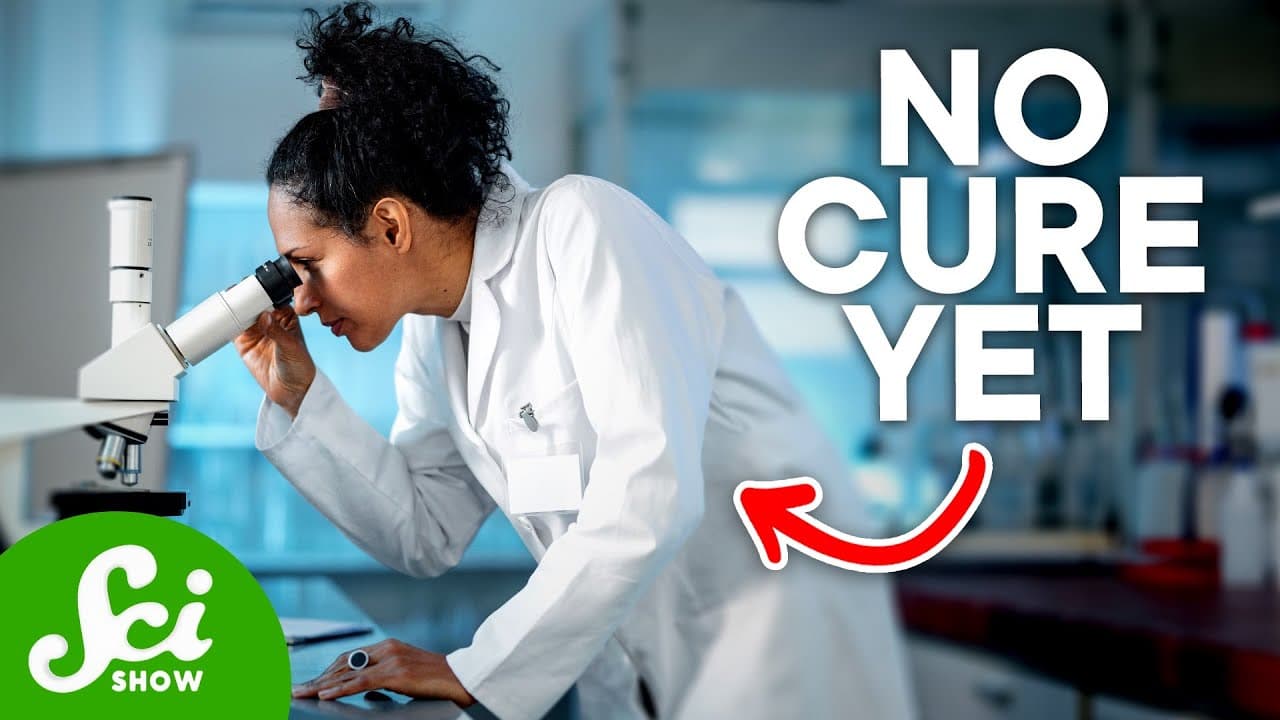
Cancer is challenging to cure because it is not a singular disease but a complex group of conditions caused by various genetic mutations. Each cancer type behaves uniquely, demanding personalized treatment strategies. Advances in genome sequencing show promise for developing tailored therapies, but inconsistencies in drug responses complicate the quest for effective treatments.
Transcript
According to the American Cancer Society, between one third and one half of the people in the United States will develop some form of cancer in their lifetimes. So scientists, doctors, and the many organizations that fund their research, are what you’d call “motivated” to find a cure. But... they haven’t found one, if you hadn’t heard. Plenty of dr... Read More
Key Insights
- 💅 Cancer is not a single disease but a diverse group of conditions, making it challenging to find a universal cure.
- 🖐️ Genetic mutations in oncogenes and tumor suppressor genes play a significant role in the development and progression of cancer.
- ♋ Chemotherapy and radiation treatments have limitations as they can damage healthy cells in addition to cancer cells.
- ♋ Advances in genome sequencing offer promising potential for personalized cancer treatments.
- 🪡 The complexity of testing and dosing in personalized medicine for cancer treatment needs to be further refined.
- 😒 Researchers are working on developing more effective ways to test and use personalized cancer treatments.
Install to Summarize YouTube Videos and Get Transcripts
Explore YouTube Video Summarizer or Get YouTube Transcript Extractor
Questions & Answers
Q: Why hasn't a cure for cancer been found yet?
Cancer is not a single disease, but rather a range of different conditions with unique genetic mutations, making it challenging to find a universal cure.
Q: How do mutations in oncogenes and tumor suppressor genes contribute to cancer?
Oncogenes, which code for proteins that signal cell growth, can become mutated and continuously stimulate cell division. Tumor suppressor genes, on the other hand, normally restrain cell growth, but mutations can lead to uncontrolled growth.
Q: Why do chemotherapy and radiation target healthy cells as well as cancer cells?
Chemotherapy and radiation target rapidly dividing cells, which includes both cancer cells and healthy cells, leading to side effects such as hair loss and digestive symptoms.
Q: How is genome sequencing being used in cancer treatment?
Genome sequencing allows scientists to identify genetic mutations in cancer cells, enabling the development of personalized treatments based on the specific mutations present.
Summary & Key Takeaways
-
Cancer is not a single disease but a collection of various conditions that share the common characteristic of uncontrolled cell division.
-
Each cancer is unique, developing differently and originating in different types of tissue due to different sets of genetic mutations.
-
Mutations in oncogenes and tumor suppressor genes play a significant role in the development and progression of cancer.
Read in Other Languages (beta)
Share This Summary 📚
Summarize YouTube Videos and Get Video Transcripts with 1-Click
Try YouTube Summary with ChatGPT & Claude or YouTube Transcript Generator
Explore More Summaries from SciShow 📚


Summarize YouTube Videos and Get Video Transcripts with 1-Click
Try YouTube Summary with ChatGPT & Claude or YouTube Transcript Generator