How Pagan Was Medieval Britain?
TL;DR
Medieval Britain was far less pagan than many 20th-century scholars claimed: later research found little evidence that genuine pagan worship survived after conversion to Christianity. Witch-trial records did not reveal a hidden pagan fertility religion, while church carvings, May Day figures, and the Green Man pub sign had been misinterpreted. Read on to see how influential theories about secret pagans and pagan imagery were dismantled.
Transcript
foreign good evening everybody I have posed a question in the title of my talk and for most of the 20th century the answer to that question given by most experts would have been a resounding affirmative it was generally accepted that ancient paganism in some form had survived in Britain long after its official conversion to Christianity there was S... Read More
Key Insights
- 🖤 The belief in the survival of paganism in medieval Britain was largely based on misinterpretation and a lack of solid research.
- 🤘 The association of medieval carvings, Mayday processions, and the "Green Man" pub sign with pagan gods has been debunked through further research.
- 🎆 The parallel features of pagan worship, such as polytheism, seasonal festivals, saints, and sacrificial rituals, were reproduced in medieval Christianity, making paganism unnecessary.
- 🥺 The Protestant Reformation and Catholic counter-reformation aimed to remove pagan parallels and establish a more orthodox and uniform Christian faith, leading to religious pluralism and struggles for religious control.
- ❓ The pagan origins of unique saints in Cornwall can be attributed to the influence of Welsh missionaries during the early Middle Ages.
- 🖤 Claims of connections between churches and pagan locations, such as yew trees, are based on folklore and lack solid evidence.
Install to Summarize YouTube Videos and Get Transcripts
Explore YouTube Video Summarizer or Get YouTube Transcript Extractor
Questions & Answers
Q: How pagan was medieval Britain?
The evidence for genuine pagan worship surviving in medieval Britain is tenuous at best. Although many 20th-century experts believed that paganism persisted after official conversion, research emerging from the late 1970s and 1990s undermined the major claims supporting that view.
Q: Why did scholars believe paganism survived in medieval Britain?
Some scholars argued that Christian aristocrats ruled over secretly pagan commoners, while others thought Christianity and paganism coexisted throughout society. In the 1920s, Jeffrey Colton described English peasants as “cheerful semi pagans” who attended Christian services but supposedly venerated older deities at home.
Q: Did witch-trial records prove that a pagan religion survived?
No. Widespread research into witch-trial records across Europe and its colonies found that the people prosecuted for witchcraft were not practitioners of a surviving pagan religion, although ancient ideas contributed to some beliefs behind the trials.
Q: What did Margaret Murray claim about witches?
Margaret Murray argued that people persecuted in early modern witch trials practiced a surviving pagan fertility religion. Her early-20th-century books made this interpretation influential, but later examination of trial records caused the theory to collapse.
Q: Were medieval Green Man carvings evidence of pagan worship?
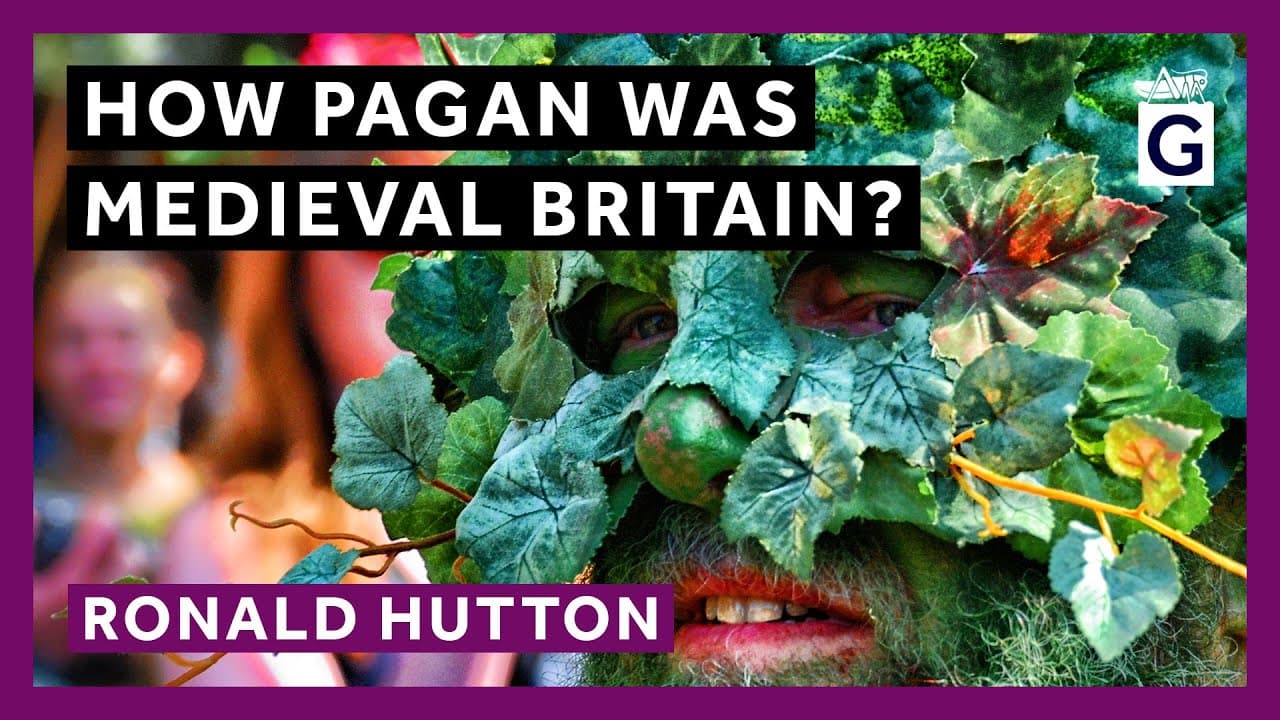
The claim that they represented a surviving pagan god arose from linking medieval foliate-head carvings with the Victorian Jack in the Green and the Green Man pub sign. Lady Raglin presented the three as images of a deity of returning greenery and fertility, but later research dismantled this construction.
Q: What is a Sheela na gig, and was it a pagan fertility goddess?
A Sheela na gig is the Irish nickname given to a medieval church carving of a woman facing the viewer and displaying her genitals. Margaret Murray interpreted the figure as a pagan fertility goddess tolerated inside churches, but the page identifies such associations between church carvings and pagan gods as debunked.
Q: How did pagan-survival theories influence modern culture?
Margaret Murray’s portrayal of a pagan witch religion contributed to the development of the modern Western pagan witch religion called Wicker in the transcript. Feminist artists adopted the Sheela na gig as a symbol of female sexuality and empowerment, while green movements embraced the Green Man as an image of the natural world.
Q: Why was medieval Christianity sometimes mistaken for surviving paganism?
Medieval Christianity reproduced features that could resemble pagan worship, including seasonal festivals, saints, sacrificial rituals, and parallels to polytheism. According to the existing page insights, these Christian forms made the survival of a separate pagan religion unnecessary as an explanation.
Summary & Key Takeaways
-
Many experts in the 20th century believed that paganism had survived in Britain after its official conversion to Christianity, with some suggesting that the aristocracy was Christian while commoners were secretly pagan.
-
The idea of the surviving pagan fertility religion was popularized by Margaret Murray in the early 20th century but has since been disproven.
-
Medieval carvings in British churches, figures found in Victorian Mayday processions, and the "Green Man" pub sign were erroneously linked to pagan gods by scholars, but further research has revealed their true origins.
Read in Other Languages (beta)
Share This Summary 📚
Summarize YouTube Videos and Get Video Transcripts with 1-Click
Try YouTube Summary with ChatGPT & Claude or YouTube Transcript Generator
Explore More Summaries from Gresham College 📚

Summarize YouTube Videos and Get Video Transcripts with 1-Click
Try YouTube Summary with ChatGPT & Claude or YouTube Transcript Generator