How Are Black Lives Matter and Politics Evolving?
TL;DR
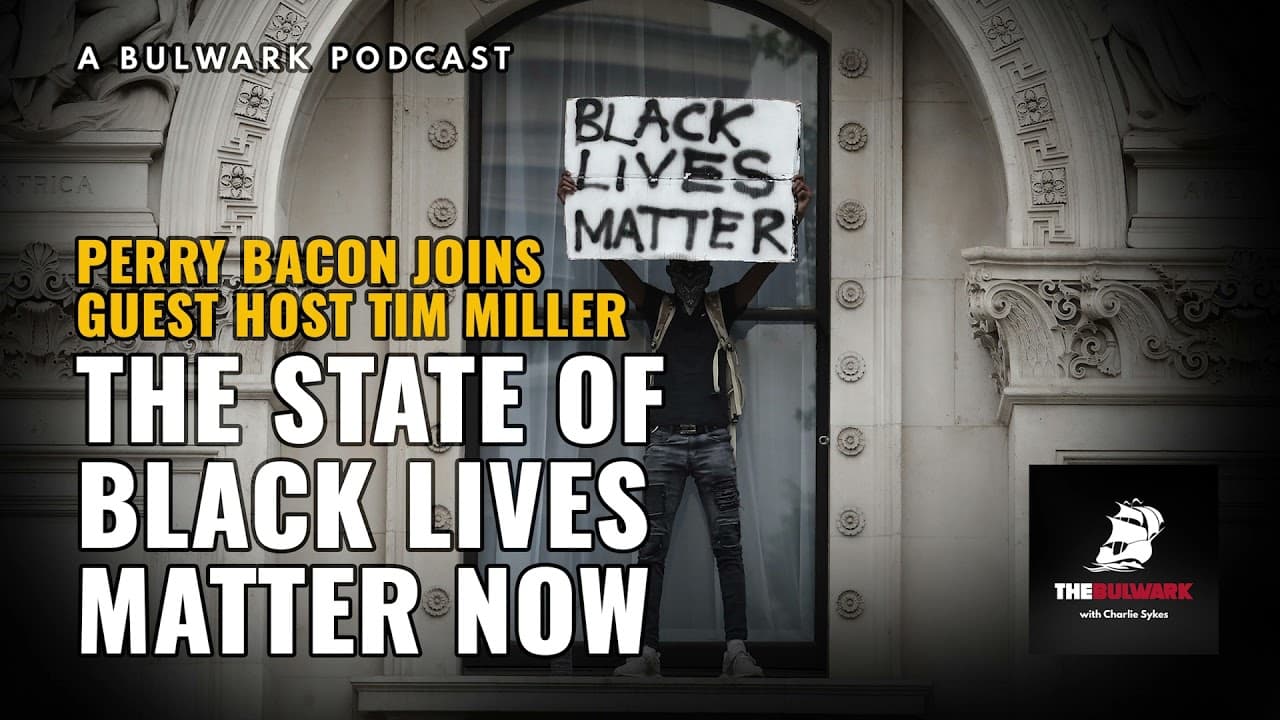
Support for Black Lives Matter has seen fluctuations, particularly influenced by the departure of Trump. The recent Virginia elections reveal how voter turnout and issues of education, notably around race discussions, affect Democratic engagement. Understanding these dynamics is crucial for navigating the challenges ahead.
Transcript
welcome to the bulwark podcast i'm tim miller in for charlie j sykes uh it's good to be with you all today before we get to our guest uh perry bacon jr who i'm so excited to have back i just wanted to point you guys to a couple of things we do have for the new year a promotion for the bulwark plus if you want to support our efforts uh if you want t... Read More
Key Insights
- 🥳 There is a need for Democratic politicians to navigate the balance between maintaining an independent brand and aligning with the party's broader goals.
- 🧑🏭 The racial awakening in the country has been shaped by various factors, including changing demographics, incidents of racial injustice, and opposition to Trump's divisive rhetoric.
- 🐎 The Virginia race highlighted the impact of voter turnout differentials and the role of education, particularly discussions on race, as key issues.
- 🥺 Performative centrism by media sources can lead to false balance and hinder honest discussions on important political issues.
Install to Summarize YouTube Videos and Get Transcripts
Explore YouTube Video Summarizer or Get YouTube Transcript Extractor
Questions & Answers
Q: How has the racial awakening in the country been influenced by Trump's presidency?
The racial awakening in the country was driven by a combination of changing demographics, the George Floyd incident, and opposition to Trump's divisive rhetoric. While some support may have waned after Trump's departure, many individuals remain committed to combating racial inequality.
Q: How can Democrats replicate the success of politicians like Susan Collins in maintaining their independent brand?
Democrats can replicate this success by finding candidates who can appeal to both their party and swing voters. These candidates should be able to separate themselves on certain issues while still supporting the broader goals of the party.
Q: Was the Virginia race primarily influenced by turnout differentials or the education issue?
Both factors played a role in the Virginia race. Voter turnout differentials favored Republicans, while the education issue, particularly regarding discussions on race in schools, influenced the voting behavior of certain segments of the electorate.
Q: How can Democrats effectively address the concerns surrounding education and race?
Democrats should focus on constructive discussions about education and race, acknowledging the concerns of different groups while promoting equitable policies and fostering understanding. They should also develop candidates who can navigate these issues without undermining the overall party brand.
Summary & Key Takeaways
-
The analysis explores the role of politicians like Susan Collins, Eric Adams, and Joe Manchin in maintaining their independent brand while belonging to a political party.
-
It discusses the racial awakening in the country and how the presence or absence of Trump affects the level of engagement.
-
The Virginia race is analyzed to understand the impact of voter turnout differentials and the role of education as a key issue.
-
The dangers of performative centrism are highlighted, with emphasis on the need for honest discussions and avoiding false balance.
Read in Other Languages (beta)
Share This Summary 📚
Summarize YouTube Videos and Get Video Transcripts with 1-Click
Try YouTube Summary with ChatGPT & Claude or YouTube Transcript Generator