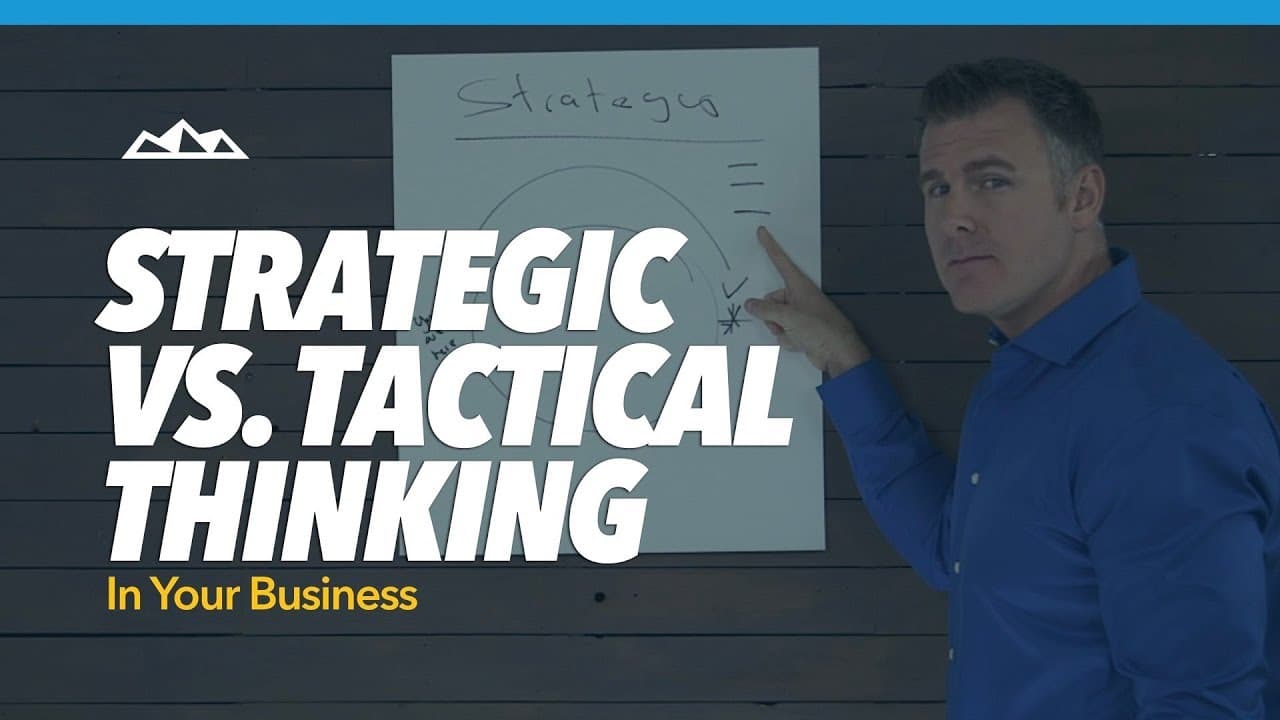
How to Think Strategically vs. Tactically in Business
TL;DR
To think strategically in business, start with a long-term vision of your goals, then list and evaluate potential strategies using the ICE framework (Impact, Confidence, Ease). Prioritize these strategies based on their scores, allocate necessary resources, and set timelines to ensure effective execution and growth.
Transcript
hey there I'm Dan Martell serial entrepreneur investor and creator of SAS Academy in this video I'm going to share with you how to think strategically about where you're going in your business not tactically so you can actually move the needle and drive your goals forward and be sure to stay to the end where I share with you my Precision scorecard ... Read More
Key Insights
- Strategic thinking involves understanding long-term goals, while tactical thinking focuses on immediate tasks and execution.
- Begin with the end in mind by envisioning where you want your business to be in 25 years.
- List out all potential strategies without prioritizing them initially to encourage creativity and ideation.
- Use the ICE framework—Impact, Confidence, Ease—to evaluate and score strategies for their potential effectiveness.
- Prioritize actions based on ICE scores to ensure right actions are taken at the right time for maximum impact.
- Allocate necessary resources and timelines for each strategy to ensure successful execution and avoid common pitfalls.
- Strategic planning requires continuous measurement and adjustment, using tools like the Precision Scorecard for tracking progress.
- Building a business requires both strategic foresight and tactical execution to ensure sustainable growth and innovation.
Install to Summarize YouTube Videos and Get Transcripts
Explore YouTube Video Summarizer or Get YouTube Transcript Extractor
Questions & Answers
Q: What is the difference between strategic and tactical thinking in business?
Strategic thinking in business involves setting long-term goals and determining the best path to achieve them, while tactical thinking focuses on the immediate actions necessary to implement strategies. Strategic thinking is about 'doing the right things,' whereas tactical thinking ensures 'doing things right.'
Q: How can business owners start thinking strategically?
Business owners can start thinking strategically by first envisioning their long-term goals, such as where they want their business to be in 25 years. This involves understanding their vision and mapping out the steps needed to achieve it, ensuring that current actions align with future objectives.
Q: What is the ICE framework and how is it used?
The ICE framework stands for Impact, Confidence, and Ease. It is used to evaluate potential business strategies by scoring them on a scale from 1 to 10 for each criterion. This helps prioritize strategies based on their potential effectiveness, ensuring that resources are focused on the most promising actions.
Q: Why is prioritization important in strategic planning?
Prioritization is crucial in strategic planning because it ensures that the most impactful and feasible actions are taken first. By focusing on high-priority strategies, businesses can achieve significant growth and avoid wasting resources on less effective initiatives, leading to better overall results.
Q: How should resources be allocated in a strategic plan?
Resources should be allocated in a strategic plan based on the prioritization of strategies. This includes budgeting for necessary financial resources and ensuring that the right personnel are in place to execute plans. Proper allocation helps avoid bottlenecks and supports the successful implementation of strategies.
Q: What role does the Precision Scorecard play in strategic planning?
The Precision Scorecard is a tool used to monitor and measure the progress of strategic plans. It helps businesses track various metrics and performance indicators, ensuring that strategies are on track and adjustments are made as needed. This continuous measurement supports effective strategic thinking and execution.
Q: How can businesses ensure sustainable growth?
Businesses can ensure sustainable growth by combining strategic foresight with tactical execution. This involves setting clear long-term goals, prioritizing effective strategies, allocating resources wisely, and continuously monitoring progress to make necessary adjustments, ensuring that growth is both steady and sustainable.
Q: What common mistakes do founders make in strategic planning?
Founders often make the mistake of not allocating sufficient resources, such as budget and personnel, to execute their strategies. They may also fail to prioritize actions based on their potential impact, leading to inefficient use of resources and missed opportunities for growth. Proper planning and prioritization are essential to avoid these pitfalls.
Summary & Key Takeaways
-
Strategic business thinking requires a long-term vision and understanding of where you want to take your company in the future. By starting with the end in mind, you can make informed decisions today that align with your ultimate goals.
-
To think strategically, you need to list all potential strategies, evaluate them using the ICE framework, and prioritize based on their potential impact, confidence, and ease of execution. This structured approach helps in making informed decisions.
-
Allocating resources effectively and setting timelines are crucial for executing strategic plans. The Precision Scorecard is a tool that helps monitor progress and adjust strategies as needed, ensuring that businesses stay on track towards their goals.
Read in Other Languages (beta)
Share This Summary 📚
Summarize YouTube Videos and Get Video Transcripts with 1-Click
Try YouTube Summary with ChatGPT & Claude or YouTube Transcript Generator
Explore More Summaries from Dan Martell 📚

Summarize YouTube Videos and Get Video Transcripts with 1-Click
Try YouTube Summary with ChatGPT & Claude or YouTube Transcript Generator