What Is Model Context Protocol and Why It Matters
TL;DR
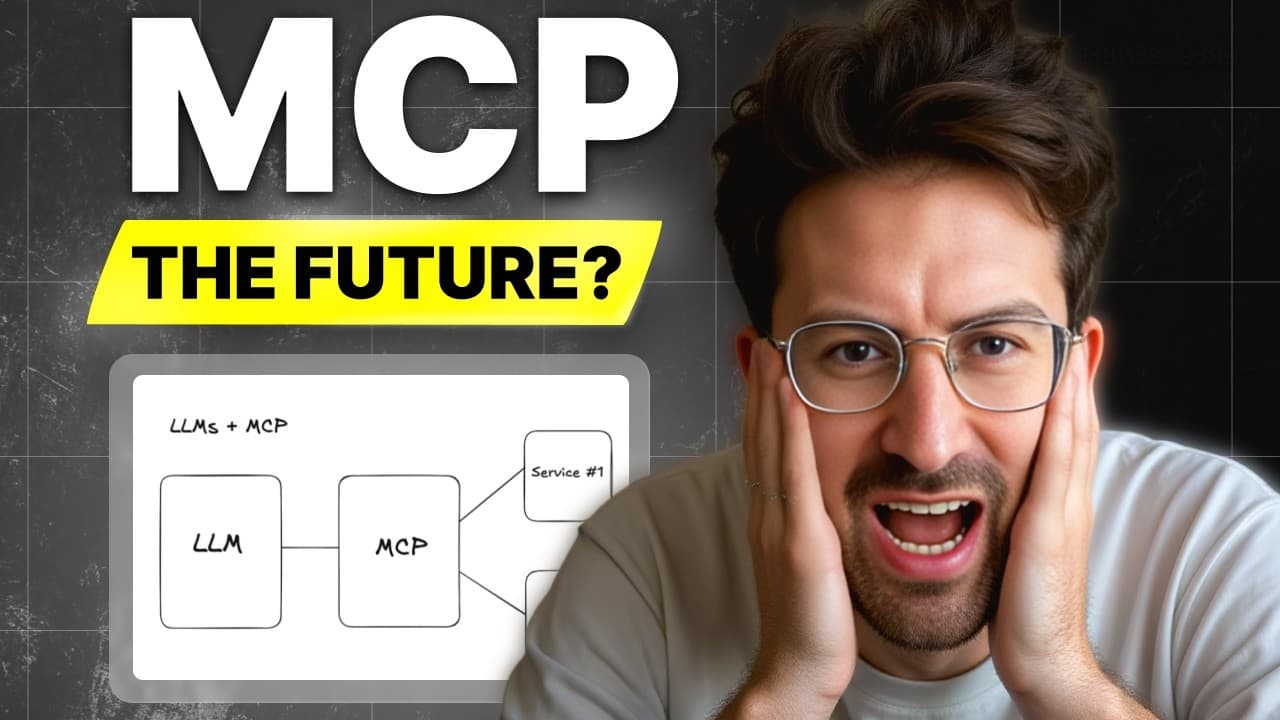
Model Context Protocol (MCP) is a standard that helps language models communicate with external tools and services through a unified approach. Language models alone mainly predict the next text, but tools can let them search the internet, work with email, or connect to spreadsheets. MCP matters because combining many separate integrations is otherwise cumbersome and difficult to coordinate. Read on to understand the progression from basic models to tool-connected assistants.
Transcript
everyone is talking about mcps it's gone completely viral but the reality is most people have no idea what mcps are and what they mean and what are the startup opportunities associated with it so in this episode I brought Professor Ross Mike who is probably the the best explainer of technical Concepts in a really easy way that someone who's non-tec... Read More
Key Insights
- MCP (Model Context Protocol) is a standard that creates a unified layer between LLMs and external services/tools.
- LLMs by themselves are limited to text prediction and cannot perform meaningful tasks without tools.
- MCP solves the problem of connecting multiple tools to LLMs by creating a standardized communication protocol.
- The MCP ecosystem consists of clients (like Tempo, Windsurf, Cursor), the protocol, servers, and services.
- MCPs act as universal translators between AI models and the tools they need to be truly useful.
- Stage 1 of LLMs involves basic text prediction, while Stage 2 connects LLMs to tools, creating engineering challenges.
- MCPs translate everything into one language, allowing LLMs to easily access databases, APIs, and services.
- Anthropic's strategy involves requiring service providers to build MCP servers, enhancing LLM capabilities.
Install to Summarize YouTube Videos and Get Transcripts
Explore YouTube Video Summarizer or Get YouTube Transcript Extractor
Questions & Answers
Q: What is Model Context Protocol (MCP), and why does it matter?
MCP is a standard for connecting language models with external tools and services. It matters because standards let engineers build systems that communicate with each other and reduce the burden of separately gluing many tools to one model.
Q: What can a language model do without external tools?
By itself, a language model primarily predicts the next text based on its training material. It can answer questions or discuss a historical figure, but it cannot independently perform an action such as sending an email.
Q: How do external tools make language models more capable?
External tools give a language model access to services it cannot use on its own. For example, a connected tool can fetch information from the internet or support an automation that creates a spreadsheet entry when an email arrives.
Q: What problem does MCP address when building AI assistants?
Building an assistant that can search the internet, read emails, and summarize information requires multiple tool integrations. Connecting, stacking, and coordinating those tools can become frustrating, cumbersome, and difficult to make cohesive.
Q: Why are standards important for MCP?
Standards provide formal conventions that help engineers create systems capable of communicating with one another. The explanation compares this role with REST APIs, a standard companies follow when constructing APIs and services.
Q: What are the two stages in the evolution of language models described here?
The first stage consists of models that answer prompts, such as writing a poem or discussing World War I. The second stage connects those models to tools and external services, allowing them to do more than generate text.
Q: Why is it difficult to build a Jarvis-like AI assistant?
Connecting a single tool to a language model is only one part of the challenge. Stacking several tools, making them work together cohesively, and managing the model’s mistakes or hallucinations creates what the speaker calls a nightmare.
Q: What practical examples show how tools can extend a language model?
The transcript describes internet search through chatbots such as Perplexity and an automation that adds a spreadsheet entry whenever an email arrives. It also mentions assistants that could search the internet, read emails, and summarize information when connected to the required services.
Summary & Key Takeaways
-
MCP standardizes the way LLMs connect to external tools, allowing for more capable AI assistants. By acting as a universal translator, MCP simplifies the integration of various services, overcoming the cumbersome process of connecting multiple tools.
-
The evolution of LLMs involves moving from basic text prediction to connecting with tools, which creates engineering challenges. MCPs solve these by creating a unified communication layer, making LLMs more versatile and capable.
-
The MCP ecosystem includes clients, protocols, servers, and services, with providers needing to build MCP servers. This standardization opens new opportunities for both technical and non-technical users as the technology evolves.
Read in Other Languages (beta)
Share This Summary 📚
Summarize YouTube Videos and Get Video Transcripts with 1-Click
Try YouTube Summary with ChatGPT & Claude or YouTube Transcript Generator
Explore More Summaries from Greg Isenberg 📚




Summarize YouTube Videos and Get Video Transcripts with 1-Click
Try YouTube Summary with ChatGPT & Claude or YouTube Transcript Generator