When Galaxies Collide... - Professor Carolin Crawford
TL;DR
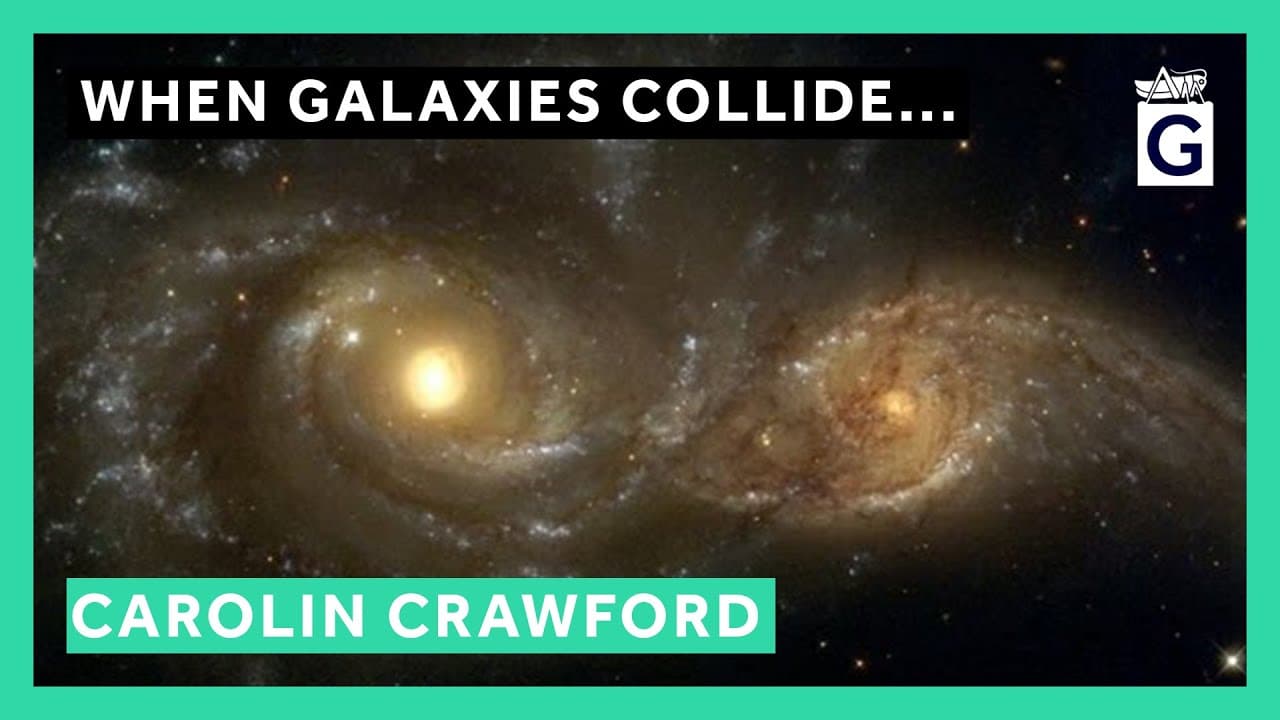
Galaxies come in different shapes and sizes, but some galaxies are exceptions to the rule, displaying twisted and distorted shapes. These peculiar galaxies are the result of gravitational interactions between galaxies. Through simulations and observations, scientists are studying these interactions to understand how galaxies change and evolve over time.
Transcript
so today's talk is about ciding galaxies and the universe is full of galaxies we estimate there are well over a hundred billion of them that we know about and they show remarkable range in both their colors and their sizes and their masses but quite a striking conformity in terms of their relative shapes you know even through all those ranges of of... Read More
Key Insights
- 😵💫 Galaxies come in two main types: elliptical and spiral, each with distinct characteristics.
- 🤩 Galactic interactions can cause distortions in shape and trigger star formation.
- ❓ Simulations and observations are used to study galactic interactions and understand their effects.
- 💁 Interacting galaxies can form new structures, such as tidal tails and bridges, and trigger intense star formation.
Install to Summarize YouTube Videos and Get Transcripts
Explore YouTube Video Summarizer or Get YouTube Transcript Extractor
Questions & Answers
Q: What are the two main types of galaxies?
The two main types of galaxies are elliptical and spiral. Elliptical galaxies are smooth and symmetric, composed of older stars. Spiral galaxies have a disc shape with a bulge in the center and show active star formation.
Q: How do interactions between galaxies affect their shapes and star formation?
Interactions between galaxies can cause distortions in shape, such as twisted and stretched spiral arms. These interactions can also trigger star formation, resulting in the formation of new stars and even new dwarf galaxies.
Q: How do scientists study galactic interactions?
Scientists use simulations and observations to study galactic interactions. Simulations allow scientists to model the behavior of galaxies during interactions and understand how different factors, such as mass, speed, and distance, affect the outcome. Observations of interacting galaxies provide real-world examples and help validate the simulations.
Q: What are some examples of galactic interactions?
Examples of galactic interactions include the merging of two spiral galaxies, the disruption of a spiral galaxy by an elliptical galaxy, and the formation of tidal tails and bridge structures between galaxies. These interactions can lead to the formation of new structures and trigger starbursts of intense star formation.
Summary & Key Takeaways
-
Galaxies come in two main types: elliptical and spiral.
-
Elliptical galaxies are smooth and symmetrical, composed mainly of older stars, while spiral galaxies have a disc shape with a bulge in the center and show active star formation.
-
Interactions between galaxies can cause distortions in shape, trigger star formation, and create new dwarf galaxies.
Read in Other Languages (beta)
Share This Summary 📚
Summarize YouTube Videos and Get Video Transcripts with 1-Click
Try YouTube Summary with ChatGPT & Claude or YouTube Transcript Generator
Explore More Summaries from Gresham College 📚

Summarize YouTube Videos and Get Video Transcripts with 1-Click
Try YouTube Summary with ChatGPT & Claude or YouTube Transcript Generator