Why Can't You Bake Mason Jars in the Oven?
TL;DR
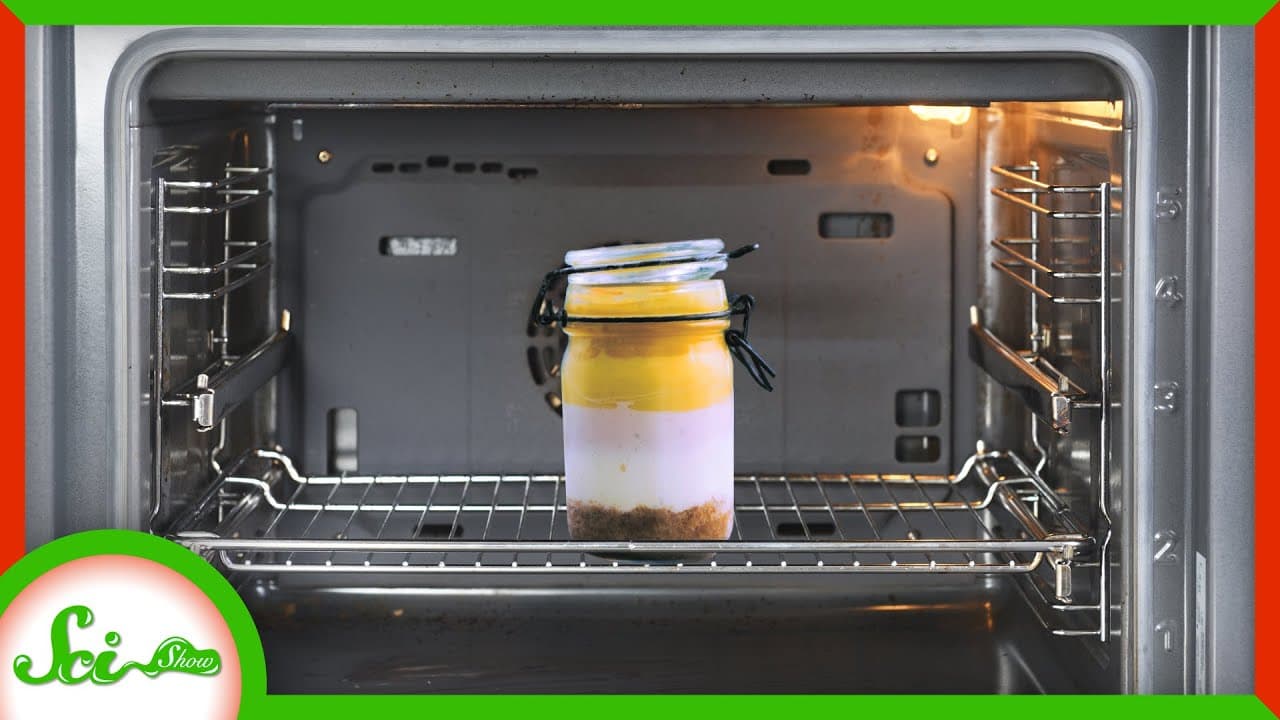
You can't bake mason jars in the oven because normal glass, like soda-lime glass, is prone to thermal shock and can shatter due to uneven expansion and contraction. In contrast, borosilicate glass can withstand these temperature changes due to its stable molecular structure, making it safe for oven use.
Transcript
Thanks to Brilliant for supporting this episode of SciShow. Go to Brilliant.org/SciShow to learn how you can take your STEM skills to the next level! [♪ INTRO] If you bake a lot, you may have realized that while glass cookware exists, not all glass is okay to use in the oven. Normal glass can actually shatter and explode in there. This happens ... Read More
Key Insights
- 🫢 Glass can shatter in the oven due to thermal shock caused by the uneven expansion and contraction of molecules.
- 😎 Soda-lime glass, the most common type of glass, is weaker and more susceptible to thermal shock due to the presence of sodium.
- 🫢 Borosilicate glass, which contains boron, is resistant to thermal shock and can withstand temperature changes without breaking.
- 😎 Borosilicate glass forms a strong and stable network by bonding with more oxygens, reducing the glass's desire to expand and contract when heated or cooled.
- 🔎 The addition of boron and sodium in the right proportions allows for the creation of a strong and stable glass structure that can withstand thermal shock.
- 😎 Borosilicate glass is easier to manufacture than pure silicon dioxide glass, which requires higher temperatures to melt.
- 😎 Chemical tricks, such as the addition of boron to glass composition, have enabled the development of various types of glass, including those suitable for oven use.
Install to Summarize YouTube Videos and Get Transcripts
Explore YouTube Video Summarizer or Get YouTube Transcript Extractor
Questions & Answers
Q: Why does normal glass shatter in the oven?
Normal glass shatters in the oven due to thermal shock, which occurs when the glass expands and contracts at different rates, leading to stress and ultimately, breakage.
Q: What is soda-lime glass?
Soda-lime glass is the most common type of glass, making up about 90% of the world's glass supply. It is manufactured by adding sodium oxide (soda) and calcium oxide (lime) to silicon dioxide to lower the melting temperature. However, it is weaker and more susceptible to thermal shock.
Q: What is borosilicate glass?
Borosilicate glass contains the element boron and is known for its ability to withstand thermal shock. It forms a strong and stable network, reducing expansion and contraction, making it suitable for oven use.
Q: How does boron affect glass composition?
Boron can form bridging oxygens in the glass structure, creating a strong and stable network. When combined with sodium in the right proportions, it prevents the formation of non-bridging oxygens, reducing the glass's vulnerability to thermal shock.
Summary & Key Takeaways
-
Normal glass shatters in the oven due to thermal shock caused by the uneven expansion and contraction of molecules.
-
The most common type of glass, soda-lime glass, is weaker and more vulnerable to thermal shock due to the presence of sodium.
-
Borosilicate glass, which contains boron, can withstand thermal shock by forming a strong and stable network that reduces expansion and contraction.
Read in Other Languages (beta)
Share This Summary 📚
Summarize YouTube Videos and Get Video Transcripts with 1-Click
Try YouTube Summary with ChatGPT & Claude or YouTube Transcript Generator
Explore More Summaries from SciShow 📚


Summarize YouTube Videos and Get Video Transcripts with 1-Click
Try YouTube Summary with ChatGPT & Claude or YouTube Transcript Generator