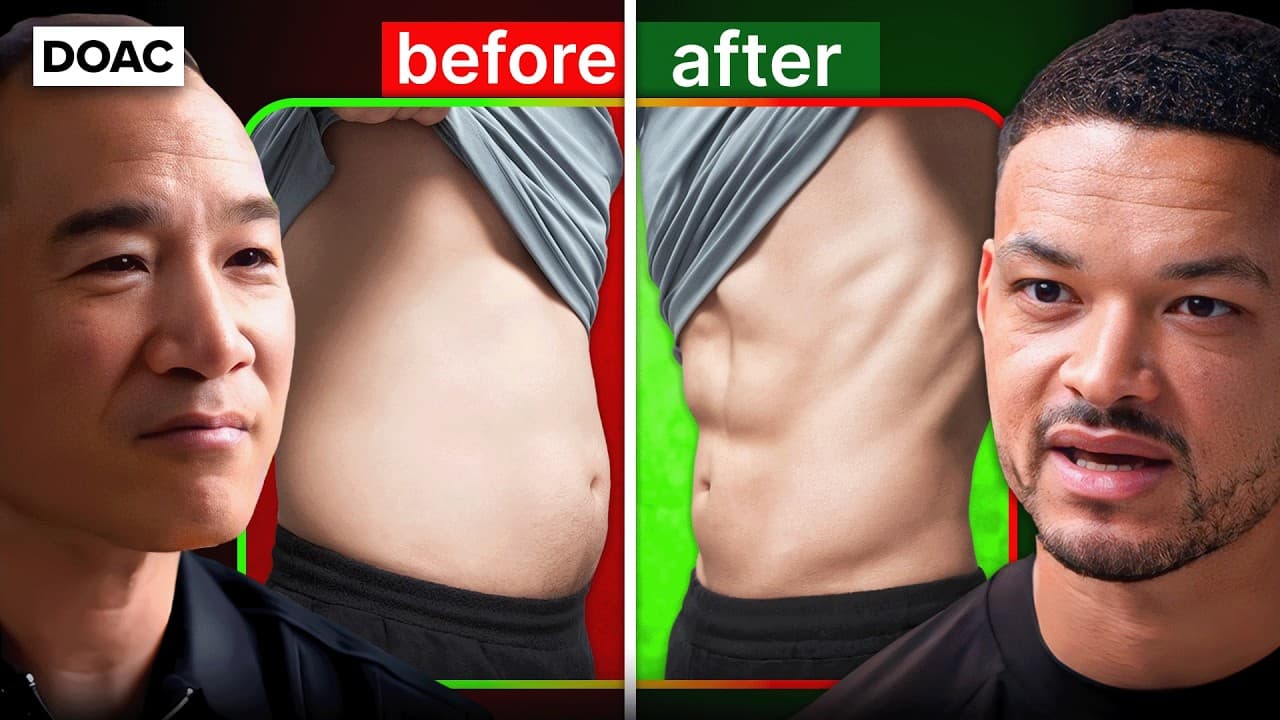
How to lose belly fat fast with sustainable diet
TL;DR
The direct answer is to create an aggressive but controlled caloric deficit while keeping protein high and maintaining training. Expect some strength loss if you crash diet, but a 20 to 40 percent deficit below maintenance is a starting point. Over time, adapt by supporting habits that curb overeating and preserve lean mass.
Transcript
I am going to challenge you to do something here. I asked my audience about weight loss and asked them for their 15 most popular questions that are currently unanswered for them. All right. About weight loss. The first one was how do I lose weight fast? So essentially you can engage what would could be classified as a as a as a protein sparing modi... Read More
Key Insights
- A 20 to 40 percent deficit below maintenance is a starting point for weight loss.
- High protein helps preserve lean mass during caloric restriction.
- Aggressive deficits can reduce strength and are not ideal for long term progress.
- Weight regain after stopping weight loss drugs often results from regained appetite and habit gaps.
- Metabolic adaptation reduces NEAT by about 2 to 300 calories during dieting.
- Visceral fat can be influenced by diet composition, particularly saturated fat intake.
- The best long term diet is one that provides enough protein and calories and fits personal preferences.
- Menopause can lower the rate of fat loss, so set expectations lower and maintain protein.
Install to Summarize YouTube Videos and Get Transcripts
Explore YouTube Video Summarizer or Get YouTube Transcript Extractor
Questions & Answers
Q: What is the simplest plan to lose weight quickly without wrecking your health?
The plan centers on a caloric deficit and high protein. Start with a deficit around 20 to 40 percent below maintenance, adjust based on progress and how you feel, and keep protein high to preserve lean mass. Train regularly, avoid extreme cuts that crash energy and mood, and monitor overall wellbeing.
Q: Why might people regain weight after stopping certain weight loss drugs?
GLP-1 receptor agonists suppress hunger, so stopping them often returns appetite to baseline and habits may not be ready to support ongoing intake. A gradual weaning process helps reinforce counter measures to overeating, build sustainable training and dietary habits, and gradually learn to live with hunger cues while maintaining progress.
Q: Does dieting slow metabolism, and why does that happen?
Dieting can reduce non-exercise activity thermogenesis by about two to three hundred calories, a major factor in perceived metabolic slowdown. There is also adaptive thermogenesis and possible thyroid involvement, which can add a smaller reduction. The effect is real but largely driven by decreased everyday movement rather than a fixed slowdown of metabolism.
Q: What diet works best for long term weight loss, keto or Mediterranean or else?
The diet that works long term is the one with enough total calories and enough protein, made up of healthy foods, and that fits the individual’s preferences and tolerances. No single plan guarantees success; adherence and protein intake are critical to preserving lean mass during fat loss.
Q: Can you target belly fat specifically for spot reduction?
Targeting belly fat specifically is not feasible for spot reduction. Fat loss occurs across the body. However, certain diets may help reduce visceral fat more effectively by lowering saturated fat intake and favoring healthier fats such as avocado, nuts, and olive oil, contributing to improved abdominal fat composition.
Q: What makes menopause impact fat loss and what to do about it?
Menopause can slow fat loss due to hormonal and sleep disruptions, joint pain, and adherence challenges. The practical response is to lower expectations, keep protein high, and aim for about half of a typical fat loss rate while adjusting activity and nutrition to support consistency.
Q: How should one structure a fast fat loss phase to be healthy?
Use an aggressive yet manageable deficit, maintain high protein, and prioritize training that preserves strength. Expect some loss of strength and adjust as needed. The goal is to stay within a deficit large enough to cause fat loss but small enough to prevent injuries and fatigue, with a focus on sustainable habits.
Q: What common mistake fuels weight loss plateaus and how to avoid it?
Underestimating NEAT and overestimating calories burned is a common pitfall. People often move less than they realize during a deficit, which reduces overall expenditure. To avoid this, intentionally increase daily activity, track movement, and adjust intake and training to maintain a consistent energy balance over time.
Summary & Key Takeaways
-
A sustainable fat loss plan centers on enough protein and a calorie deficit that fits the individual while prioritizing healthy foods. It avoids extreme crash dieting and emphasizes habits that support appetite control and consistent training.
-
Metabolic adaptation occurs during dieting, where NEAT can drop by 2 to 300 calories and adaptive thermogenesis can add or subtract energy expenditure. Understanding this helps explain why calories-in, calories-out sometimes feels off.
-
Menopause and midlife changes affect weight loss progress and adherence. Reduce expectations for rapid fat loss, maintain protein intake, and adjust goals to fit hormonal and lifestyle shifts without cutting essential nutrients.
Read in Other Languages (beta)
Share This Summary 📚
Summarize YouTube Videos and Get Video Transcripts with 1-Click
Try YouTube Summary with ChatGPT & Claude or YouTube Transcript Generator
Explore More Summaries from The Diary Of A CEO Clips 📚






Summarize YouTube Videos and Get Video Transcripts with 1-Click
Try YouTube Summary with ChatGPT & Claude or YouTube Transcript Generator