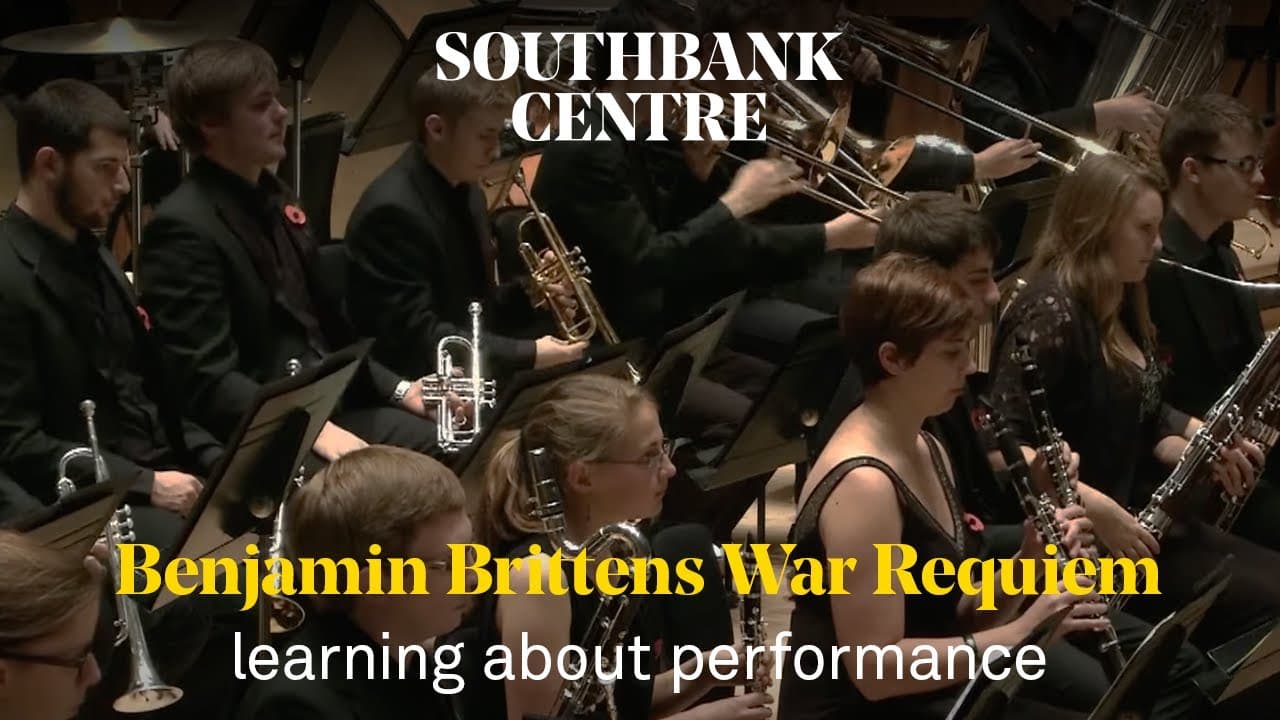
Benjamin Britten's War Requiem | Learning About Performance
TL;DR
Benjamin Britton's War Requiem is a 20th-century masterpiece that combines various techniques and incorporates the theme of uncertainty, while striving for reconciliation through its music.
Transcript
foreign thank you benjamin britton was the leading composer in the middle of the 20th century in britain he was born in 1913 and he died in 1976 with the war requiem he was asked to write a piece in commemoration of the second world war this is a major work of the 20th century which uses many of the techniques that composers were using at that time... Read More
Key Insights
- 🖕 Benjamin Britton's War Requiem is a significant composition from the middle of the 20th century, influenced by composers of the time and incorporating gamelan techniques.
- 🌥️ The theme of uncertainty and the shadow of the World Wars loom large over the composition.
- 🌍 The choice of international soloists and the substitution of Galina Vishnevskaya reflect the desire for reconciliation during the Cold War.
- 🌥️ The composition demands a large ensemble, including various vocal soloists, choirs, and orchestras.
- 💀 The War Requiem evokes different emotions throughout, from sadness and worry to anger and holiness.
- 😒 Benjamin Britton's use of the tritone interval adds a conflicted and unresolved element to the composition.
- 😨 The War Requiem incorporates the intense and powerful imagery of the Dies Irae, portraying fears of judgement and damnation.
Install to Summarize YouTube Videos and Get Transcripts
Explore YouTube Video Summarizer or Get YouTube Transcript Extractor
Questions & Answers
Q: How did Benjamin Britton incorporate gamelan techniques into the War Requiem?
Benjamin Britton incorporated gamelan techniques into the War Requiem by using ritualistic bells and loosely scored sections within the piece, inspired by the gamelan's style.
Q: Who were the soloists originally planned for the War Requiem, and why were they significant?
Originally, the soloists planned for the War Requiem were Peter Piers (tenor), Dietrich Fischer-Dieskau (baritone), and Galina Vishnevskaya (soprano). This choice of soloists aimed to symbolize reconciliation between England, Germany, and Russia during the Cold War era.
Q: How did the absence of Galina Vishnevskaya as the soprano soloist impact the performance?
Due to visa issues caused by the Cold War tensions, Galina Vishnevskaya couldn't perform as the soprano soloist. Instead, Heather Harper, a young English soprano, took on the role. This substitution demonstrated the challenges faced during the Cold War and added an element of unpredictability to the performance.
Q: How did Benjamin Britton create different moods within the War Requiem?
Benjamin Britton created different moods in the War Requiem by shifting between large and intimate musical forces, such as transitioning from the full orchestra and choir to a chamber orchestra and two male soloists. The conductor plays a crucial role in highlighting these dramatic changes.
Summary & Key Takeaways
-
Benjamin Britton composed the War Requiem as a commemoration of the Second World War, incorporating techniques used by composers at the time, including those influenced by the gamelan.
-
The piece portrays a range of emotions, starting with sadness and worry, evolving into anger, holiness, and ending with a bittersweet plea for deliverance.
-
The War Requiem requires a large ensemble, including a symphony orchestra, multiple vocal soloists, choirs, a chamber orchestra, and an organ.
Read in Other Languages (beta)
Share This Summary 📚
Summarize YouTube Videos and Get Video Transcripts with 1-Click
Try YouTube Summary with ChatGPT & Claude or YouTube Transcript Generator
Explore More Summaries from Southbank Centre 📚
Summarize YouTube Videos and Get Video Transcripts with 1-Click
Try YouTube Summary with ChatGPT & Claude or YouTube Transcript Generator