How to Gold Plate a Watch Using Vapor Deposition
TL;DR
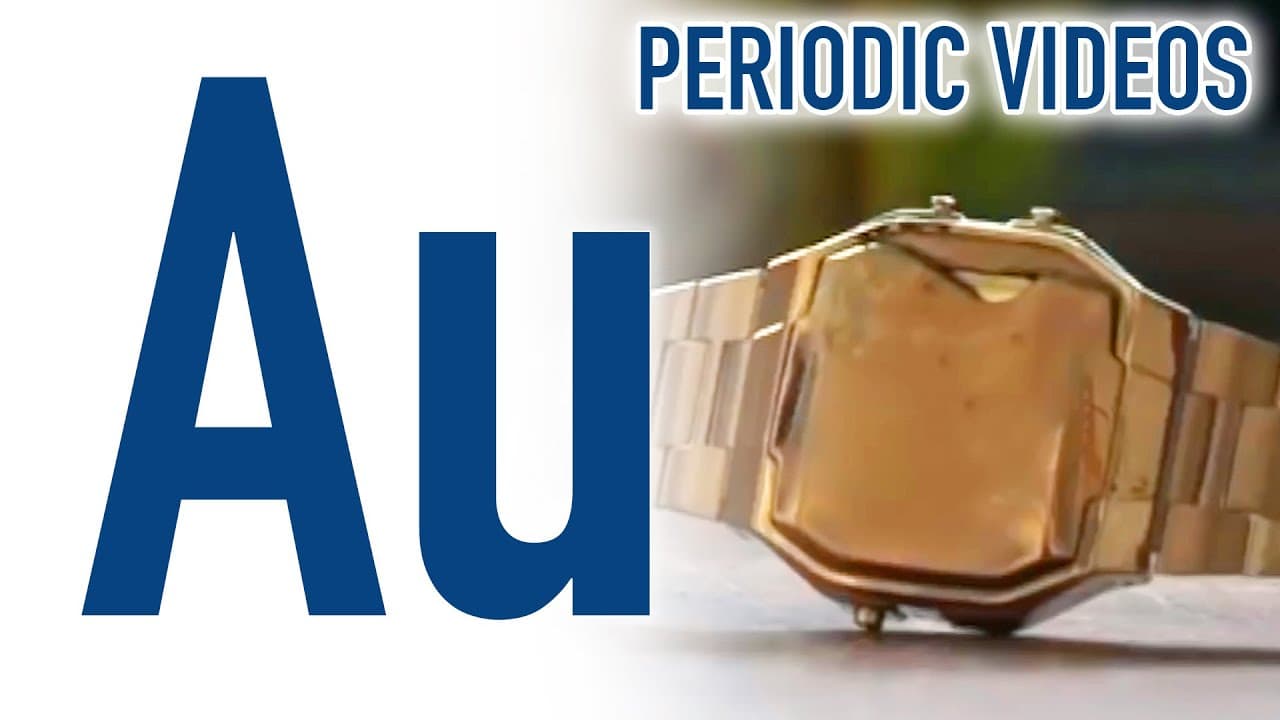
Gold plating a watch using vapor deposition involves placing the watch in a vacuum chamber and evaporating gold until a thin layer coats the surface. This method creates a shiny appearance, but care must be taken as excessive heat can damage the watch components. The result is a visually appealing gold finish, although gaps may occur where the watch was held during the process.
Transcript
okay so what we're going to do today is something quite different I've never done it before we're going to take uh Brady's cheap CIO watch looks like this we're going to try and make it gold my favorite element so what we have here is a contraption that Neil made for evaporating Metals so what we have is we have a chamber vacuum chamber and then we... Read More
Key Insights
- 🤘 Gold has fascinated people for thousands of years and is one of the few metals that can be found in its pure form in nature.
- 🏅 The process of gold evaporation can create a thin gold film on the surface of an object, such as a watch, giving it a gold appearance.
- 🏅 Gold's unreactive nature makes it an ideal element for various applications, including jewelry and catalyzing chemical reactions.
- 🤘 Mining precious metals, including gold, often involves keeping the exact quantity mined secretive.
- 🙈 Gold's historical significance is seen in alchemy, where attempts were made to transform cheap metals into gold.
- 👀 The process of gold evaporation can result in gaps in the gold coating, as seen in the gaps where the watch was clipped onto the holder.
- 🫠 The process of gold evaporation can cause heat damage to certain components of the watch, such as melting the window.
Install to Summarize YouTube Videos and Get Transcripts
Explore YouTube Video Summarizer or Get YouTube Transcript Extractor
Questions & Answers
Q: How does the process of gold evaporation work?
Gold evaporation involves heating up gold to high temperatures in a vacuum chamber, causing the gold atoms to vaporize and coat the surface of the watch.
Q: Why is gold considered an unreactive element?
Gold does not easily react with oxygen or other elements, allowing it to exist in its pure form and retain its metallic properties even under various environmental conditions.
Q: Can a thin layer of gold create a shiny appearance on a surface?
Yes, even a few atoms thick layer of gold can create a metallic shine due to the delocalized electrons in the solid, which are shared by multiple atoms.
Q: What are some other uses of gold in chemistry?
Gold has been found to be a catalyst for various reactions, including carbon monoxide reacting with oxygen. Additionally, gold can form small particles in water, allowing it to be used in colloidal solutions.
Summary & Key Takeaways
-
The process involves placing the watch in a vacuum chamber and evaporating gold in it.
-
Gold, known for its unreactive nature, can exist in its pure form in the environment.
-
A thin layer of gold, a few atoms thick, can create a shiny metallic appearance.
Read in Other Languages (beta)
Share This Summary 📚
Summarize YouTube Videos and Get Video Transcripts with 1-Click
Try YouTube Summary with ChatGPT & Claude or YouTube Transcript Generator
Explore More Summaries from Periodic Videos 📚
Summarize YouTube Videos and Get Video Transcripts with 1-Click
Try YouTube Summary with ChatGPT & Claude or YouTube Transcript Generator