How To Clear Icy Roads, With Science
TL;DR
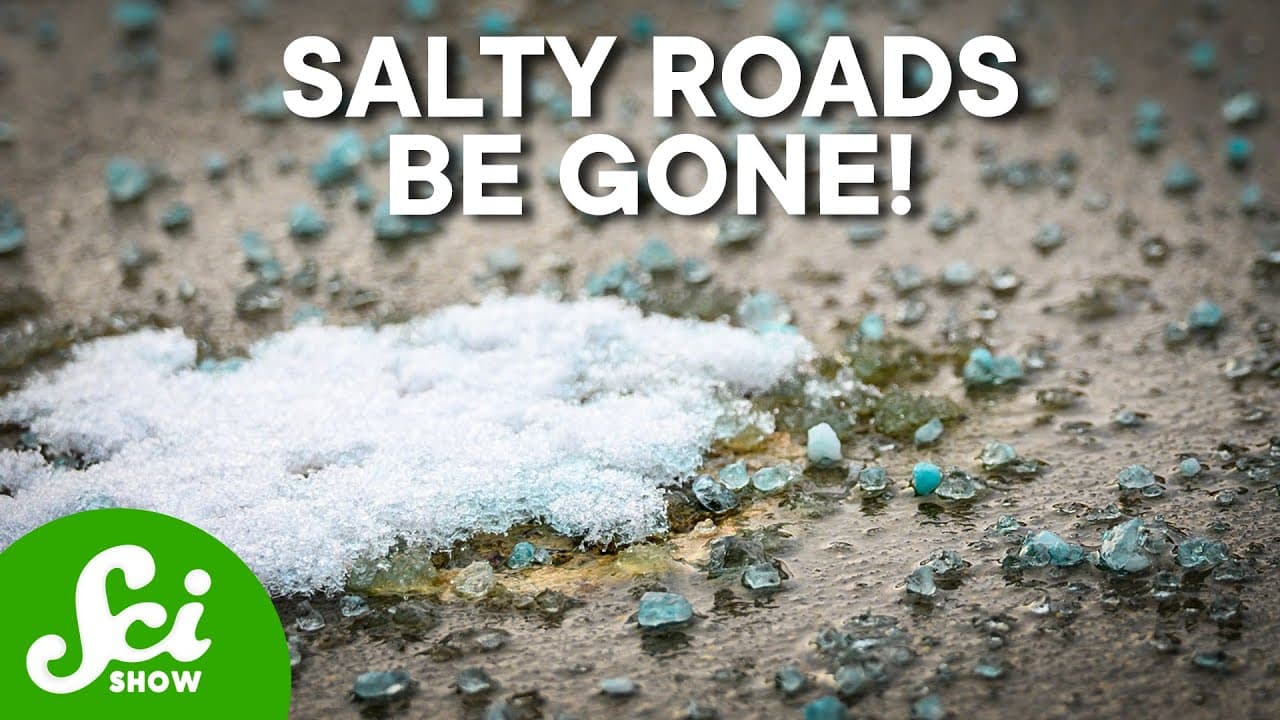
Salt used to de-ice roads has negative environmental impacts, but there are alternatives such as using different salts, byproducts, or brine solutions.
Transcript
Navigating an icy road can be pretty dangerous. And while applying a coating of salt is the time-tested method for rendering a frozen highway drivable, that salt has major downsides. It’s toxic for plants, wildlife and freshwater ecosystems. It contaminates our drinking water and air quality. It can even damage our cars, which, like, feels a b... Read More
Key Insights
- 🙃 Salt used for road de-icing has negative impacts on the environment, wildlife, and infrastructure.
- 🙃 Different salts, such as magnesium chloride and calcium chloride, can be used as alternatives to sodium chloride for de-icing roads.
- 💟 Byproducts from vodka distilleries or sugar beet processing facilities, as well as urea, can also be used as eco-friendly de-icing options.
- 💁 Brine solutions can be used to prevent ice formation on roads and reduce the amount of salt needed for de-icing.
- 🥺 Implementing these alternatives may require infrastructure investment but can lead to cost savings in the long run.
- 😨 Some alternatives, like magnesium chloride, can still be corrosive to cars but are less harmful to the environment.
- 👉 Choosing the right de-icing solution involves considering factors such as effectiveness, environmental impact, cost, and local conditions.
Install to Summarize YouTube Videos and Get Transcripts
Explore YouTube Video Summarizer or Get YouTube Transcript Extractor
Questions & Answers
Q: Why is salt the most common de-icing technique for roads?
Salt lowers the freezing point of water, preventing the formation of solid ice crystals. It does this by interrupting the ice structure and keeping water molecules from forming solid ice.
Q: What are the downsides of using sodium chloride for road de-icing?
Sodium chloride is toxic to plants and wildlife, damages infrastructure like water treatment plants and bridges, and is corrosive to cars. It also contributes to poor air, soil, and water quality.
Q: What are some environmentally-friendly alternatives to sodium chloride?
Other salt options, such as magnesium chloride and calcium chloride, can lower the freezing point more effectively than sodium chloride while using less raw salt. Byproducts from vodka distilleries or sugar beet processing facilities and urea are also eco-friendly options.
Q: How do brine solutions help with road de-icing?
Brine is a liquid salt solution that can be applied to roads before snow or ice form. It limits the formation of ice on the road and requires about a quarter of the salt used for de-icing. However, it requires infrastructure and planning to implement.
Summary & Key Takeaways
-
Salt is commonly used to de-ice roads, but it harms the environment and infrastructure.
-
Different salts, such as magnesium chloride and calcium chloride, can be used as alternatives to sodium chloride.
-
Byproducts from vodka distilleries or sugar beet processing facilities and urea are other eco-friendly options for de-icing roads.
-
Brine solutions can be used to prevent ice formation on roads and require less salt for de-icing.
Read in Other Languages (beta)
Share This Summary 📚
Summarize YouTube Videos and Get Video Transcripts with 1-Click
Try YouTube Summary with ChatGPT & Claude or YouTube Transcript Generator
Explore More Summaries from SciShow 📚


Summarize YouTube Videos and Get Video Transcripts with 1-Click
Try YouTube Summary with ChatGPT & Claude or YouTube Transcript Generator