A Free English Class Where I Attempt To Answer Your Questions
TL;DR
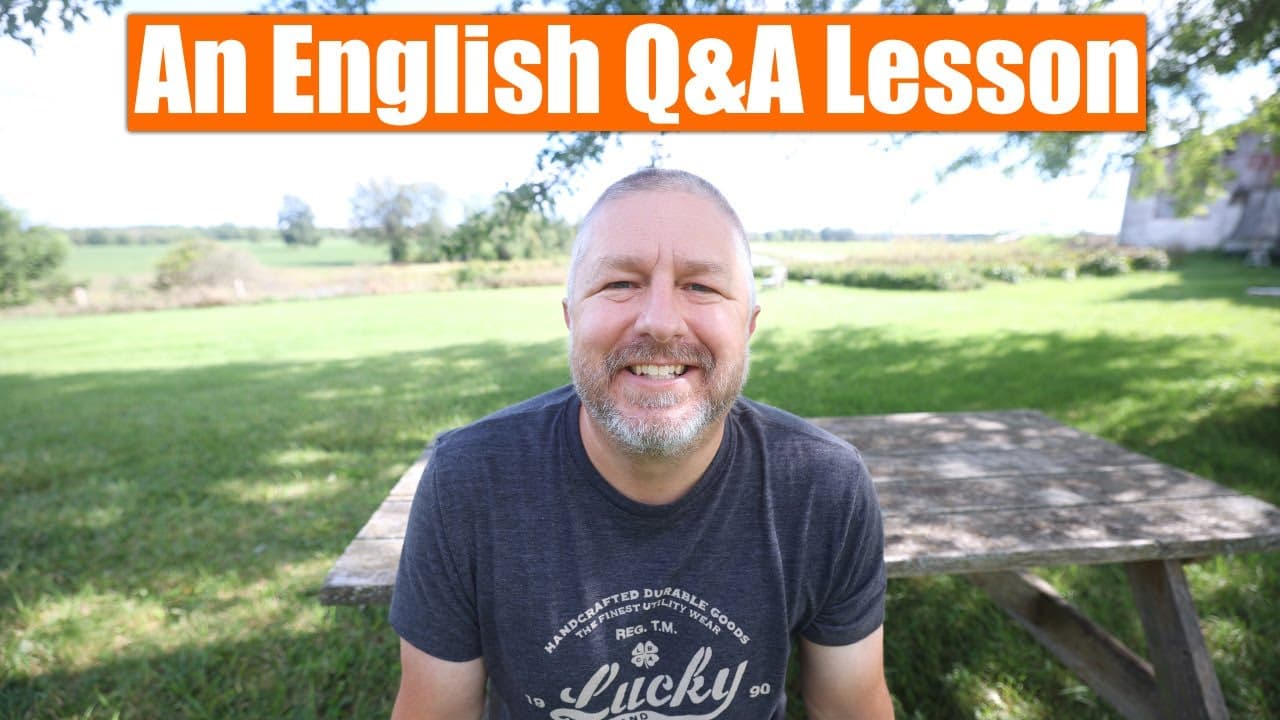
Bob the Canadian teaches an English lesson outdoors and answers questions from viewers.
Transcript
hi everybody hello and welcome as you know i like to test everything before i get started so we'll start in about 27 seconds i'll just make sure the audio is working make sure the video is working make sure everything is working it's always good when everything is working well so we're starting in 14 12 seconds of course it doesn't actually look li... Read More
Key Insights
- 🫵 Bob the Canadian conducts an outdoor English lesson and answers questions from viewers.
- 🧑🏫 He introduces himself as an English teacher who creates regular videos teaching English concepts.
- 👻 Technical difficulties are resolved, allowing the lesson to proceed successfully.
- 😷 Bob mentions the link where viewers can ask questions and gives a shoutout to another English teacher's channel.
- ⁉️ He answers various questions about English vocabulary and phrases, providing detailed explanations.
- 💁 Bob shares personal anecdotes and provides tips for becoming a better English teacher.
Install to Summarize YouTube Videos and Get Transcripts
Explore YouTube Video Summarizer or Get YouTube Transcript Extractor
Questions & Answers
Q: How can I use "do a 180," "slap happy," and "vilify" in sentences?
"Do a 180" means to change one's mind completely, for example, voting for a different political party. "Slap happy" means to be very happy in a carefree and irresponsible way. "Vilify" means to speak or write about someone in a rude or negative manner.
Q: How would you phrase the phrases "hit the spot" and "hit the mark" in sentences?
"Hit the spot" means that something satisfies or pleases you, like quenching your thirst. "Hit the mark" means that you achieved what was expected or aimed for, like giving a successful presentation.
Q: What does "stay gold" mean?
"Stay gold" is a phrase from the book "The Outsiders" by S.E. Hinton, which means to stay true to yourself and not change.
Q: What's the difference between "in time" and "on time"?
"In time" means that something happened before it was too late, while "on time" means that something happened at the designated or expected time.
Q: How can I become a better English teacher?
Be concise and clear in your explanations, be happy and positive in your interactions with students, and relate to them by asking about their lives.
Summary & Key Takeaways
-
Bob the Canadian tests audio and video before starting the lesson. Despite some technical difficulties, he is able to conduct the lesson outside.
-
He introduces himself as an English teacher who creates videos teaching English concepts and answers questions from viewers.
-
Bob mentions the link to the form where viewers can ask questions and gives a shoutout to Brent from American English with this guy for reaching 6,000 subscribers.
Read in Other Languages (beta)
Share This Summary 📚
Summarize YouTube Videos and Get Video Transcripts with 1-Click
Try YouTube Summary with ChatGPT & Claude or YouTube Transcript Generator
Explore More Summaries from Learn English with Bob the Canadian 📚




Summarize YouTube Videos and Get Video Transcripts with 1-Click
Try YouTube Summary with ChatGPT & Claude or YouTube Transcript Generator