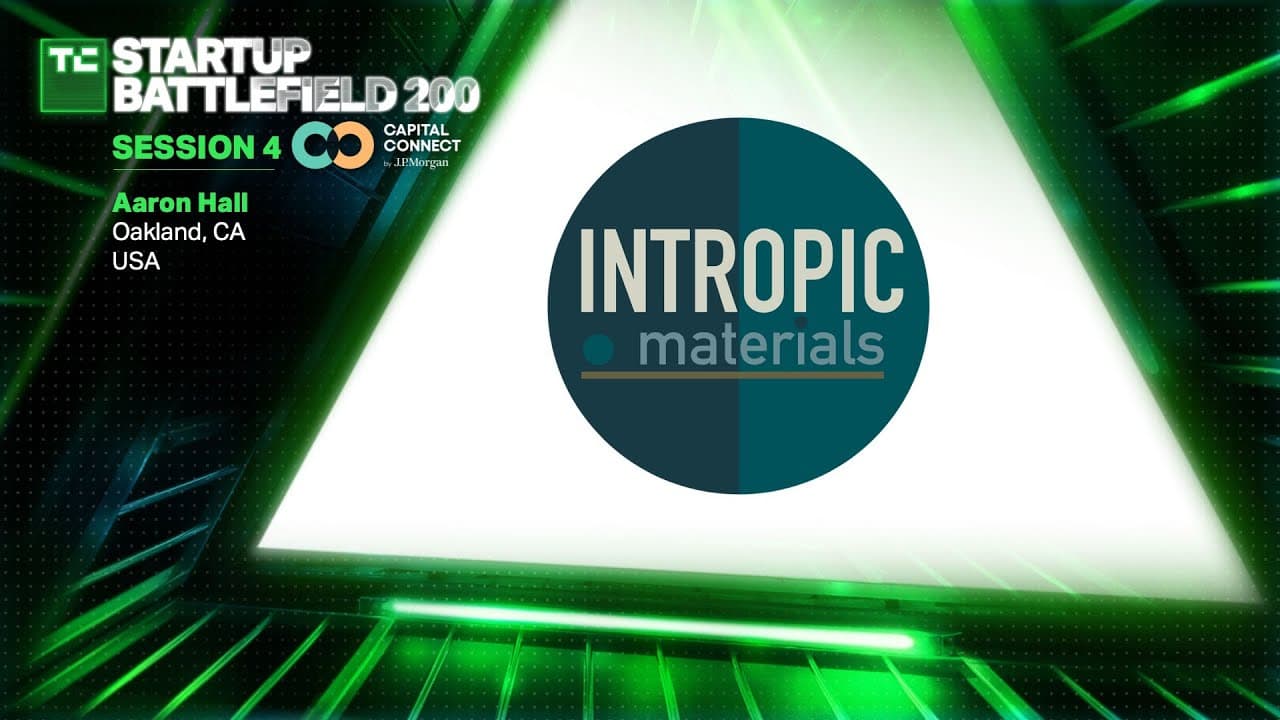
Startup Battlefield - Session 4: Intropic Materials
TL;DR
Entropic Materials has developed a breakthrough technology that enables the stabilization of enzymes in plastics, allowing them to self-degrade. This innovation tackles the massive global plastic waste problem.
Transcript
may I have your attention please welcome back TechCrunch managing editor Matt Burns this felt great right being back in person doing live pictures with live demos from around the world I've had a great time these people have had a great time because they work for me and this is not that one he's my boss but everyone else I hope you've had a great t... Read More
Key Insights
- 🍳 Enzymes can effectively break down polymers found in plastics, offering a promising solution to the plastic waste problem.
- 🍉 Traditional recycling and composting methods have limitations in terms of scalability and infrastructure availability.
- 👻 Entropic Materials' technology allows for the degradation of plastics from the inside out, providing a more efficient and effective approach.
- 🧡 By embedding enzymes in plastics, the technology offers a wider range of compostable product possibilities, reducing reliance on conventional plastic materials.
- 💄 The cost of the additive is anticipated to be competitive with existing plastic additives, making it a viable solution for manufacturers.
- 🍉 The degradation process can be triggered by heat and water, providing flexibility in terms of disposal options.
- 🧑✈️ Entropic Materials is targeting collaborations with brands and companies to pilot their technology and achieve significant environmental impact.
Install to Summarize YouTube Videos and Get Transcripts
Explore YouTube Video Summarizer or Get YouTube Transcript Extractor
Questions & Answers
Q: How does Entropic Materials' technology work to address the plastic waste problem?
The company stabilizes enzymes and embeds them in plastics, allowing the materials to self-degrade after use, reducing plastic pollution.
Q: How does Entropic Materials' technology compare to traditional recycling and composting methods?
Unlike recycling, which can be complex and laborious, and composting, which requires specific infrastructure, Entropic Materials' technology offers a simpler and more efficient solution to the plastic waste problem.
Q: What are the potential applications of Entropic Materials' technology?
The technology can be used in various plastic products, allowing for the development of a wider range of compostable items beyond cups and bags, opening up new design possibilities.
Q: How does Entropic Materials plan to collaborate with brands and companies in implementing their technology?
The company is seeking partnerships with brands and companies, especially those aligned with sustainable values, to pilot their technology and bring it to market. They are also open to collaborations with larger players in the plastic industry to have a significant impact.
Summary & Key Takeaways
-
Entropic Materials has developed a technology to stabilize enzymes in plastics, enabling them to self-degrade after use.
-
Plastics are a significant contributor to pollution, with 6.3 billion tons of plastic waste currently on land and in oceans.
-
Traditional methods of recycling and composting have limitations, but this new technology offers a more efficient and scalable solution.
Read in Other Languages (beta)
Share This Summary 📚
Summarize YouTube Videos and Get Video Transcripts with 1-Click
Try YouTube Summary with ChatGPT & Claude or YouTube Transcript Generator
Explore More Summaries from TechCrunch 📚





Summarize YouTube Videos and Get Video Transcripts with 1-Click
Try YouTube Summary with ChatGPT & Claude or YouTube Transcript Generator