How Will AI Transform Education in the Future?
TL;DR
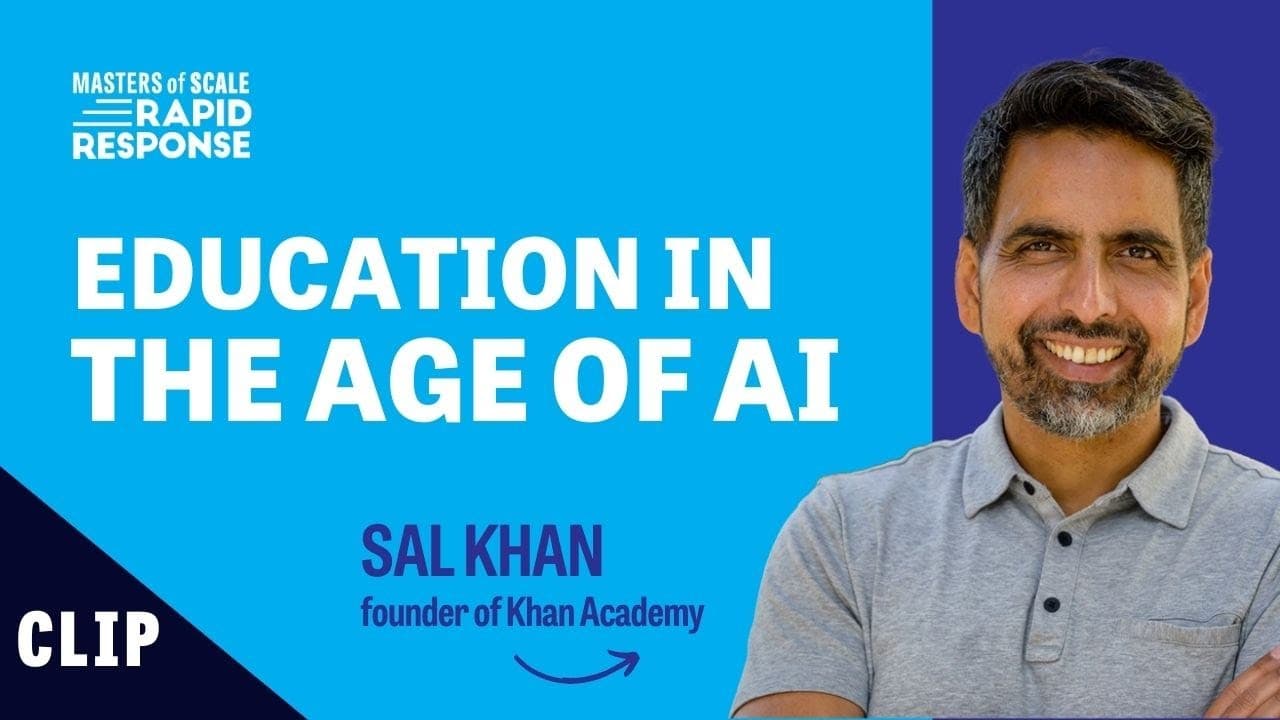
AI has the potential to revolutionize education by promoting critical thinking, personalizing learning experiences, and reducing political bias. Tools like Khanmigo can simulate historical figures and engage students in immersive ways, while also monitoring the writing process to ensure originality and mitigate plagiarism. This technology enables students to explore ideas in a safe environment, boosting their confidence for real-world discussions.
Transcript
there's so much scrutiny right now of certain areas in education you know whether you're talking about critical race Theory or whatever that you have to think about your guard rails in really complicated ways because different school districts have different rules about those things oh absolutely and the good news is kind me and we we've tested it ... Read More
Key Insights
- AI can help avoid political bias in education by encouraging critical thinking rather than reinforcing echo chambers.
- AI tools like Khanmigo can simulate historical figures, providing immersive learning experiences for students.
- AI can assist in monitoring the essay-writing process, ensuring originality and reducing plagiarism.
- Students feel safer testing ideas with AI, which helps them build confidence for real-world discussions.
- AI can make traditional teaching methods more efficient, expanding the possibilities for educators.
- By providing feedback on both process and output, AI can offer a more comprehensive view of student learning.
- AI can facilitate discussions on controversial topics by presenting multiple perspectives without bias.
- The use of AI in education can address pre-existing issues, such as students' fear of judgment in expressing ideas.
- More videos with Sal Khan:
Install to Summarize YouTube Videos and Get Transcripts
Explore YouTube Video Summarizer or Get YouTube Transcript Extractor
Questions & Answers
Q: How does AI help in avoiding political bias in education?
AI can help avoid political bias by promoting critical thinking rather than reinforcing echo chambers. For instance, when discussing controversial topics like the Second Amendment, AI encourages students to explore historical contexts and multiple perspectives, prompting them to think critically rather than simply agreeing with prevailing opinions.
Q: What role does AI play in enhancing student engagement?
AI enhances student engagement by simulating historical figures and creating immersive learning experiences. For example, teachers can use AI to bring figures like Harriet Tubman into the classroom, offering students a dynamic way to learn about historical events and figures, which can make lessons more interactive and memorable.
Q: How does AI assist in the essay-writing process?
AI aids in the essay-writing process by acting as a coach, guiding students through their work and providing feedback. AI tools can track the entire writing process, offering insights into how students develop their ideas. This not only ensures originality but also helps teachers understand students' thought processes and learning progress.
Q: Why do students feel safer testing ideas with AI?
Students feel safer testing ideas with AI because it provides a non-judgmental environment where they can explore different perspectives without fear of criticism. This allows them to build confidence in their ideas and arguments, which they can later present in real-world discussions, knowing they've already tested their thoughts in a safe space.
Q: In what ways can AI make traditional teaching methods more efficient?
AI can make traditional teaching methods more efficient by automating routine tasks and providing personalized feedback. It allows teachers to focus on more complex aspects of teaching, such as facilitating discussions and critical thinking exercises. AI also offers detailed insights into student performance, enabling teachers to tailor their instruction to individual needs.
Q: How does AI provide a comprehensive view of student learning?
AI provides a comprehensive view of student learning by tracking both the process and the final output of student work. It offers insights into how students arrive at their conclusions, highlighting areas of strength and those needing improvement. This holistic approach helps educators understand and support students' learning journeys more effectively.
Q: How can AI facilitate discussions on controversial topics?
AI can facilitate discussions on controversial topics by presenting multiple perspectives without bias. It encourages students to consider various viewpoints, fostering an environment where critical thinking is prioritized over simply echoing popular opinions. This approach helps students develop a deeper understanding of complex issues and promotes respectful dialogue.
Q: What pre-existing educational issues can AI address?
AI can address pre-existing educational issues such as students' fear of judgment and lack of confidence in expressing ideas. By providing a safe space for exploration and feedback, AI helps students build confidence in their abilities. Additionally, AI's ability to monitor originality and learning processes can help reduce plagiarism and ensure academic integrity.
Summary & Key Takeaways
-
Sal Khan discusses the potential of AI in education, emphasizing its ability to foster critical thinking and avoid political bias. Khanmigo, a GPT-4 powered AI, can simulate historical figures, enhancing student engagement and understanding. AI also aids in monitoring the essay-writing process, promoting originality and reducing plagiarism.
-
AI tools provide a safe environment for students to explore ideas, helping them gain confidence for real-world discussions. By presenting multiple perspectives, AI can facilitate unbiased discussions on controversial topics. This technology enables educators to efficiently expand their teaching methods and address pre-existing educational challenges.
-
AI in education, as explained by Sal Khan, can revolutionize traditional workflows, offering personalized learning experiences. It provides comprehensive feedback on student work, focusing on both the process and final output. Overall, AI's integration into education aims to enhance learning outcomes and address students' fears of judgment.
Read in Other Languages (beta)
Share This Summary 📚
Summarize YouTube Videos and Get Video Transcripts with 1-Click
Try YouTube Summary with ChatGPT & Claude or YouTube Transcript Generator