What Is the Fourth Industrial Revolution and Its Impact?
TL;DR
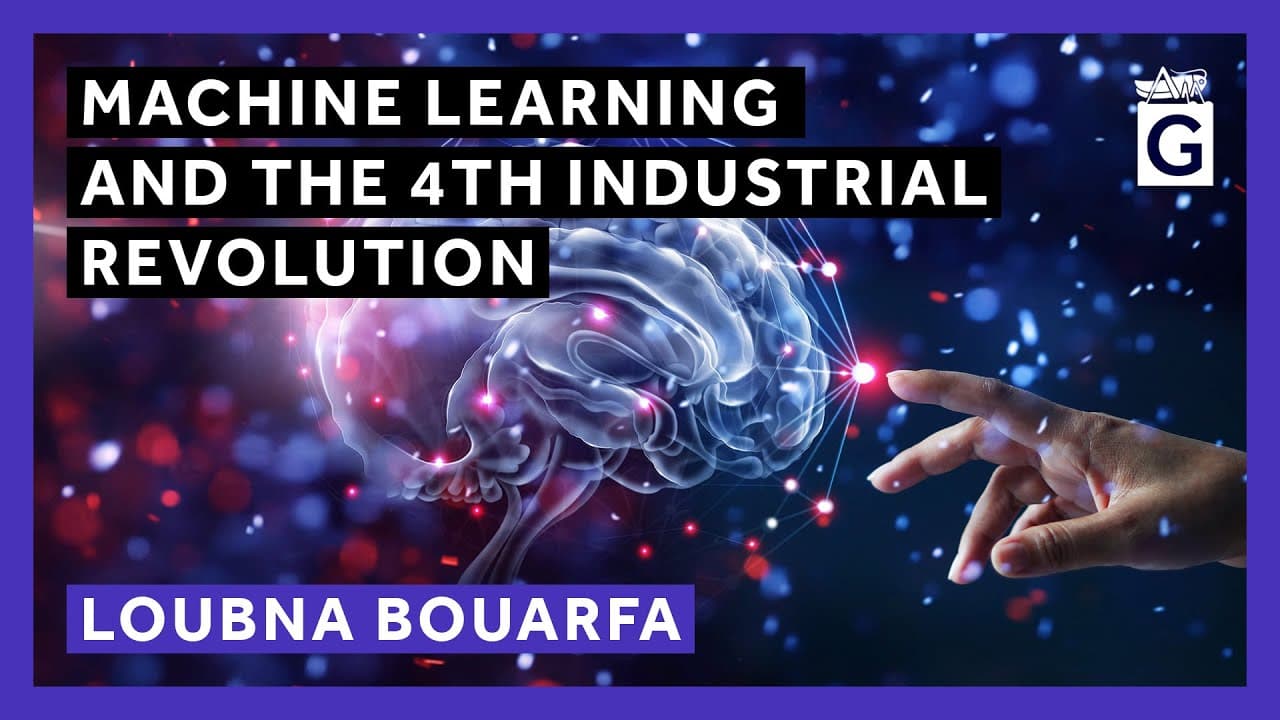
The Fourth Industrial Revolution signifies a transformative era where humans and machines collaborate, merging logic with intuition to tackle global issues. By leveraging artificial intelligence, this revolution aims to address challenges like climate change, healthcare, and inequality, promoting a more equitable and sustainable future.
Transcript
- In the next hour, I will talk about the origin of the Fourth Industrial Revolution, also studying how machines think in a similar way as we think, humans, and how this symbiotic relationship in this new industrial revolution will bring us to this new world, where the dilemma of either-or, the philosophical dilemma of either-or, either profit or i... Read More
Key Insights
- 💋 The Fourth Industrial Revolution marks a significant shift towards integrating humans and machines, combining their intelligence, and addressing global challenges.
- 🤗 Machines in this revolution do not simply follow human rules but learn from data, opening up new possibilities for innovation and problem-solving.
- 😒 The revolution requires a strong ethical framework to ensure unbiased and accountable use of AI, with an emphasis on human values and goals.
- 👨💼 This revolution has the potential to transform various sectors, including healthcare, education, business, agriculture, and transportation.
- 🫥 The blurring of lines between humans and machines necessitates upskilling the workforce, adapting education systems, and reimagining business models.
Install to Summarize YouTube Videos and Get Transcripts
Explore YouTube Video Summarizer or Get YouTube Transcript Extractor
Questions & Answers
Q: How is the Fourth Industrial Revolution different from previous industrial revolutions?
Unlike previous revolutions, the Fourth Industrial Revolution focuses on the integration of human intelligence and AI, enabling machines to learn and make decisions based on data rather than human rules.
Q: How will the Fourth Industrial Revolution impact different sectors, such as healthcare and education?
In healthcare, AI will revolutionize diagnostics, personalized medicine, and preventive care. In education, AI will enable personalized learning, access to education regardless of geographical barriers, and upskilling of the workforce.
Q: What are the key challenges of the Fourth Industrial Revolution?
The challenges include ensuring accountability and ethical use of AI, addressing inequality and the displacement of workers, and shaping the direction of AI to align with human values and goals.
Q: How can AI help in creating a sustainable and equitable future?
AI can drive sustainable development by optimizing resource usage, predicting energy consumption, and reducing waste. It can also contribute to creating a more equitable society by eliminating biases, providing equal access to education and healthcare, and empowering individuals with personalized support.
Summary & Key Takeaways
-
The Fourth Industrial Revolution marks a new inflection point in human history, characterized by the symbiotic relationship between humans and machines.
-
Humans and machines are combining their intelligence and capabilities, integrating logic and intuition, profit and impact, and blurring the lines between the physical and digital worlds.
-
This revolution aims to address global challenges such as climate change, inequality, and healthcare by harnessing the power of artificial intelligence (AI) and human innovation.
Read in Other Languages (beta)
Share This Summary 📚
Summarize YouTube Videos and Get Video Transcripts with 1-Click
Try YouTube Summary with ChatGPT & Claude or YouTube Transcript Generator
Explore More Summaries from Gresham College 📚


Summarize YouTube Videos and Get Video Transcripts with 1-Click
Try YouTube Summary with ChatGPT & Claude or YouTube Transcript Generator