Is Space Travel Pointless?
TL;DR
Space exploration raises ethical concerns about humanity's ability to preserve other worlds.
Transcript
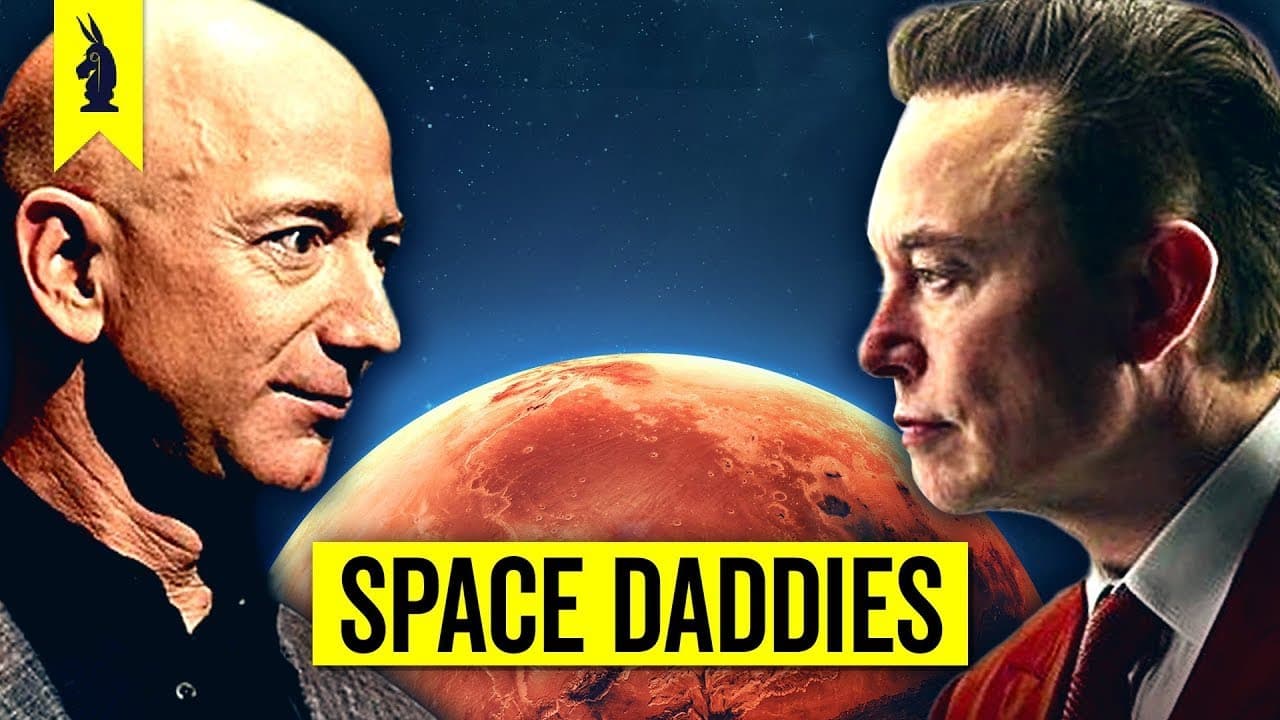
this video is brought to you by betterhelp if you guys haven't heard ever everyone's going to space space space space and you don't have to be a billionaire in a dong-shaped rocket to know that space exploration is popping off from Twitter's new stepdad's attempt to make space tourism a thing to NASA's recent Return To The Moon zero gravity Expedit... Read More
Key Insights
- 👾 Space exploration is a contentious topic, with arguments for and against based on historical, ethical, and environmental considerations.
- 🤨 The potential for human extinction due to climate change raises the stakes for considering space colonization as a survival strategy.
- 😓 Philosophers argue that the history of human exploration tends to involve domination and ecological harm, casting doubt on humanity’s capacity to responsibly explore new worlds.
- 👾 The Cold War significantly shaped the political motivations behind space exploration, linking it to the pursuit of military and national supremacy.
- 🔀 Eco-nihilism presents a critical perspective on humanity’s right to explore and colonize, based on our track record of environmental destruction.
- 👾 Initiatives like NASA's DART mission illustrate that space exploration can have beneficial outcomes for Earth, expanding the narrative beyond mere colonization.
- 🤨 The disparity in global emissions raises questions about ecological responsibility, complicating the eco-nihilist viewpoint that humanity collectively deserves extinction.
Install to Summarize YouTube Videos and Get Transcripts
Explore YouTube Video Summarizer or Get YouTube Transcript Extractor
Questions & Answers
Q: What are the main ethical concerns associated with space exploration?
The ethical concerns primarily revolve around whether humans have the right to exploit other planets, especially given our destructive history on Earth. Philosophers argue that if humanity cannot demonstrate an ability to coexist with our environment, then colonizing other planets could lead to similar ecological disaster elsewhere. This debate leads to questions about moral responsibility and our capacity for change.
Q: How did the Cold War influence the space exploration narrative?
The Cold War set the stage for a competitive atmosphere in space exploration, marked by the launch of Sputnik by the USSR. This event highlighted perceived American weaknesses and aimed to assert military and political superiority in space. The intersection of national prestige and technological advancement during this period continues to influence current space dynamics, often prioritizing political interests over altruistic exploration.
Q: What is eco-nihilism, and how does it relate to space travel?
Eco-nihilism is a philosophical perspective that argues humanity deserves extinction due to its destructive environmental impact. Proponents contend that unless humans can demonstrate the ability to live harmoniously with nature, pursuing space travel is morally unjustifiable. Therefore, this viewpoint raises important questions about humanity's right to colonize other planets without repeating past mistakes.
Q: Can space exploration benefit life on Earth?
Proponents argue that initiatives like NASA’s DART mission, aimed at asteroid deflection, demonstrate that space exploration can have practical benefits for Earth’s safety. This perspective suggests that space endeavors should not only focus on colonization but also on protecting and sustaining life on our home planet. If done responsibly, space exploration could ultimately lead to advancements that benefit Earth.
Q: How do views on human nature relate to the future of space colonization?
Opinions about human nature significantly impact attitudes toward space colonization. Pessimists argue that humans are inherently destructive and do not deserve the opportunity to exploit other worlds. Optimists, however, believe that evolving values and morals can steer humanity towards more responsible behaviors, suggesting that systematic progress may enable sustainable exploration.
Q: What role do private companies play in the future of space exploration?
Private companies like SpaceX and Blue Origin are reshaping the landscape of space exploration, often viewed with skepticism regarding their motivations. Their immense wealth and interests in personal space travel risk distorting the altruistic narrative of exploration, potentially framing space travel as an escape for the elite rather than a collective human endeavor focused on survival and global improvement.
Q: What is the significance of historical exploration narratives?
Historical exploration is often romanticized, overlooking the underlying motivations of power and resource acquisition. This perspective prompts critical reflection on current space exploration initiatives, echoing the need for a more ethical approach to future missions that prioritize the well-being of all planetary ecosystems, not just human ambition.
Q: What underlying assumptions does eco-nihilism challenge in the context of space exploration?
Eco-nihilism challenges the assumption that human life is inherently valuable and deserving of survival, positing that all life has equal moral standing. This philosophy urges reconsideration of how humanity approaches both Earth and potential extraterrestrial environments, advocating for a more harmonious relationship with all forms of life before considering space colonization.
Summary & Key Takeaways
-
The video discusses conflicting views on space exploration, contending that while some see it as a necessary avenue for human survival, others argue it could exacerbate ecological destruction.
-
Historical context reveals that space exploration has often been driven by power dynamics, especially during the Cold War, raising questions about the motivations behind current endeavors.
-
Philosophical debates such as eco-nihilism highlight the moral implications of colonizing other planets, suggesting that humans should first learn to protect Earth before seeking to expand into space.
Read in Other Languages (beta)
Share This Summary 📚
Summarize YouTube Videos and Get Video Transcripts with 1-Click
Try YouTube Summary with ChatGPT & Claude or YouTube Transcript Generator
Explore More Summaries from Wisecrack 📚






Summarize YouTube Videos and Get Video Transcripts with 1-Click
Try YouTube Summary with ChatGPT & Claude or YouTube Transcript Generator