How to Break into AI Without a Tech Background
TL;DR
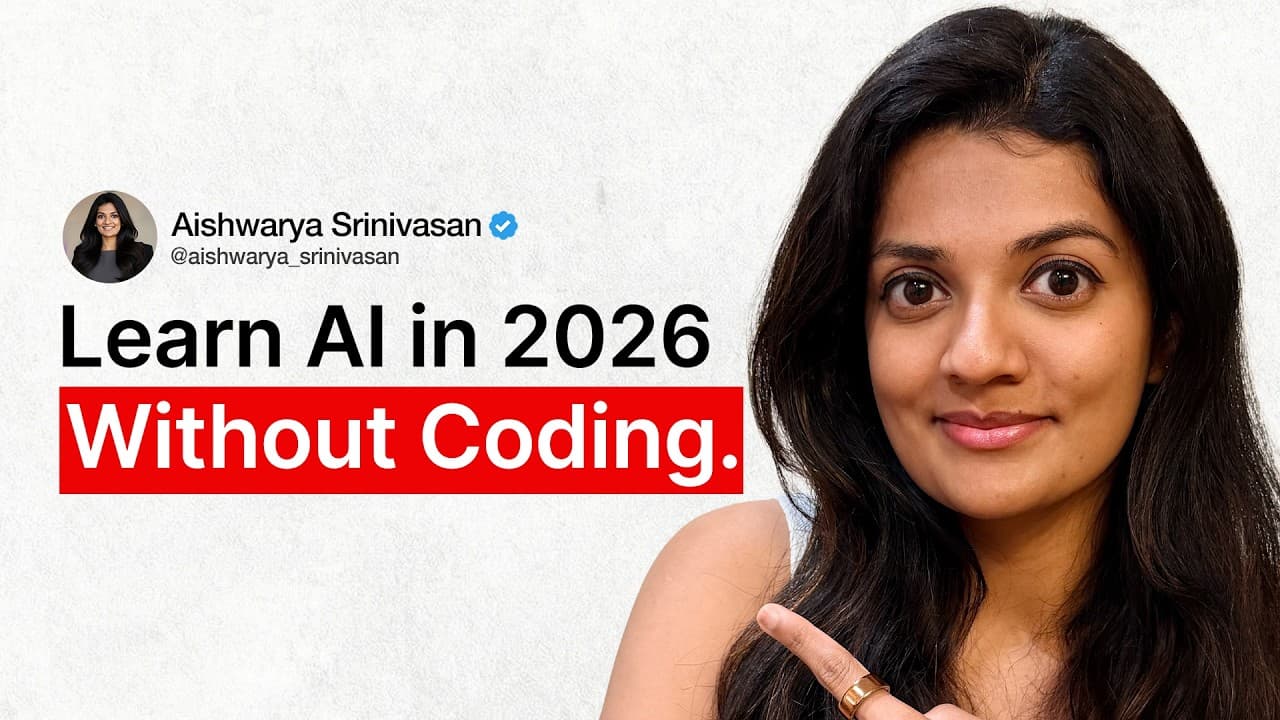
To break into AI without a technical background, start by understanding AI literacy rather than diving into tools. Define your career goals clearly to create a personalized learning path. Use resources like AI for Everyone and leverage skills from your current field, whether marketing, sales, or product management. Focus on building a custom roadmap and follow experts who align with your career aspirations.
Transcript
If you're trying to break into AI in 2026, but you don't have a technical background, this video is going to give you a clear personalized path forward, which is not generic advice that applies to everyone, but it is in fact a framework to figure out exactly what you need to learn based on where you're starting and where you want to go. I know how ... Read More
Key Insights
- AI literacy is the first step before learning tools or coding.
- Define clear career goals to guide your AI learning path.
- Different backgrounds require tailored learning paths in AI.
- AI roles vary widely, requiring diverse skill sets and goals.
- Use ChatGPT to design personalized learning roadmaps.
- Follow experts who align with your specific AI career goals.
- Your non-technical background can be an asset in AI.
- Consistency and goal clarity are key to success in AI careers.
Install to Summarize YouTube Videos and Get Transcripts
Explore YouTube Video Summarizer or Get YouTube Transcript Extractor
Questions & Answers
Q: How to start learning AI without a technical background?
Begin with AI literacy courses like 'AI for Everyone' by Andrew Ng to understand fundamental concepts. Avoid starting with coding or tools. Define your career goals to tailor your learning path. Focus on understanding how AI systems work and how they can be applied in your current field.
Q: Why is AI literacy more important than tools initially?
AI literacy provides a foundational understanding of what AI is and how it functions within systems. This knowledge is crucial before diving into tools or coding, as it helps prevent wasted time on irrelevant learning and enables more informed decision-making about which skills to pursue.
Q: What should marketers focus on when learning AI?
Marketers should focus on understanding how AI can enhance content creation, campaign analysis, and personalization. Learning about prompting as a thinking skill and evaluating AI outputs is crucial. Understanding AI tools and collaborating with engineers can significantly boost efficiency and effectiveness.
Q: How can ChatGPT help in creating a learning roadmap?
ChatGPT can be used to design a personalized learning roadmap by providing context about your current role and career goals. It can suggest skills to prioritize, concepts to focus on, and recommend resources. ChatGPT can also revise the roadmap as your understanding evolves, ensuring it remains relevant.
Q: What mindset is essential for transitioning into AI?
A mindset focused on clarity, consistency, and experimentation is essential. Success in AI is not about knowing everything initially but about setting clear goals, being consistent in learning, and applying knowledge practically. Viewing your non-technical background as an asset rather than a hindrance is also important.
Q: How can non-technical backgrounds be advantageous in AI?
Non-technical backgrounds provide unique perspectives and skills that are valuable in AI, such as user understanding, messaging, and communication. These skills are crucial for roles that involve designing AI experiences, interacting with users, and effectively communicating the value of AI solutions.
Q: What resources are recommended for AI literacy?
Recommended resources for AI literacy include 'AI for Everyone' by Andrew Ng and 'Generative AI for Everyone' on Coursera. These courses provide a non-technical overview of AI capabilities, limitations, and impact on jobs and workflows, which are essential for anyone looking to enter the AI field.
Q: Why is a personalized learning path important in AI?
A personalized learning path is important because AI roles and career paths are diverse, requiring different skills and knowledge. A tailored approach ensures that learning is relevant, efficient, and aligned with individual career goals, preventing confusion and burnout from consuming irrelevant content.
Summary & Key Takeaways
-
To transition into AI without a technical background, start by understanding AI literacy rather than immediately learning tools or coding. Clarify your career goals to build a personalized learning path that aligns with your existing skills and desired role in AI. Use resources like AI for Everyone to establish a strong foundation.
-
Different professional backgrounds require tailored approaches to learning AI. For example, marketers should focus on leveraging AI tools, while data analysts might delve into machine learning fundamentals. Use ChatGPT to create a customized 6-9 month roadmap and follow experts relevant to your career path.
-
Your non-technical background offers unique perspectives valuable in AI. Consistency in learning, clear goals, and a willingness to experiment are crucial. Utilize AI tools to enhance your current role and gradually build expertise. Follow specific creators and resources that align with your AI career objectives.
Read in Other Languages (beta)
Share This Summary 📚
Summarize YouTube Videos and Get Video Transcripts with 1-Click
Try YouTube Summary with ChatGPT & Claude or YouTube Transcript Generator
Explore More Summaries from Aishwarya Srinivasan 📚


Summarize YouTube Videos and Get Video Transcripts with 1-Click
Try YouTube Summary with ChatGPT & Claude or YouTube Transcript Generator