How Can You Manage Your Emotions Effectively?
TL;DR
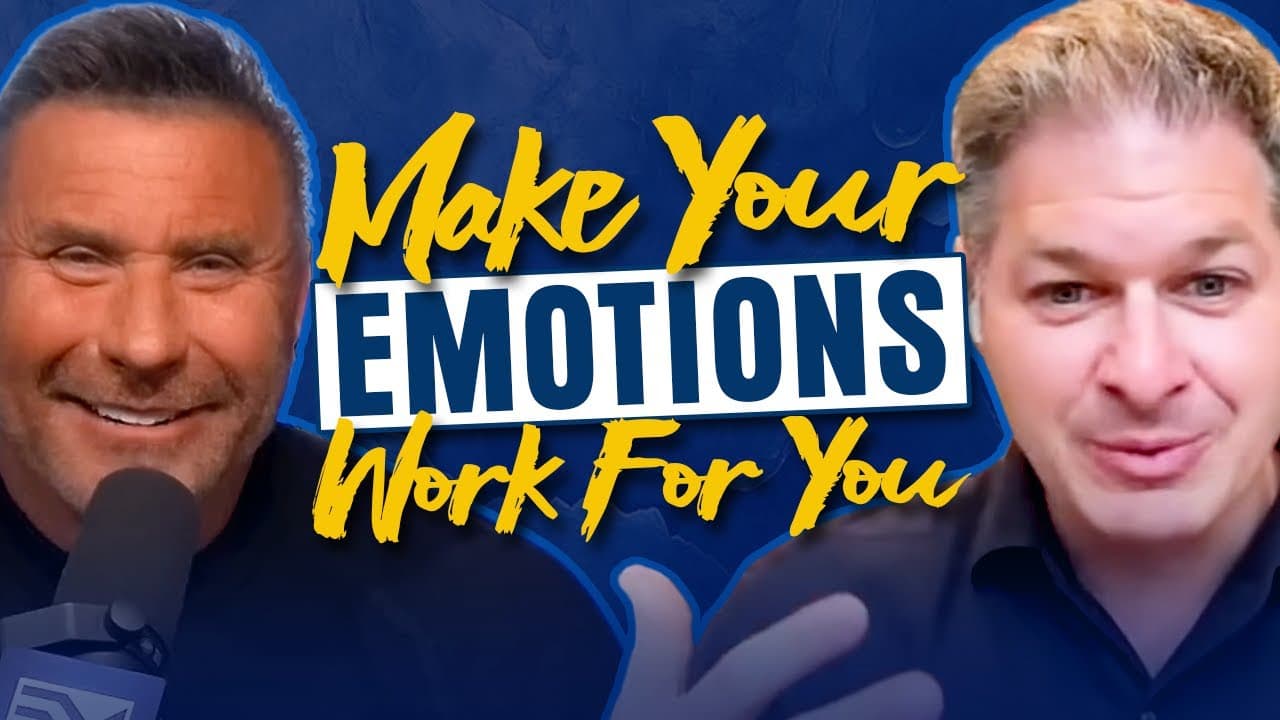
To manage your emotions effectively, utilize techniques like mental time travel to gain perspective, sensory shifts such as music or environment changes, and expressive writing to structure chaotic thoughts. Additionally, making if-then plans can help automate emotional regulation, while helping others and engaging with nature can improve your mood significantly.
Transcript
how correlated are thoughts and emotions you could think your way into or out of different emotional states we do this all the time when we go in the darker Direction too we think about the what ifs right this what if this happens what if that happens that's us thinking our way into experiences when we get stuck worrying about things we zoom in on ... Read More
Key Insights
- Thoughts and emotions are deeply connected, and you can think your way into or out of emotional states.
- Time traveling mentally, both into the future and the past, can help provide perspective and hope during emotional distress.
- Sensory shifts, like listening to music or changing your environment, can quickly alter your emotional state.
- Expressive writing helps structure thoughts, providing clarity and closure on emotional issues.
- Creating if-then plans (WOOP) can make emotional regulation automatic and more effective.
- Nature exposure has cognitive and emotional restorative benefits, helping to manage stress and improve mental clarity.
- Helping others during your own emotional lows can be a powerful way to improve your mood and emotional state.
- Prayer and rituals offer a sense of control and connection to something larger, aiding in emotional regulation.
- More videos with Ethan Kross:
Install to Summarize YouTube Videos and Get Transcripts
Explore YouTube Video Summarizer or Get YouTube Transcript Extractor
Questions & Answers
Q: How are thoughts and emotions related?
Thoughts and emotions are intimately connected; you can think your way into different emotional states. For instance, thinking about positive future events can make you feel good, while worrying about potential negative outcomes can lead to anxiety. Recognizing this connection allows for intentional emotional shifts.
Q: What is a sensory shift and how can it help manage emotions?
A sensory shift involves using your senses to alter your emotional state. This can include listening to music, which can evoke specific feelings, or changing your environment, such as going for a walk in nature. These shifts can quickly change your mood and help manage emotional responses.
Q: How does expressive writing aid in emotional regulation?
Expressive writing involves documenting your deepest thoughts and feelings, which helps organize chaotic thoughts into a coherent narrative. This process provides structure to emotional experiences, allowing for better understanding and resolution, and ultimately aiding in emotional regulation.
Q: What is the WOOP strategy and how does it work?
WOOP stands for Wish, Outcome, Obstacle, and Plan. It's a strategy to make emotional regulation automatic by defining a goal (Wish), identifying the positive results (Outcome), recognizing personal barriers (Obstacle), and creating specific if-then plans (Plan) to manage emotional triggers effectively.
Q: How does exposure to nature benefit emotional well-being?
Exposure to nature has cognitive and emotional restorative benefits. It helps restore attention and reduce stress by gently engaging the senses, providing a calming effect. This makes it easier to manage emotions and improve mental clarity, especially in stressful or emotionally taxing situations.
Q: Why is helping others beneficial during emotional lows?
Helping others during emotional lows can improve your mood by shifting focus away from your own problems. It provides a sense of purpose and connection, which can be uplifting and rewarding, creating a win-win situation for both you and the person you are helping.
Q: What role does prayer play in emotional regulation?
Prayer can be a powerful tool for emotional regulation by providing a sense of order and control through ritualistic repetition. It connects individuals to a higher power, offering comfort and perspective, and often involves communal aspects that enhance emotional support and stability.
Q: How can one use perspective shifts to manage emotions?
Perspective shifts involve changing the way you view a situation to alter your emotional response. This can be done by mentally projecting into the future to see how you'll feel later or comparing current struggles to past hardships to gain perspective, both of which can provide hope and reduce anxiety.
Summary & Key Takeaways
-
Dr. Ethan Kross discusses the intricate relationship between thoughts and emotions, emphasizing how mental time travel can either trap or liberate us. He introduces sensory shifts as a method to quickly change emotional states, using music and environment as tools.
-
Expressive writing is highlighted as a method to structure chaotic thoughts, aiding emotional processing. Dr. Kross also explains the WOOP strategy to automate emotional regulation by planning responses to emotional triggers.
-
The conversation explores the benefits of nature and helping others as methods to enhance emotional well-being. Dr. Kross also touches on the role of prayer and rituals in providing emotional stability and a sense of control.
Read in Other Languages (beta)
Share This Summary 📚
Summarize YouTube Videos and Get Video Transcripts with 1-Click
Try YouTube Summary with ChatGPT & Claude or YouTube Transcript Generator
Explore More Summaries from Ed Mylett 📚





Summarize YouTube Videos and Get Video Transcripts with 1-Click
Try YouTube Summary with ChatGPT & Claude or YouTube Transcript Generator