How to Build a Profitable Personal Brand in 2026
TL;DR
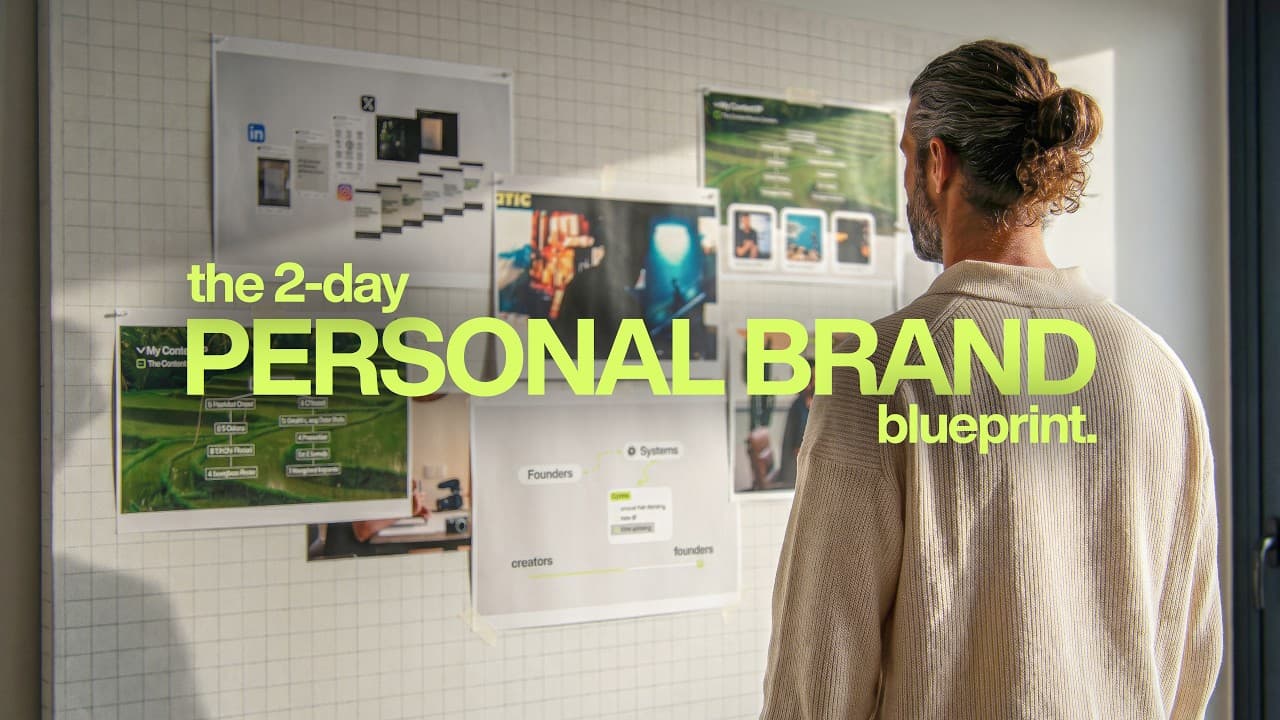
To build a profitable personal brand without burnout, focus on developing a system rather than trying to be a content creator. Use a two-day blueprint to establish a brand that operates independently, leveraging a team to manage content and engagement. This approach allows founders to maintain their business momentum while building a sustainable brand presence.
Transcript
You do not need every post to go viral or turn into an influencer to build a profitable personal brand. In fact, if you try to do that, you'll probably just burn out and quit. What you actually need is two focus days, a clean system, and the courage to build it like a founder, not like some content creator. If your business is already working, and ... Read More
Key Insights
- A personal brand can be profitable without daily content creation.
- A two-day blueprint helps establish a sustainable brand system.
- Founders should focus on building systems, not just content.
- Signal framework ensures clarity in brand communication.
- Content IP makes ideas recognizable and unique.
- Monetization is about building trust, not just selling.
- Authority pillars guide content creation and brand positioning.
- A media company identity shift allows brand scalability.
Install to Summarize YouTube Videos and Get Transcripts
Explore YouTube Video Summarizer or Get YouTube Transcript Extractor
Questions & Answers
Q: How to build a personal brand without daily content creation?
To build a personal brand without daily content creation, focus on developing a system that operates independently. Use a two-day blueprint to establish authority pillars and content IP, and leverage a team to manage content production and distribution. This approach allows for a sustainable brand presence without the founder's constant involvement.
Q: What is the signal framework in personal branding?
The signal framework in personal branding ensures clarity in communication by defining what the brand stands for. It involves answering key questions about the brand's identity, audience, and industry stance, helping to establish a strong brand signal that resonates with the target audience and guides content creation.
Q: Why is it important to differentiate between creator and founder?
Differentiating between creator and founder is crucial because creators focus on content production, while founders build systems that allow the brand to operate independently. This distinction helps avoid burnout and ensures the brand's growth is not solely dependent on the founder's personal involvement, enabling scalability and sustainability.
Q: How does content IP enhance a personal brand?
Content IP enhances a personal brand by creating recognizable and unique frameworks, systems, and language that distinguish the brand's ideas. This intellectual property makes the brand's content repeatable and difficult to copy, establishing authority and trust with the audience, and ensuring consistent brand messaging.
Q: What role does trust play in monetizing a personal brand?
Trust plays a pivotal role in monetizing a personal brand, as it encourages the audience to engage with and invest in the brand's offerings. Building trust involves consistent, clear communication and delivering genuine value, making the audience more likely to self-select into the brand's ecosystem, reducing the need for aggressive sales tactics.
Q: How can a brand operate without the founder's constant input?
A brand can operate without the founder's constant input by establishing a clear authority map and operating principles that guide the team. By delegating responsibilities and creating a content engine that repurposes high-performing content, the brand can maintain consistency and growth without requiring the founder's daily involvement.
Q: What is the content waterfall system?
The content waterfall system is a method of repurposing a single piece of high-performing content into multiple pieces across various platforms. This system maximizes content reach and efficiency, allowing the brand to maintain a consistent presence without requiring the founder to create new content constantly, thus optimizing resource use.
Q: How does a media company identity shift benefit a personal brand?
A media company identity shift benefits a personal brand by aligning it with the operational structure of successful media companies. This shift emphasizes content distribution, audience engagement, and brand scalability, allowing the brand to build a loyal audience and generate revenue consistently, independent of the founder's direct content creation efforts.
Summary & Key Takeaways
-
The video outlines a two-day blueprint for building a personal brand without becoming a content creator. Day one focuses on shifting from creator to founder mindset, establishing a signal framework, and creating authority pillars. Day two emphasizes team involvement, content distribution, and trust-based monetization strategies.
-
Building a personal brand involves creating a system that operates independently of the founder's daily input. The process includes defining clear authority pillars, developing unique content IP, and ensuring the brand communicates effectively to build trust with the audience.
-
A successful personal brand requires a shift from creator to CEO, focusing on systematizing content production and distribution. This approach reduces founder burnout and allows the brand to grow sustainably, leveraging team support and strategic content repurposing.
Read in Other Languages (beta)
Share This Summary 📚
Summarize YouTube Videos and Get Video Transcripts with 1-Click
Try YouTube Summary with ChatGPT & Claude or YouTube Transcript Generator
Explore More Summaries from Matt Gray 📚
Summarize YouTube Videos and Get Video Transcripts with 1-Click
Try YouTube Summary with ChatGPT & Claude or YouTube Transcript Generator