What are planetary boundaries and why protect Earth?
TL;DR
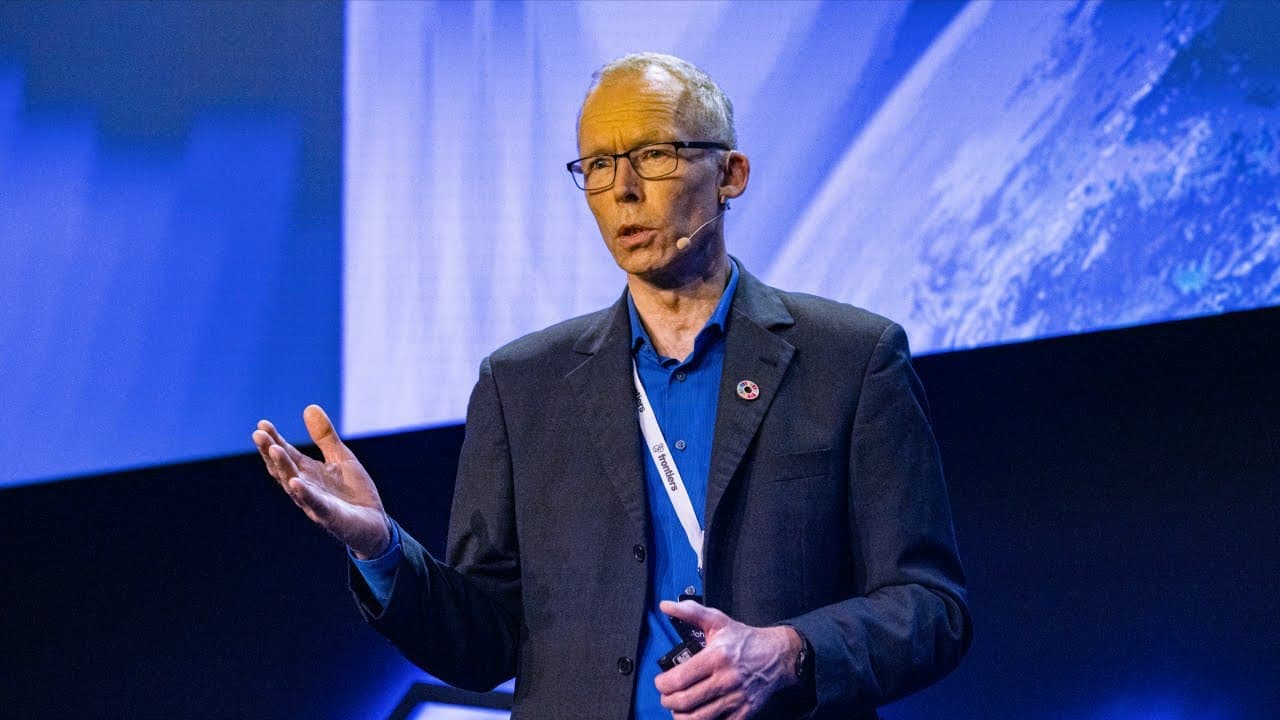
Planetary boundaries define a safe operating space for humanity and explain how the Earth system is showing signs of reduced resilience. The speaker argues we are in a turbulent epoch where climate, ecological, and geopolitical crises interact, and that keeping warming near 1.5C and protecting natural sinks is essential for a stable future.
Transcript
I want to take you down on the ground for a moment and give you the scientific story behind the planetary boundaries the three pieces of extraordinary advancements in Earth system science that took us to the point where we per necessity needed to define a safe operating space for Humanity's future on earth and the first piece of the science is undo... Read More
Key Insights
- Planetary boundaries establish a safe operating space for Humanity and the Earth system. They quantify how far Earth can be pushed before systemic risks rise.
- The Anthropocene is characterized by human dominance of planetary processes and a looming loss of resilience in Earth system functioning.
- There is a growing concern that climate, ecological, and governance crises interact, creating a potential polycrisis scenario that amplifies impacts across regions.
- Maintaining 1.5 degrees Celsius of warming as a target requires rapid phasing out of fossil fuels and preserving carbon sinks and natural steady states.
- The Holocene is used as a reference point for a stable climate state, with a narrow variability range that underpin human development.
- Evidence from climate and ecological data indicates cracks in natural safeguards such as ocean uptake and forest sinks, challenging previous assumptions of stable buffers.
- The planetary boundary framework has evolved toward interdisciplinary global sustainability science to address climate, biodiversity, and social equity in one integrated approach.
- Scientific advances in Earth system modeling are essential to understanding past, present, and future trajectories of the planet and human civilization.
Install to Summarize YouTube Videos and Get Transcripts
Explore YouTube Video Summarizer or Get YouTube Transcript Extractor
Questions & Answers
Q: What are planetary boundaries and why were they developed?
Planetary boundaries are a science based framework that defines a safe operating space for humanity by identifying thresholds in Earth system processes. They were developed to provide a health check for the planet, enabling scientists to assess when human activity risks pushing the Earth system into a less stable regime. The framework emphasizes precaution, resilience, and governance considerations, guiding global sustainability efforts.
Q: Why is the Anthropocene described as turbulent, and what crises are highlighted?
The Anthropocene is described as turbulent because human activity now dominates climate, ecological, and societal systems, leading to a convergence of crises. The speaker notes climate, ecological, and geopolitical crises interact and reinforce each other, creating a polycrisis where losses in biodiversity, disrupted moisture and carbon cycles, and pandemics emerge as interconnected challenges demanding coordinated responses.
Q: What role does the 1.5 degree target play according to the lecture?
The lecture argues that 1.5 degrees Celsius is a physical limit that should be held to avoid crossing dangerous thresholds. The speaker cites IPCC conclusions indicating that there is no safe landing at higher temperatures and that keeping intact natural processes is essential for climate stability. Rapid decarbonization and preservation of carbon sinks are central to staying near or below this target.
Q: How does the Holocene relate to current climate discussions?
The Holocene is used as a reference point for the desired climate state that supported human development. It provides a narrow variability range that scientists compare against to judge stability. The talk emphasizes that maintaining Holocene like conditions is critical for sustainable human societies, and this benchmark informs planetary boundary assessments and policy goals.
Q: What is the significance of natural sinks like oceans and forests in this framework?
Natural sinks such as oceans and forests are crucial buffers that absorb carbon and help stabilize the climate. The speaker notes that these sinks have historically supplied a large portion of the economy through climate regulation. Cracks in these systems, like forests switching from sinks to sources, raise concerns about the robustness of these buffers under continued stress.
Q: What evidence is presented to show that the planet is moving away from a stable state?
The presentation references scientific graphs and observations demonstrating increased global temperatures, shifts in carbon uptake, and the degradation of ecosystems such as the Amazon rainforest changing from a sink to a source. These indicators signal a departure from the stable Holocene state and underline the need for a rapid, science guided response.
Q: What does the speaker suggest about the role of interdisciplinary science in solutions?
The speaker argues that addressing climate crisis and safeguarding biodiversity requires an interdisciplinary, global sustainability science approach. This involves integrating climate science, ecology, economics, governance, and equity to design transformative actions that keep humanity within a safe operating space while advancing sustainable development.
Q: What is described as the ultimate objective of the planetary boundaries project?
The ultimate objective is to keep humanity within a safe and just operating space on Earth by maintaining the planetary boundaries within which the Earth system remains resilient. This requires keeping intact natural processes, reducing risk of tipping points, and enabling a fair transition to sustainable technology, governance, and societal practices that support long term stability.
Summary & Key Takeaways
-
The talk presents the planetary boundaries framework as a system to gauge Earth stability and human impact, emphasizing that resilience is declining and the Anthropocene is intensifying global turbulence.
-
The keynote highlights that rapid decarbonization and preserving ecosystem services are necessary to prevent crossing critical thresholds and maintain a Holocene-like climate state.
-
Finally, the speaker stresses that interdisciplinary global sustainability science must guide transformative, equitable action to safeguard both humanity and biodiversity on Earth.
Read in Other Languages (beta)
Share This Summary 📚
Summarize YouTube Videos and Get Video Transcripts with 1-Click
Try YouTube Summary with ChatGPT & Claude or YouTube Transcript Generator
Explore More Summaries from Frontiers 📚

Summarize YouTube Videos and Get Video Transcripts with 1-Click
Try YouTube Summary with ChatGPT & Claude or YouTube Transcript Generator