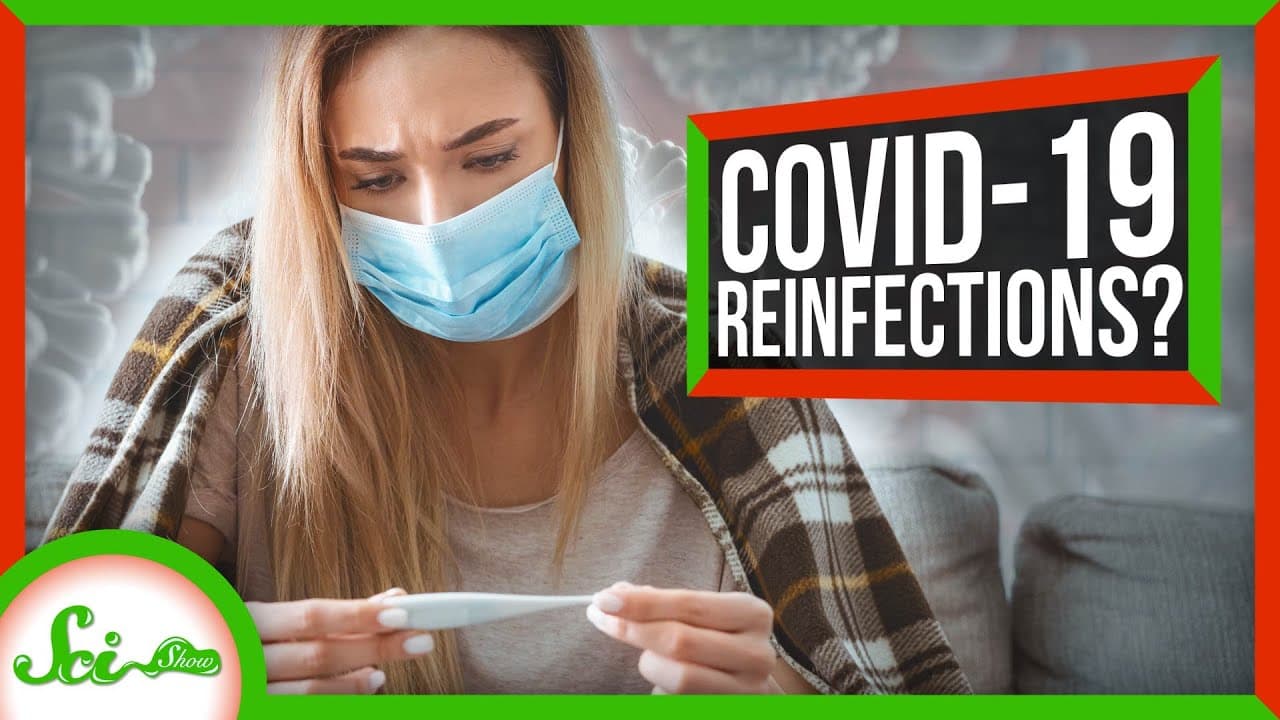
Does Getting COVID-19 Make You Immune to It? | SciShow News
TL;DR
Vaccines are crucial for achieving herd immunity and slowing the spread of COVID-19, but it's unclear how long immunity lasts and if re-infections are possible.
Transcript
thanks to brilliant for supporting this episode of scishow good a brilliant daughter slash scishow to learn more about their statistics fundamentals course this episode was filmed on April 22nd if we have a more recent episode about reinfection we will include it in the description there are now dozens of potential vaccines in development to fight ... Read More
Key Insights
- 🐢 Vaccines are crucial in achieving herd immunity and slowing the spread of COVID-19.
- 🍉 The immune system has innate and adaptive defenses, with memory cells providing long-term protection.
- 🤨 Apparent re-infection cases of COVID-19 raise concerns about long-term immunity.
- 🍉 Viral latency and the virus evading long-term immunity are possible explanations for re-infection cases.
- 🪡 Further studies are needed to determine the duration of immunity to COVID-19.
- 🫒 Effective treatments may be crucial if immunity to COVID-19 is short-lived.
- 😷 Wearing masks and practicing social distancing are important regardless of previous infection.
Install to Summarize YouTube Videos and Get Transcripts
Explore YouTube Video Summarizer or Get YouTube Transcript Extractor
Questions & Answers
Q: How does the immune system provide protection against infections?
The immune system has innate and adaptive defenses, including physical barriers and cells that attack pathogens. The adaptive immune system creates memory cells for long-term protection.
Q: Can people be re-infected with COVID-19?
There have been reported cases of apparent re-infection, but it's not yet clear if these cases are due to inaccurate testing or the virus evading long-term immunity.
Q: How does viral latency work?
Some viruses, like herpes, can hide in the body and reactivate later. It's uncertain if SARS-CoV-2 can exhibit this behavior.
Q: Why might some viruses elicit shorter periods of immunity?
Corona viruses, including the common cold, may suppress the immune response and result in shorter periods of immunity. It's still a mystery why this happens.
Q: Is there evidence of long-term immunity to similar viruses?
Studies on SARS survivors showed lasting immunity for an average of around two years. There is some evidence of memory T-cells 11 years after recovery.
Summary & Key Takeaways
-
Vaccines offer a path to immunity without severe illness, allowing us to achieve herd immunity and slow the infection rate.
-
The immune system has layers of defense, including the innate and adaptive immune systems.
-
The adaptive immune system creates memory cells that can recognize and destroy specific pathogens, providing active immunity.
Read in Other Languages (beta)
Share This Summary 📚
Summarize YouTube Videos and Get Video Transcripts with 1-Click
Try YouTube Summary with ChatGPT & Claude or YouTube Transcript Generator
Explore More Summaries from SciShow 📚

Summarize YouTube Videos and Get Video Transcripts with 1-Click
Try YouTube Summary with ChatGPT & Claude or YouTube Transcript Generator