What Are the Risks and Benefits of Human-Led AI?
TL;DR
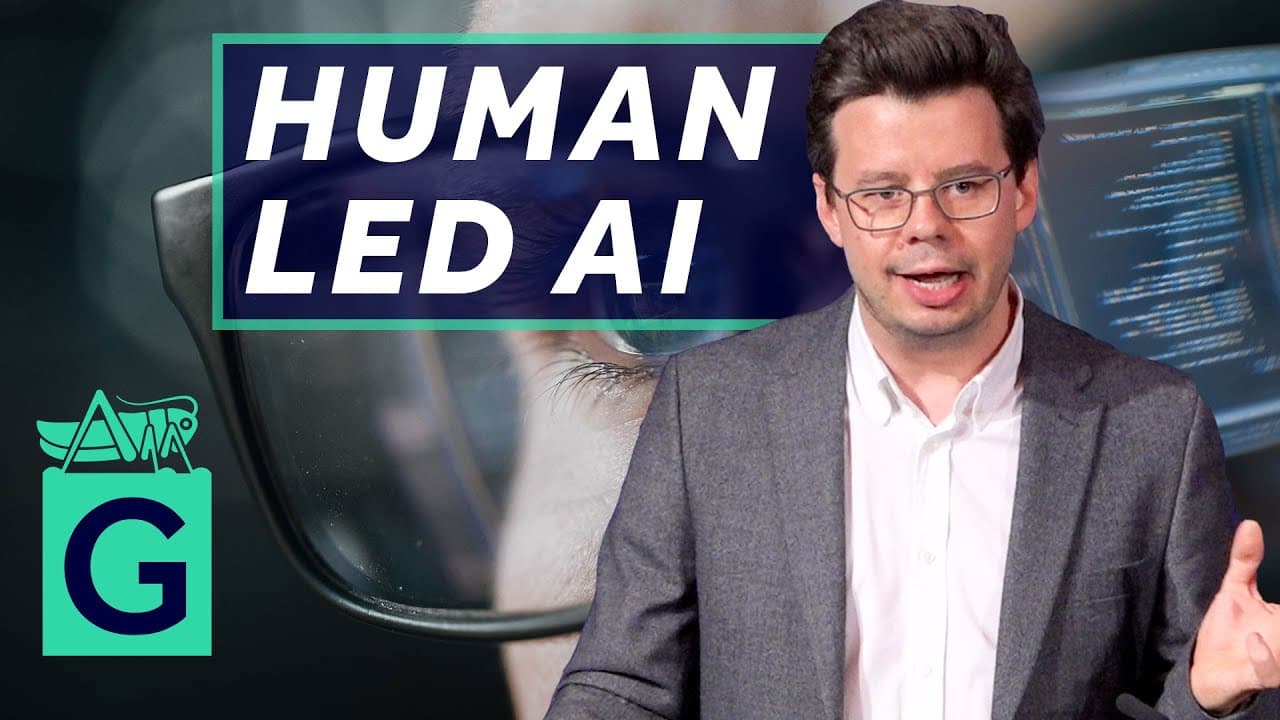
Human-led AI has the potential to transform sectors like education, healthcare, and transportation, but it poses challenges including specifying objective functions and ethical concerns. To ensure safety and alignment, it's crucial to express human values in AI systems and approach development with caution, balancing the benefits against possible risks.
Transcript
so I'm sure everyone here has seen AI in the news recently maybe over the last year or two and you're probably wondering whether this is just like a brief moment in the sun you know is it going to be like crypto or the metaverse or you know is this a is this here to stay and I'm here to say basically this is just the start if we roll out the curren... Read More
Key Insights
- 🎓 AI has the potential to bring significant advancements in various industries, transforming education, healthcare, transportation, and more.
- 🥺 Specifying precise objective functions for AI systems without common sense presents challenges and can lead to unintended consequences.
- 😑 The development of powerful AI requires careful consideration of ethical implications and the need to express human values in software.
- 🦺 Different approaches, such as incremental development and formal mathematical guarantees, can help ensure the safety and alignment of AI systems.
- 🦺 The boundary between the safe Green Zone and the risky Red Zone of AI development may not be strictly defined, but a thoughtful balance between risks and benefits is crucial.
- 🪡 AI data poisoning and biased training data pose challenges that need to be addressed through careful curation and mitigation techniques.
Install to Summarize YouTube Videos and Get Transcripts
Explore YouTube Video Summarizer or Get YouTube Transcript Extractor
Questions & Answers
Q: What are the challenges in specifying precise objective functions for AI systems?
The difficulty lies in capturing common sense and human-like decision-making in computers. Humans possess an enormous amount of common sense when performing tasks, which is challenging to translate into precise instructions for AI systems.
Q: What are the potential risks associated with AI?
AI misuse, accidental misuse, and the lack of a clear off-switch are major concerns. When AI is used for critical decisions, such as in healthcare or warfare, the absence of human judgment and common sense can lead to unintended outcomes.
Q: How can we ensure AI systems are safe and unbiased?
It is crucial to carefully curate training data and employ techniques that mitigate bias. Ongoing research and development of AI algorithms that incorporate governance mechanisms, explainability, and modular testing can enhance safety and reduce bias.
Q: How can humans guide AI decision-making and express their values in software?
The design of AI systems should involve a collaboration between humans and AI to ensure decision-making aligns with human values. Governance protocols, feedback loops, and strategic human decisions can guide AI systems towards desired outcomes.
Summary & Key Takeaways
-
Current AI techniques in education, healthcare, transportation, and warfare already have the potential to bring about a significant shift in society.
-
Concerns arise due to the difficulty of specifying precise objective functions for AI systems without common sense, which can lead to unintended consequences.
-
The development of powerful AI raises questions about ethics and the need for humans to express their values in software to guide AI decision-making.
Read in Other Languages (beta)
Share This Summary 📚
Summarize YouTube Videos and Get Video Transcripts with 1-Click
Try YouTube Summary with ChatGPT & Claude or YouTube Transcript Generator
Explore More Summaries from Gresham College 📚

Summarize YouTube Videos and Get Video Transcripts with 1-Click
Try YouTube Summary with ChatGPT & Claude or YouTube Transcript Generator