Is a Mathematician a Robot? - Professor Chris Budd OBE
TL;DR
Mathematics is central to robotics because it enables machines to learn tasks that can directly affect people’s lives. Professor Chris Budd examines machine learning, strong artificial intelligence, self-driving cars, and Isaac Asimov’s Three Laws of Robotics while asking how close society is to universal robots. He also highlights biased decisions, opaque reasoning, and other ethical concerns, giving readers a reason to explore both the promise and limitations of machine intelligence.
Transcript
right well welcome everybody it's nice to be here despite a somewhat damp day so the for those you don't know me I'm Chris Berg and I'm the aggression professor of geometry and today I'm going to ask the question is a mathematician a robot he's a mathematician or robots for those of you who have been following this series which is called maths and ... Read More
Key Insights
- 😷 Machine learning has the potential to revolutionize various industries, such as computer vision, investment planning, and medical diagnosis.
- 🎰 However, there are ethical concerns surrounding machine learning, including the potential for biased decision-making and the inability to fully understand the reasoning of machine learning algorithms.
- 🌥️ Machine learning algorithms have limitations, and there are still problems that computers cannot solve, such as factorizing large numbers.
Install to Summarize YouTube Videos and Get Transcripts
Explore YouTube Video Summarizer or Get YouTube Transcript Extractor
Questions & Answers
Q: Is a mathematician a robot?
The talk uses this question to explore how mathematics gives robots the ability to learn and perform tasks. It focuses on machine intelligence rather than claiming that mathematicians literally are robots, while asking how close machines are to exhibiting general human intelligence.
Q: What role does mathematics play in robotics?
Mathematics supports the methods that allow machines to learn how to perform particular tasks. The talk connects this learning to technologies that directly affect daily life and to the ethical issues created by machine-made decisions.
Q: What are Isaac Asimov’s Three Laws of Robotics?
As presented in the talk, a robot should not harm or indirectly cause harm to a human being. It should obey human rules and defend its own existence.
Q: What is strong artificial intelligence?
Strong artificial intelligence is the ability of a robot to think and behave in the same general way as a human. It includes making free associations, showing a degree of “free will,” being creative, and displaying general intelligence.
Q: What makes a machine a robot?
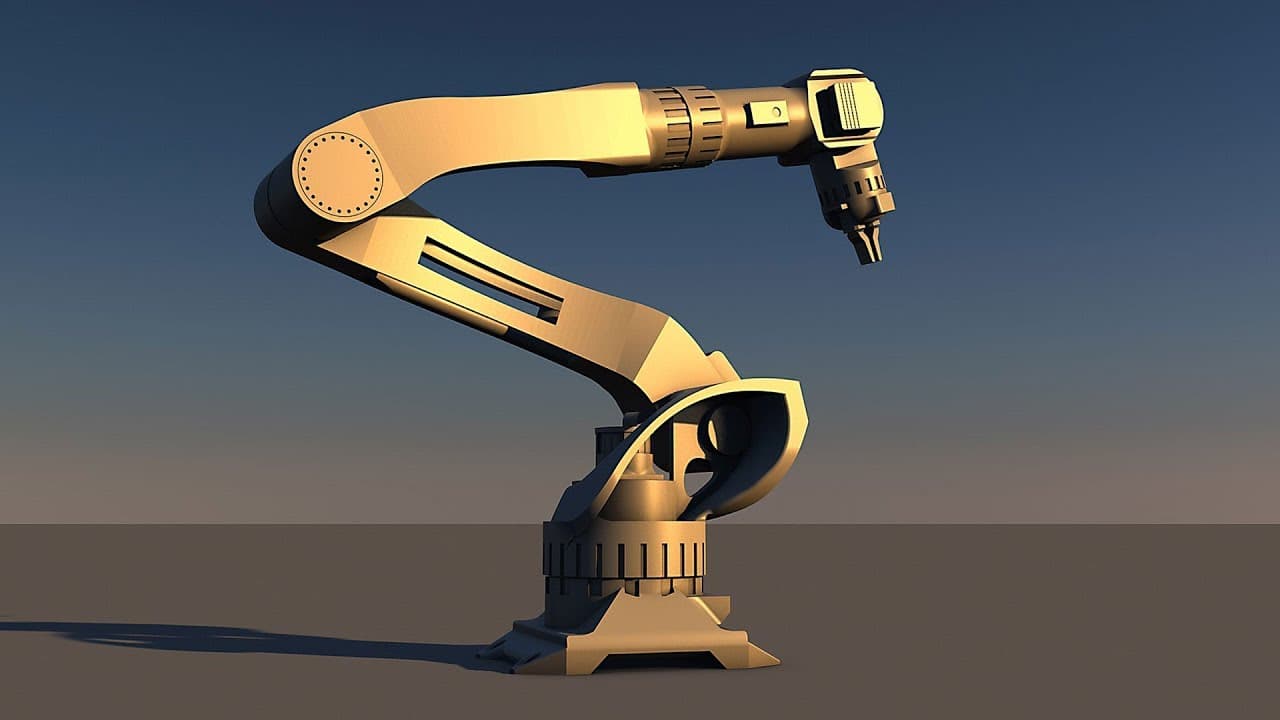
A robot does not need to resemble a mechanical person with arms and legs. The important element is its brain or intelligence, which makes it capable of carrying out tasks with a degree of freedom.
Q: Where does the word “robot” come from?
The word was coined around the 1920s and comes from the Czech word “robota,” meaning forced labor. The talk connects it with the play “R.U.R.,” or “Rossum’s Universal Robots.”
Q: What examples of robots does Professor Chris Budd discuss?
The examples include Honda’s ASIMO, machines used to weld or assemble cars, personal-assistant technology, and self-driving cars. These illustrate that robots can take many forms and are already present in everyday life.
Q: What concerns arise when machine learning makes decisions?
Machine learning can draw false conclusions from large amounts of data, producing biased or inaccurate outcomes. Its reasoning may also be difficult to understand because an algorithm can operate like a black box, raising concerns when machines replace human judgment.
Summary & Key Takeaways
-
The speaker discusses the role of mathematics in robotics, specifically machine learning, and its impact on society.
-
Machine learning is the ability of a machine to be trained to perform specific tasks, and it is rapidly developing and changing many aspects of our lives.
-
The speaker explores the ethical issues that arise with the use of machine learning, such as bias in decision-making and the potential for machines to replace human judgment.
Read in Other Languages (beta)
Share This Summary 📚
Summarize YouTube Videos and Get Video Transcripts with 1-Click
Try YouTube Summary with ChatGPT & Claude or YouTube Transcript Generator
Explore More Summaries from Gresham College 📚

Summarize YouTube Videos and Get Video Transcripts with 1-Click
Try YouTube Summary with ChatGPT & Claude or YouTube Transcript Generator