What Are the Key Concepts of Java Object-Oriented Programming?
TL;DR
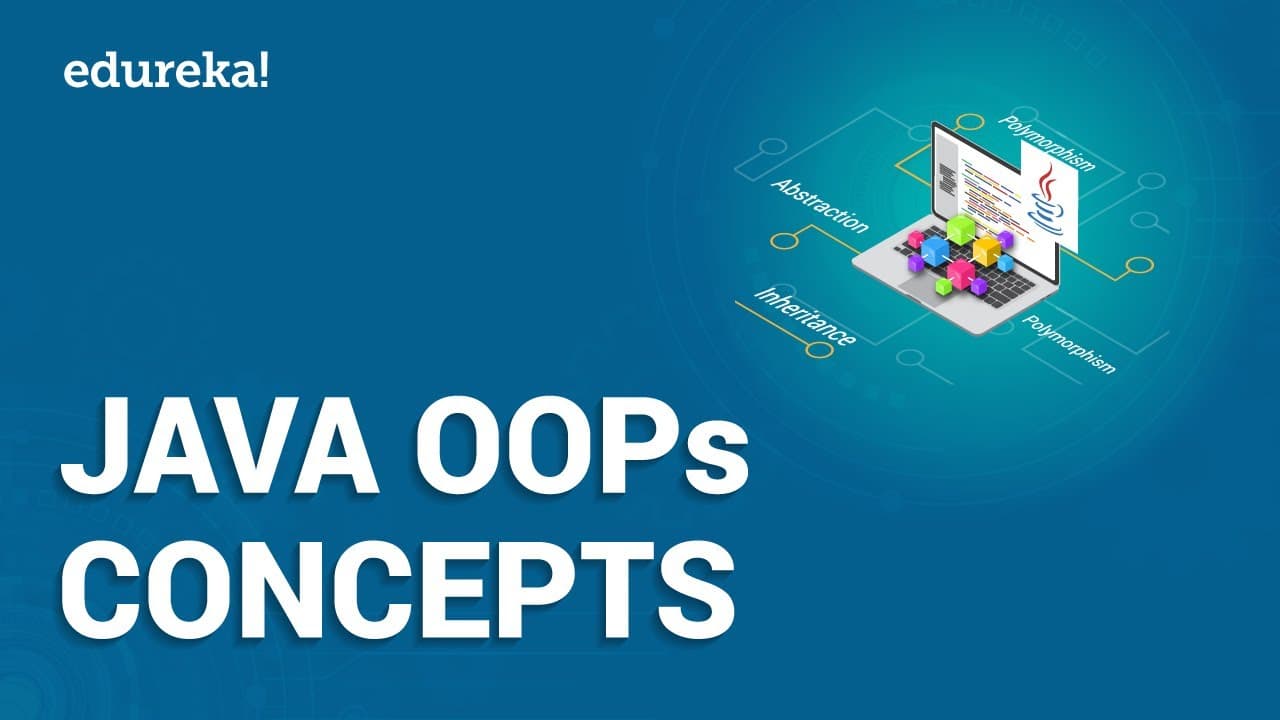
Java object-oriented programming (OOP) revolves around four key concepts: encapsulation, inheritance, polymorphism, and abstraction. Encapsulation safeguards data by restricting direct access, inheritance enables one class to derive properties from another, polymorphism allows for method overloading and overriding for flexible behavior, and abstraction focuses on hiding complex implementation details through abstract classes and interfaces.
Transcript
hello friends welcome to a Devika this is yond and today's session we're gonna cover object-oriented programming structure in Java so let's begin and see what and all we are going to cover for the day we'll see what is object-oriented programming how is it different from the procedural approach what are the various fundamentals available in object-... Read More
Key Insights
- 🏗️ Object-oriented programming (OOP) is a widely used software design methodology that involves creating software solutions using objects and classes. Objects represent real-world entities with state and behavior, while classes serve as blueprints for objects.
- 💡 In OOP, objects have properties (attributes) and behavior (methods). The properties describe the characteristics of an object, while the behavior defines what an object can do.
- 🔑 Inheritance is a fundamental concept in OOP, where one object acquires the properties of another object. It establishes a parent-child relationship and allows for code reusability and extensibility.
- 🌐 Encapsulation is another key principle of OOP that involves hiding the internal state of an object and only exposing necessary information through methods. It helps ensure data security and maintainability of the code.
- 🔁 Polymorphism, or the ability of an object to take on different forms, is achieved through method overloading (compile-time polymorphism) and method overriding (runtime polymorphism). It allows for more flexible and dynamic code execution.
- 🔖 Abstraction is a concept in OOP that allows you to create abstract classes and interfaces. Abstract classes provide a template for methods and definitions, while interfaces define constants and abstract methods. They enable multiple inheritance and promote loose coupling.
- 📐 OOP follows a bottom-up approach, where you think of the objects first and then start coding. It offers features like access modifiers and other enhancements not available in procedural programming.
- 🔍 The four major pillars of OOP are inheritance, encapsulation, polymorphism, and abstraction. These pillars form the foundation for any OOP language and are essential for creating robust and modular software solutions.
Install to Summarize YouTube Videos and Get Transcripts
Explore YouTube Video Summarizer or Get YouTube Transcript Extractor
Questions & Answers
Q: What is the difference between object-oriented programming and procedural programming?
Object-oriented programming is a bottom-up approach where the object is considered first and coding is done based on the objects, while procedural programming is a top-down approach where the program is modularized into functions.
Q: What is the purpose of encapsulation in object-oriented programming?
Encapsulation allows data to be hidden and accessed only through specific methods, ensuring security and maintaining the integrity of the data.
Q: How is inheritance used in object-oriented programming?
Inheritance allows one object to acquire the properties and behaviors of another object, creating a parent-child relationship. This promotes code reuse and facilitates extensibility.
Q: What is polymorphism in object-oriented programming?
Polymorphism refers to the ability for methods with the same name to have different definitions, either at compile-time (overloading) or at runtime (overriding).
Q: How is abstraction achieved in object-oriented programming?
Abstraction is achieved through abstract classes and interfaces, which provide a blueprint for classes and contain abstract methods that need to be implemented.
Q: What is the purpose of encapsulation in object-oriented programming?
Encapsulation allows data to be hidden and accessed only through specific methods, ensuring security and maintaining the integrity of the data.
Summary & Key Takeaways
-
Object-oriented programming is a software design methodology that utilizes objects and classes to create software solutions.
-
Objects are real-world entities with state and behavior, while classes act as blueprints for objects.
-
The four main pillars of object-oriented programming are inheritance, abstraction, polymorphism, and encapsulation.
Read in Other Languages (beta)
Share This Summary 📚
Summarize YouTube Videos and Get Video Transcripts with 1-Click
Try YouTube Summary with ChatGPT & Claude or YouTube Transcript Generator
Explore More Summaries from edureka! 📚
![AWS Full Course - Solutions Architect [12 Hours] | AWS Certified Solutions Architect [2024] |Edureka thumbnail](/_next/image?url=https%3A%2F%2Fi.ytimg.com%2Fvi%2F5gnoVjpfWxU%2Fhqdefault.jpg&w=750&q=75)




Summarize YouTube Videos and Get Video Transcripts with 1-Click
Try YouTube Summary with ChatGPT & Claude or YouTube Transcript Generator