2. Accessing and Modulating Brain Circuitry in Freely Moving Human Subjects with Parkinson's
TL;DR
Deep brain stimulation can access and modulate brain circuitry in freely moving people with Parkinson’s disease to support more precise, targeted therapies. Researchers combine neural recordings with objective movement measures, including engineered keyboards, wearable sensors, and dual force plates, to identify signatures of tremor, bradykinesia, balance problems, and freezing of gait. Read on to see how these measurements could drive responsive, closed-loop stimulation.
Transcript
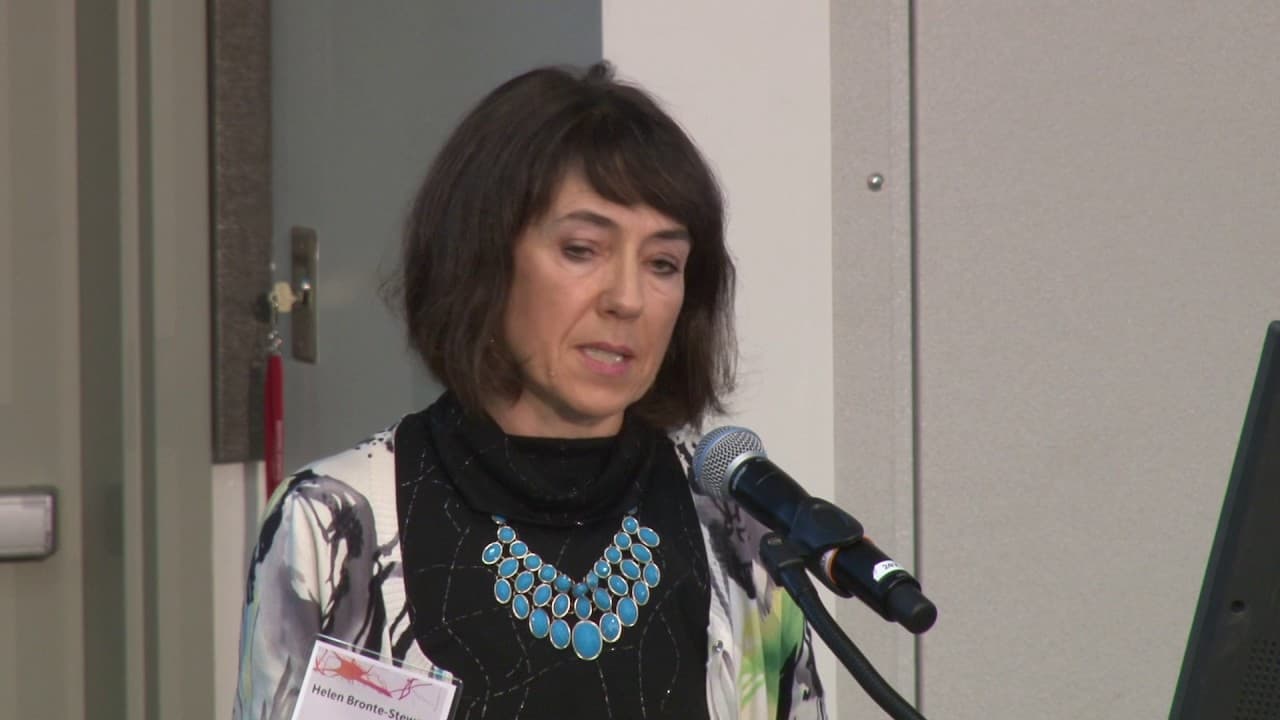
Stanford University so actually I think I'll just sit down now because Bryan just gave my talk I'm kidding so I am going to tell you about how we are trying to solve a problem that a lot of people said was ridiculous and that is how do we access and modulate brain circuitry in freely moving human subjects with Parkinson's disease to develop precise... Read More
Key Insights
- 🧠 Deep brain stimulation is being used to access and modulate brain circuitry in Parkinson's disease patients for precise targeted therapies.
- 🧑🦼 Clinical rating scales and wearable sensors are being used to measure complex movements and fine motor control in human subjects.
- 🤕 Exaggerated oscillations in the beta band have been observed in the subthalamic nucleus of Parkinson's disease patients, and deep brain stimulation can attenuate these oscillations.
Install to Summarize YouTube Videos and Get Transcripts
Explore YouTube Video Summarizer or Get YouTube Transcript Extractor
Questions & Answers
Q: How can brain circuitry be accessed and modulated in freely moving people with Parkinson’s disease?
Deep brain stimulation provides access to neural activity in deep brain regions and can modulate circuitry affected by Parkinson’s disease. Measuring that activity alongside movement in real time may reveal abnormal neural signatures that can drive smarter, responsive stimulation.
Q: How is fine motor control measured in people with Parkinson’s disease?
Researchers use a repetitive alternating finger-tapping task, described as a trill, on a MIDI keyboard. They later developed an engineered keyboard that can measure tremor, bradykinesia, and freezing behavior and was validated against a clinical rating scale.
Q: Why are clinical rating scales insufficient for developing precise Parkinson’s therapies?
Clinical rating scales are described as comprehensive and useful, but they do not provide the resolution needed for an engineering solution. Developing targeted therapies requires computerized, objective, validated measurements of complex movement.
Q: Which Parkinson’s symptoms are measured with computerized movement tasks?
The engineered keyboard can capture tremor, bradykinesia, and freezing behavior during repetitive finger movements. The speaker describes it as one of the most sensitive methods for measuring even large-scale movement disorders.
Q: How are wearable sensors used to study Parkinson’s movement?
Wearable sensors can be strapped to the limbs and used in the operating room or clinic. The researchers used solid-state gyroscopes to measure velocity during movement.
Q: How do researchers measure balance and freezing of gait in Parkinson’s disease?
Dual force plates are used to assess axial motor control, including balance. The researchers also developed a metric for freezing of gait based on a repetitive stepping-in-place task.
Q: What role does the subthalamic nucleus play in Parkinson’s deep brain stimulation?
The subthalamic nucleus is a deep brain region affected in Parkinson’s disease and a target for deep brain stimulation. Parkinson’s patients show exaggerated beta-band oscillations there, and stimulation has been shown to attenuate those oscillations.
Q: How could closed-loop deep brain stimulation improve Parkinson’s treatment?
Closed-loop stimulation can use kinematic or neural signals associated with particular symptoms to control neuromodulation responsively. This could make stimulation more precise and customized, while potentially providing a template for treating a wider range of neuropsychiatric diseases.
Summary & Key Takeaways
-
Deep brain stimulation (DBS) is being used to access and modulate brain circuitry in Parkinson's disease patients for precise targeted therapies.
-
Clinical rating scales and wearable sensors have been used to measure complex movements and fine motor control in human subjects.
-
Exaggerated oscillations in the beta band have been observed in the subthalamic nucleus of Parkinson's disease patients, and DBS has been shown to attenuate these oscillations.
-
Closed-loop DBS, driven by kinematic or neural signals, has the potential to improve symptoms and customize neuromodulation for a variety of neuropsychiatric diseases.
Read in Other Languages (beta)
Share This Summary 📚
Summarize YouTube Videos and Get Video Transcripts with 1-Click
Try YouTube Summary with ChatGPT & Claude or YouTube Transcript Generator
Explore More Summaries from Stanford 📚



Summarize YouTube Videos and Get Video Transcripts with 1-Click
Try YouTube Summary with ChatGPT & Claude or YouTube Transcript Generator