These Ancient Hindu Science Facts Will Shock You - Prof Raj Vedam
TL;DR
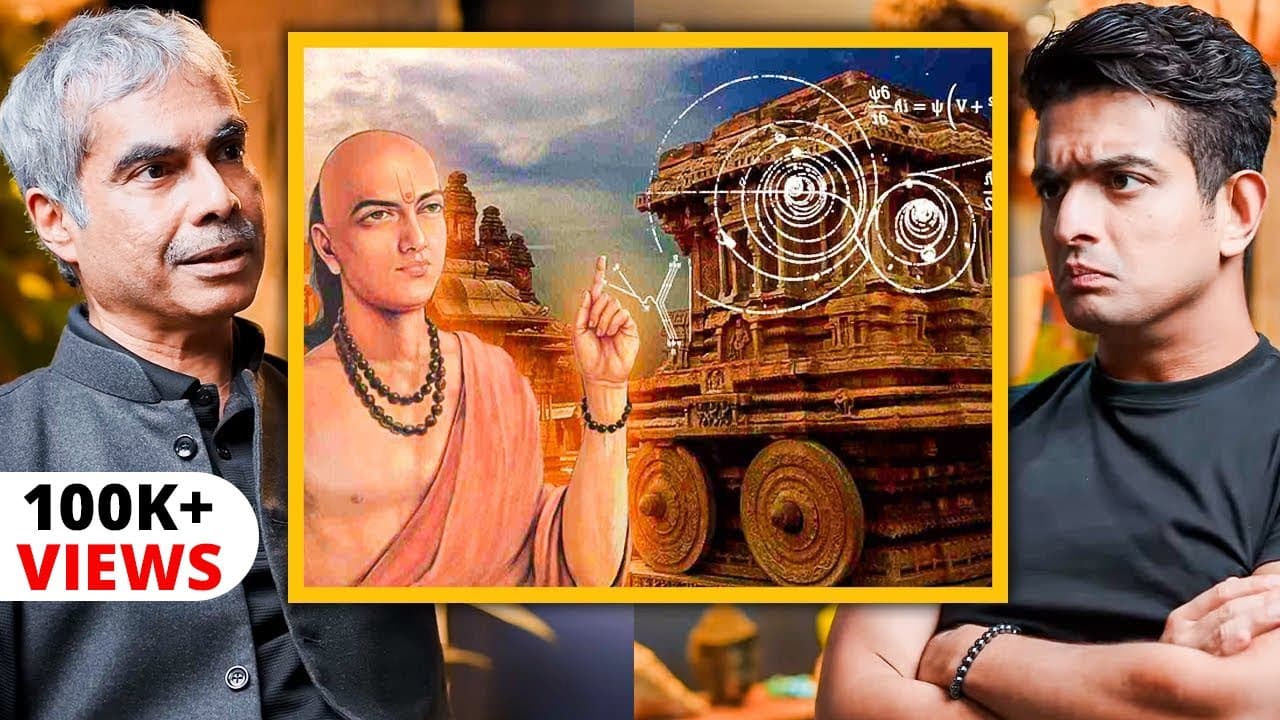
Ancient Indians used stories to map celestial bodies and predict astronomical events.
Transcript
your friends are scrolling through short content but you my friend you're here to learn welcome to Tiana's Clips let's talk about astronomy and okay all right you know the science is a little more right right uh what would you like to say about it okay would you like to bring an astrology as well there is no such thing as astrology we only had joa ... Read More
Key Insights
- 🍻 Ancient Indians linked astronomical observations to cycles in nature, embedding this knowledge within cultural stories to enhance understanding and memory.
- 🤩 The concept of nakshatras or lunar mansions allowed for complex calendrical systems that tracked the movements of the moon against fixed stars.
- ❓ Through stories like that of Chandra, ancient texts effectively conveyed intricate astronomical phenomena and human experiences in harmony with the cosmos.
- 😒 The mathematics observed by astronomers like Rishi Atri signifies the early use of geometry and predictive modeling in understanding celestial alignment and events.
- 🍁 Indian scholars not only mapped the skies but also reconciled different types of calendars to ensure agricultural and ceremonial activities remained in sync with natural cycles.
- 🛟 Texts such as the Puranas serve as vital records of astronomical understanding, conveying both scientific insights and cultural narratives.
- 🤑 The deep curiosity of ancient Indians to comprehend cosmic movements reflects a rich intellectual tradition that questions and seeks to unify knowledge.
Install to Summarize YouTube Videos and Get Transcripts
Explore YouTube Video Summarizer or Get YouTube Transcript Extractor
Questions & Answers
Q: How did ancient Indians observe and interpret celestial events?
Ancient Indians were keen observers of the night sky, noting the movements of celestial bodies like the moon and stars. They developed a system based on cycles of time, linking the moon's position to seasonal changes on Earth. The patterns they recognized were recorded in ancient texts, which also encoded wisdom through narratives, making them both practical and educational.
Q: What role do nakshatras play in Indian astronomy?
Nakshatras are lunar mansions that divide the ecliptic into 27 segments, linked to the movements of the moon. By observing the moon's placement against various stars, ancient astronomers could predict seasonal changes and other natural phenomena. Each nakshatra had a story associated with it, which helped the populace remember important cycles and astronomical events.
Q: Can you explain the significance of the story of Chandra and the 27 Daughters of King Dhaka?
The story of Chandra, the Moon, marrying the 27 daughters illustrates how ancient Indians encoded astronomical observations into narratives. This tale not only entertained but also provided an understanding of the moon's phases and its movement across the night sky, serving to visualize the lunar cycle in a culturally relevant manner.
Q: What mathematical methods did ancient Indians use in astronomy?
Ancient Indian astronomers utilized devices like the Tua yantra to measure angles in the sky, enabling them to predict eclipses. They developed a sophisticated understanding of celestial geometry, recognizing the angular relationship between the sun and moon, which allowed them to forecast astronomical events accurately.
Q: How does the understanding of lunar cycles differ from solar cycles in ancient Indian astronomy?
Ancient Indians distinguished between lunar and solar cycles, with the lunar cycle being approximately 29.5 days, described through nakshatras, whereas the solar year was understood to be about 365.24 days. They reconciled these cycles mathematically to maintain calendars, highlighting their advanced grasp of timekeeping.
Q: What texts contain the records of early Indian astronomy?
Early records of Indian astronomy can be found in various ancient texts, particularly in the Puranas, such as the Matsa Purana, which detail stories and phenomena related to celestial bodies, including astronomical events and mythological contexts that encoded observational wisdom.
Q: Why is the discovery of Rishi Atri's predictive abilities significant?
Rishi Atri's capacity to predict solar eclipses showcases an advanced understanding of mathematics and astronomy in ancient India. His predictions, based on angles between celestial bodies, reflect a sophisticated scientific approach and indicate a high level of intellectual development that has endured through history.
Q: How did ancient Indian astronomy influence modern understanding?
The astronomical practices of ancient India laid a foundation for modern astronomy by emphasizing observation and mathematical reasoning. Their methods of predicting celestial events and understanding time's cyclical nature resonate in contemporary scientific practices, showing the enduring legacy of ancient knowledge.
Summary & Key Takeaways
-
Ancient Indian astronomy involved intricate observations of celestial movements, where the moon's patterns were linked to stories encoding wisdom that helped people track time and understand cycles in nature.
-
The concept of nakshatras, or lunar mansions, allowed ancient people to predict natural events based on the moon's position against a backdrop of stars, showcasing a sophisticated understanding of the cosmos.
-
Early Indian scholars like Rishi Atri utilized mathematical tools to predict solar eclipses, revealing advanced astronomical knowledge far ahead of their time, encapsulated in sacred texts like the Puranas.
Read in Other Languages (beta)
Share This Summary 📚
Summarize YouTube Videos and Get Video Transcripts with 1-Click
Try YouTube Summary with ChatGPT & Claude or YouTube Transcript Generator
Explore More Summaries from TRS Clips 📚



Summarize YouTube Videos and Get Video Transcripts with 1-Click
Try YouTube Summary with ChatGPT & Claude or YouTube Transcript Generator