How Is insitro’s Daphne Koller Using AI for Digital Biology?
TL;DR
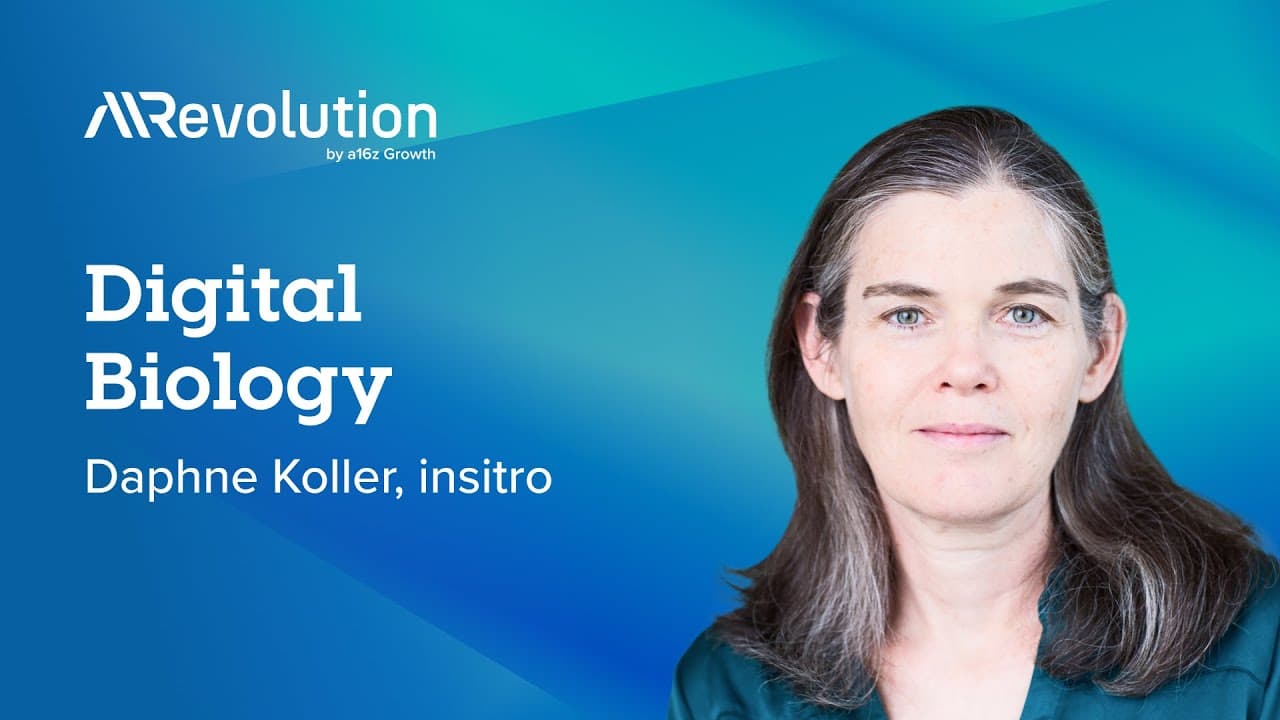
Daphne Koller says AI can advance digital biology because researchers can now measure and generate biological data at scale, making machine learning genuinely useful for studying human health. At insitro, a data factory creates human-derived cellular data, while the POSH platform pools CRISPR-edited cells to reduce environmental artifacts and compare genetic interventions. Read on to see how these methods connect cellular behavior, genetics, and drug discovery.
Transcript
we built a language model for biology so all of us are like now everyone's an expert to language models you have to explain this to people like oh language of biology no one knew what I was talking about but now it's like I'm just saying look it's just like GPT but for cells thank you Daphne is like the OG's OG and AI she was a Pioneer at Stanford ... Read More
Key Insights
- 🥹 The ability to measure biology at scale and deploy machine learning methods holds great potential for advancements in various fields.
- 🏛️ Building a language model for biology enables the translation and understanding of cellular data using AI techniques.
- 🧑⚕️ The convergence of machine learning and biology presents opportunities in human health, agriculture, environment, and materials.
- 🫡 The culture of openness, engagement, and mutual respect plays a crucial role in bridging the gap between biology and machine learning.
- 🏑 The field of AI for Life Sciences aims to develop a systematic approach to meaningful interventions and therapeutic discoveries.
- 🖐️ AI plays a significant role in automating experiments, improving data quality, and enhancing the understanding of complex biological systems.
- 🛟 Collaboration between experts in biology and machine learning is essential to leverage the full potential of AI in life sciences.
Install to Summarize YouTube Videos and Get Transcripts
Explore YouTube Video Summarizer or Get YouTube Transcript Extractor
Questions & Answers
Q: Why did Daphne Koller choose to focus on life sciences?
Koller considers safely and effectively improving human health both an exceptionally difficult and important problem. She also sees life sciences as a place where using AI for good could create disproportionate impact.
Q: Why is now the right time to apply AI to life sciences?
Researchers can now measure biology at scale at the cellular, subcellular, and organism levels. These larger biological data systems make it meaningful to deploy sophisticated machine-learning methods.
Q: What is insitro’s data factory?
The data factory generates biological data using pluripotent stem cells derived from people and transformed into cell types such as neurons or hepatocytes. Researchers can introduce disease-causing mutations and examine how different mutations affect cells with different genetic backgrounds.
Q: Why is generating biological data on demand valuable?
It lets researchers design data around specific biological questions instead of relying only on existing datasets. Koller says this creates discovery opportunities as well as machine-learning problems involving active learning and experimental design.
Q: What is the POSH platform?
POSH stands for pooled optical screening in humans. It places cells together with a pool of CRISPR guides, giving different cells distinct genetic edits before researchers observe their behavior and identify the guide associated with each cell.
Q: How does pooled screening reduce experimental artifacts?
Live cells placed in separate wells experience slightly different environments, which can create subtle differences that are difficult to reconcile. Keeping cells in one pool gives them the same cellular background and dish, reducing those environmental artifacts.
Q: What can researchers measure with POSH?
Researchers can observe pooled cells with a microscope as they move and behave. They can then fix the cells and sequence the barcode associated with each CRISPR guide to connect a genetic intervention with the resulting cellular behavior.
Q: What does a biological language model do?
Koller describes it as being like GPT for cells. It applies the language-model idea to biology so cellular data can be represented and understood with machine-learning techniques.
Summary & Key Takeaways
-
Daphne Koller highlights the importance of utilizing AI in life sciences to address challenging problems in human health.
-
The ability to measure biology at scale and deploy machine learning methods is now possible due to advancements in data collection and generation.
-
Incitro's unique data factory allows for the generation of large-scale biological data, enabling discovery opportunities and interesting machine learning problems.
Read in Other Languages (beta)
Share This Summary 📚
Summarize YouTube Videos and Get Video Transcripts with 1-Click
Try YouTube Summary with ChatGPT & Claude or YouTube Transcript Generator
Explore More Summaries from a16z 📚





Summarize YouTube Videos and Get Video Transcripts with 1-Click
Try YouTube Summary with ChatGPT & Claude or YouTube Transcript Generator