How Could the Upcoming Supreme Court Decision in King v. Burwell Affect America’s Healthcare Future and the ACA?
TL;DR
An unfavorable Supreme Court decision in King v. Burwell could eliminate federal insurance subsidies, making coverage unaffordable for some people and raising premiums across the individual market. The dispute affects federally facilitated exchanges in 37 different states, where subsidies cover about 72% of participating consumers’ premiums. Read on to understand the possible effects on coverage, insurers, states, and the ACA.
Transcript
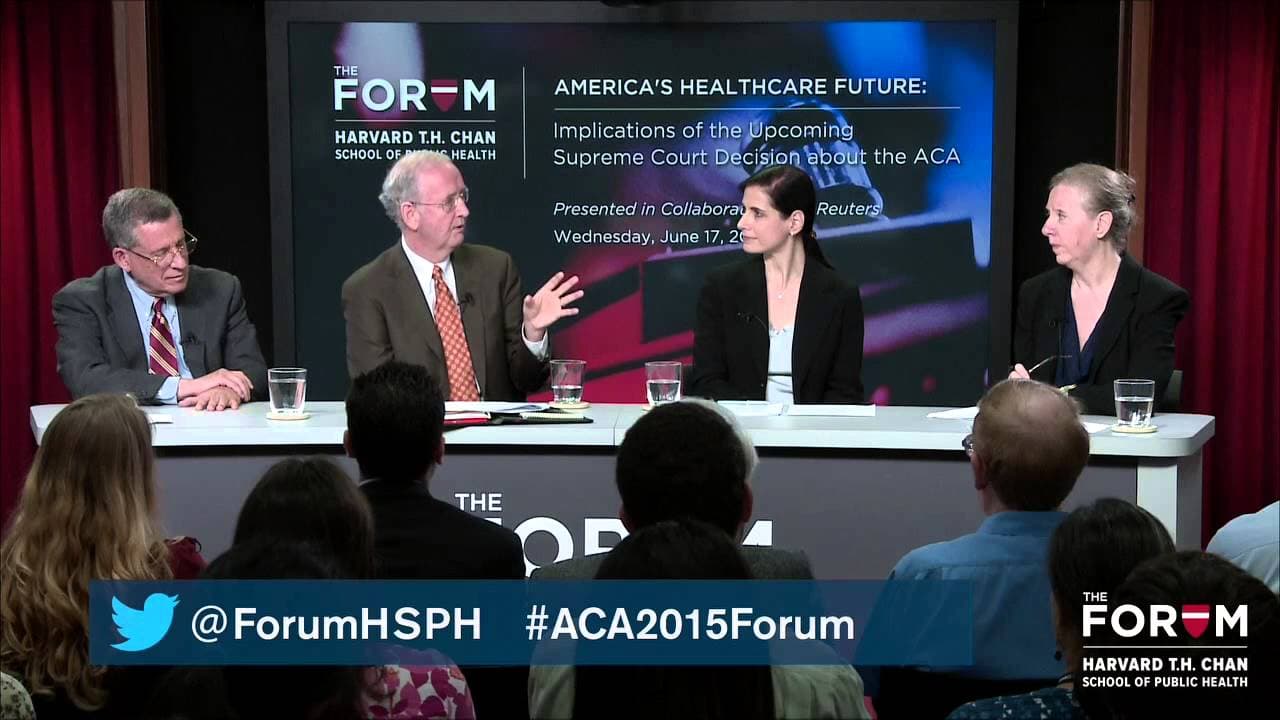
you you welcome my name is sharon begley i'm the senior health and science correspondent at Reuters and today's moderator our program which is about an hour long is a collaboration between the Harvard th Chan School of Public Health and Reuters today we'll be discussing the implications of a case before the Supreme Court argued in March King V Burw... Read More
Key Insights
- 😮 The absence of subsidies could result in a degeneration of risk pooling, leading to rising premiums for individuals and potential loss of coverage.
- 😚 The lack of political will in certain states to establish their own exchanges makes it unlikely that they will step in to rescue those who lose subsidies.
- 👮 The Supreme Court decision may not be a complete repeal of the Affordable Care Act, as there are other components of the law that will remain intact.
- ❓ The decision will have significant political ramifications, particularly in the upcoming presidential election.
- 💉 The impact on health care providers, such as hospitals, may result in financial challenges due to reimbursement cuts.
- 😫 The decision could set a precedent for rereading other controversial legislation, but it is unlikely to have a broader impact on existing laws.
Install to Summarize YouTube Videos and Get Transcripts
Explore YouTube Video Summarizer or Get YouTube Transcript Extractor
Questions & Answers
Q: What is King v. Burwell about?
King v. Burwell challenges whether ACA tax credits can support insurance purchased through federally facilitated exchanges. The dispute centers on four words in the law, "established by the state."
Q: Who could lose subsidies if the Supreme Court rules for the plaintiffs?
People receiving tax credits through federally facilitated exchanges could lose those subsidies. They are largely low-income consumers, but their ages and health profiles vary across states and regions.
Q: How many states could be affected by the King v. Burwell decision?
The challenge could affect people in 37 different states who buy insurance through a federal exchange. Most states had not established their own exchanges.
Q: How much of participants’ premiums do ACA subsidies cover?
The subsidies cover about 72% of premiums for people participating in the exchanges. Without that support, some consumers might choose not to buy insurance or might be unable to afford it.
Q: Could people without subsidies also face higher premiums?
Yes. People buying unsubsidized exchange plans or insurance elsewhere in the non-group market could also be affected because premiums reflect the average cost of the insured group.
Q: Would low-income people face a penalty if coverage became unaffordable?
Some low-income people would not be subject to a penalty if insurance became unaffordable for them. They could still lose coverage if unsubsidized premiums exceeded what they could pay.
Q: Could states preserve the tax credits by creating their own marketplaces?
Individual states could qualify by creating their own healthcare marketplaces. However, the transcript says few states had made plans to do so.
Q: What immediate effects could an unfavorable ruling have on insurers?
Insurers had to announce by July 1st whether they intended to participate in the following year’s individual market. Facing uncertainty about policy support, they could issue withdrawal notices that would look like millions of cancellation notices.
Summary & Key Takeaways
-
Definition: King v. Burwell concerns whether ACA tax credits apply to insurance purchased through federally facilitated exchanges.
-
Definition: The legal dispute centers on four words in the ACA, "established by the state."
-
Number: The federal exchange served affected consumers in 37 different states.
-
Number: The ACA insured 10.2 million Americans at the time discussed.
-
Number: Subsidies covered about 72% of participating consumers’ premiums.
-
Who: Subsidy recipients were largely low-income people with varied ages and health profiles across the country.
-
Compare: Subsidy recipients faced direct losses, while unsubsidized exchange and non-group buyers could face premium effects.
-
When: The Supreme Court decision was expected by the end of June and could arrive as soon as the next day.
-
Step 1: Insurers had to announce by July 1st whether they intended to join the following year’s individual market.
-
Step 2: Insurers facing uncertainty could send withdrawal notices that would resemble millions of cancellation notices.
-
When: The Supreme Court typically stayed decisions for 30 to 90 days.
-
Tool: States could preserve eligibility for tax credits by creating their own healthcare marketplaces.
Read in Other Languages (beta)
Share This Summary 📚
Summarize YouTube Videos and Get Video Transcripts with 1-Click
Try YouTube Summary with ChatGPT & Claude or YouTube Transcript Generator
Explore More Summaries from Harvard University 📚






Summarize YouTube Videos and Get Video Transcripts with 1-Click
Try YouTube Summary with ChatGPT & Claude or YouTube Transcript Generator