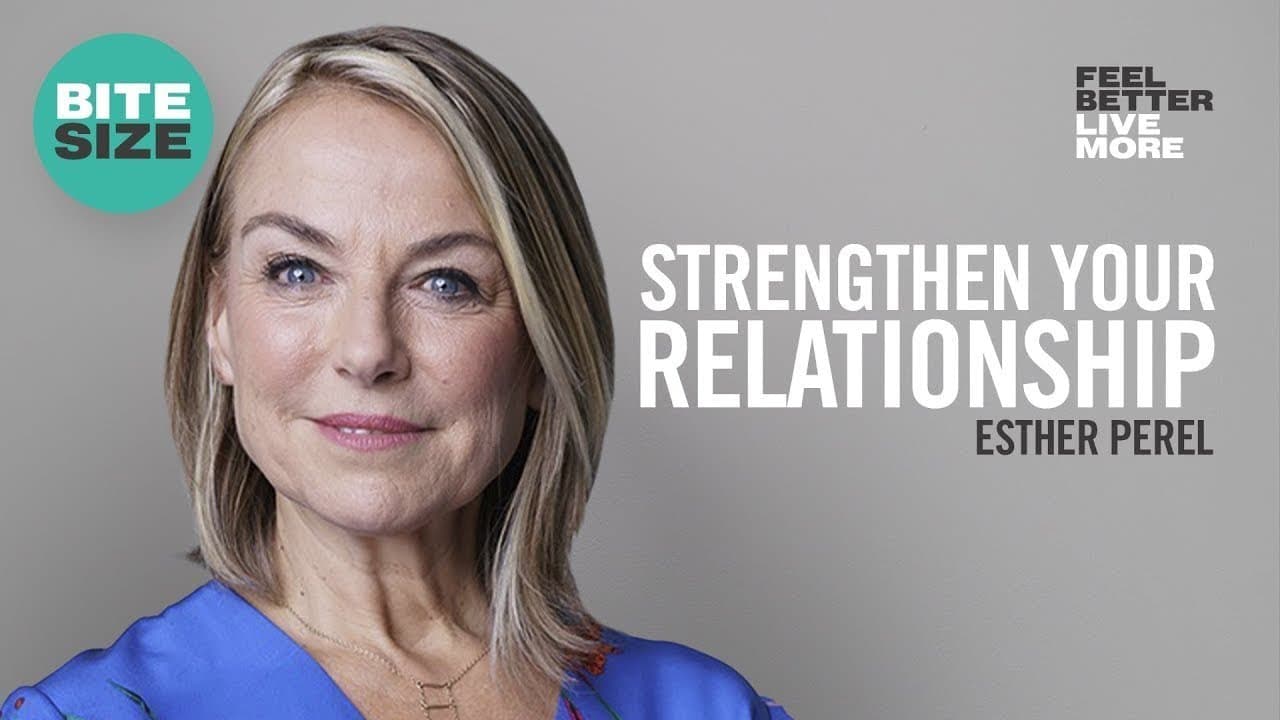
Esther Perel: How Can You Strengthen Your Relationships and Enhance Your Life? | Bitesize
TL;DR
You can strengthen relationships by changing your habitual responses, treating conflict as part of a cycle of connection, disconnection, and reconnection, and speaking honestly about difficulties. Esther Perel explains that relationships are co-created: how one person speaks is influenced by how the other listens. Understanding these patterns can improve both connection and self-knowledge, so read on for practical insights into repair, identity, and modern partnership pressures.
Transcript
it is the quality of our relationships that determines the quality of our lives the story is never just created by one person it's a co-creation the way i speak is influenced by the way you listen the way i see myself is influenced by the way you see me why is it when relationships are fundamental to how we feel about ourselves whether we feel fulf... Read More
Key Insights
- The quality of relationships determines much of the quality of life because human beings are social creatures who seek connection, meaning, and evidence that they matter to others. Relationships can consequently produce both intense joy and profound grief.
- A relationship is a co-created story because each person’s behavior influences the other’s experience and response. The way one person speaks is affected by how the other listens, while self-perception is partly shaped by how others see and treat that person.
- The rhythm of relationships is harmony, disharmony, and repair. Connection is followed by disconnection and possible reconnection, so difficulty does not necessarily mean a relationship is bad. New tensions can emerge simply because people and circumstances continue changing.
- The self is relational because people come to understand themselves through interactions with others, including imagined interactions held in their minds. Self-knowledge and relationships are therefore not separate projects, since identity develops through both personal awareness and interpersonal experience.
- A person behaves differently across relationships because each relational dynamic draws out particular qualities and responses. Core characteristics may remain, but the space between two people helps shape who each becomes and what patterns they create together.
- Modern partnerships carry unprecedented expectations because one person is often expected to provide what an extended family, community, and religious institutions once supplied. Belonging, connection, specialness, intimacy, sexuality, companionship, and support can become a demanding assignment for two people.
- The pressure to appear perfectly happy prevents honest discussion about ordinary hardship. People can gain more from sharing experiences of loss, illness, unemployment, economic difficulty, or prolonged proximity, then exchanging useful resources and lessons from those experiences.
- Changing a relationship can begin with changing your own response. If a partner says the same thing and receives a different answer from the one given repeatedly for years, the shared pattern shifts and a new relational story can begin.
Install to Summarize YouTube Videos and Get Transcripts
Explore YouTube Video Summarizer or Get YouTube Transcript Extractor
Questions & Answers
Q: How can you strengthen your relationships and enhance your life?
Begin by changing your own familiar response instead of waiting for the other person to change. Because a relationship is co-created, responding differently can disrupt an established pattern and invite a different reaction. Honest conversations and efforts to reconnect after conflict can also strengthen the relationship.
Q: Why does the quality of relationships affect the quality of life?
People are wired for connection and do not thrive well alone. Relationships influence whether people feel valued, respected, attractive, loved, or likely to be abandoned. They can create both intense happiness and profound grief, making them central to fulfillment and meaning.
Q: What do harmony, disharmony, and repair mean in a relationship?
They describe a recurring rhythm of connection, disconnection, and reconnection. Tension does not necessarily mean a relationship is bad, because people change and new issues emerge. Repair is the process of rebuilding connection after disruption.
Q: How can you improve a relationship when the other person will not change?
Focus on changing your own contribution to the interaction. If the other person says something familiar but receives a different response from you, the established pattern changes. That shift may influence what happens next and begin rewriting the relationship’s shared story.
Q: Why is a relationship considered a co-created story?
Neither person creates the relationship’s story alone. The way one person speaks is influenced by how the other listens, while self-perception is affected by how the other person sees them. Each participant therefore shapes the roles, reactions, and meaning developed between them.
Q: How do relationships shape a person’s identity?
People understand themselves through interactions with others, including interactions imagined in their minds. Who someone is combines how they see themselves, how others see them, and how aware they are of their effect on others. Different relationships can draw out different qualities and behaviors.
Q: Why are modern romantic relationships under so much pressure?
One partner may now be expected to provide economic support, companionship, love, belonging, intimacy, sexuality, specialness, and personal growth. Support that was once spread across extended family, community, and religious institutions can become the assignment of two people. These concentrated expectations place unusual pressure on the partnership.
Q: Why is honesty about relationship difficulties important?
Pressure to appear perfectly happy can prevent people from discussing ordinary hardship. Speaking openly about loss, illness, unemployment, economic difficulty, or struggling with prolonged proximity allows people to exchange useful experiences and resources. It also replaces false perfection with shared understanding.
Summary & Key Takeaways
-
The quality of relationships strongly shapes the quality of life because people are wired for connection and construct meaning through one another. Questions about respect, attraction, value, belonging, and abandonment are relational questions. A person’s identity therefore develops through interactions, including how others respond to and perceive that person.
-
Relationships move through recurring cycles of harmony, disharmony, and repair, or connection, disconnection, and reconnection. Conflict does not automatically indicate failure because people change and new issues naturally emerge. Honest conversations about loss, illness, unemployment, financial hardship, and partnership struggles can replace false perfection with shared understanding and practical relationship intelligence.
-
Modern adult relationships carry unprecedented expectations. One partner may be asked to provide economic support, companionship, love, belonging, intimacy, sexuality, specialness, and personal growth. Improvement begins when someone changes their own familiar response, which alters the interaction and may invite a different response from the other person, gradually rewriting their shared story.
Read in Other Languages (beta)
Share This Summary 📚
Summarize YouTube Videos and Get Video Transcripts with 1-Click
Try YouTube Summary with ChatGPT & Claude or YouTube Transcript Generator
Explore More Summaries from Dr Rangan Chatterjee 📚





Summarize YouTube Videos and Get Video Transcripts with 1-Click
Try YouTube Summary with ChatGPT & Claude or YouTube Transcript Generator