Why Is It Harder to Get a Junior Developer Job?
TL;DR
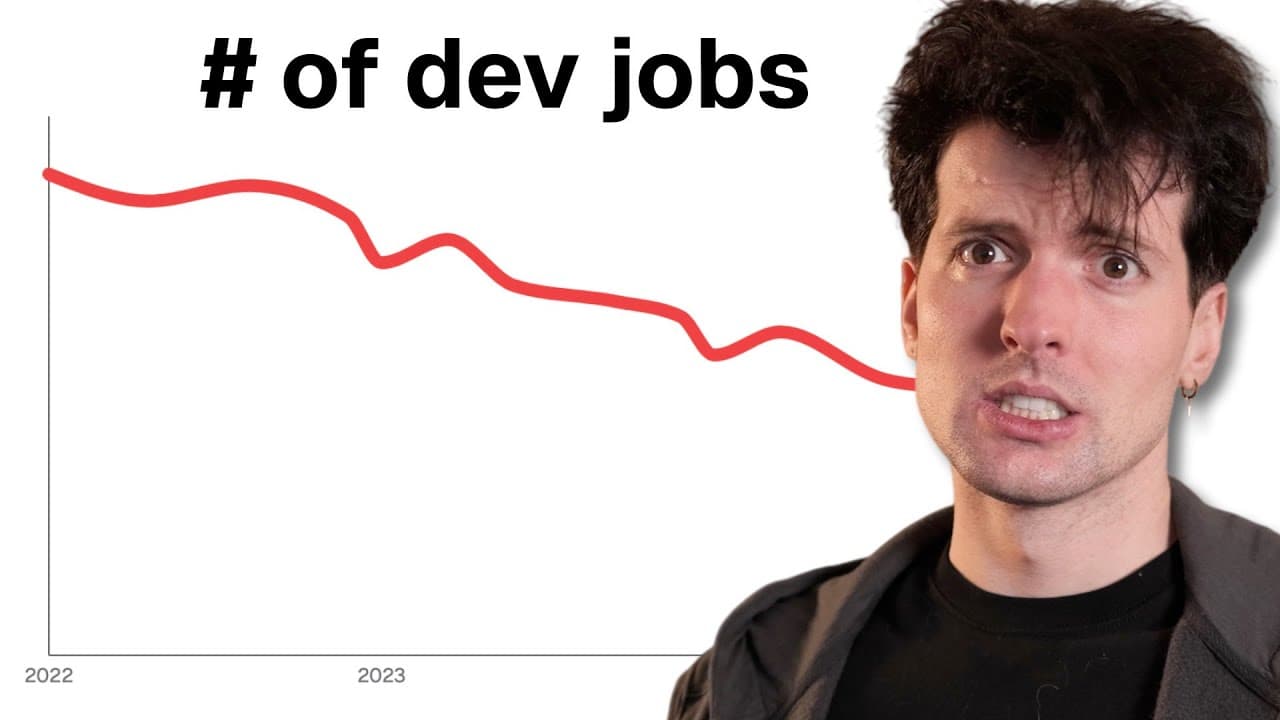
Junior developer jobs are harder to get because companies need fewer engineers per feature, can reassign existing employees, and can choose from a larger pool of developers. Better tools, AI, smaller product expectations, and earlier feedback further reduce team sizes. The creator’s own two three-month contracts show why paid opportunities once helped beginners become qualified, and why understanding today’s changed hiring dynamics is worth reading on.
Transcript
I have to admit something to y'all. When I got my first job as a software dev, I was not qualified in the slightest. I really probably shouldn't have even gotten the job if I'm being totally honest. The reason I got it was the manager and the other people on the team liked me and vied with me. In particular, the manager liked my music taste, funny ... Read More
Key Insights
- Junior developer opportunities once allowed underqualified candidates to become capable engineers through paid work. The creator received two consecutive three-month contracts, worked intensely for six months, and developed enough practical ability to consider himself somewhat qualified by the end of that period.
- Software hiring is shaped by three changing factors: the number of developers required for each feature, the number of developers available, and the money companies can spend on hiring. The creator argues that these factors no longer move in ways that consistently benefit developers.
- Developer leverage was historically created by a large gap between high staffing requirements and a limited supply of qualified engineers. Companies could not easily replace developers, and some even hired influential engineers partly to prevent competitors from employing them.
- Employee leverage has declined because companies may already employ enough engineers to cover new work through reorganization. Instead of hiring externally, a large company can move people from low-value or unsuccessful projects, while employees who cannot be reassigned may face layoffs.
- Modern product teams can be smaller because development tools have improved, AI can accelerate implementation, expectations may be reduced, and teams can release sooner to collect feedback. Together, these changes can eliminate roles that would previously have been filled through external hiring.
- The Twitch Mod View team demonstrated an earlier mixed-staffing model around 2020 or 2021. Existing team members were joined by an internal transfer and two outside additions, including a high-performing intern who moved into a full-time position and an experienced developer from another company.
- Junior applicants face competition beyond other beginners because roles can be filled by internal employees or experienced external candidates. Even in the earlier Twitch example, one successful candidate first proved herself through an internship, while another arrived with experience from a qualified company.
- The entry-level problem affects the entire industry because beginners need credible routes to gain experience and demonstrate competence. The creator calls for experienced developers to sympathize with juniors and help identify paths to success in an unusually difficult and confusing hiring environment.
Install to Summarize YouTube Videos and Get Transcripts
Explore YouTube Video Summarizer or Get YouTube Transcript Extractor
Questions & Answers
Q: Why is it harder to get a junior developer job now?
Companies need fewer engineers per feature, have more developers available to hire, and can often reassign existing employees instead of recruiting externally. Better tools, AI, smaller product expectations, and earlier feedback also allow smaller teams to complete work that previously created openings for junior developers.
Q: How has AI affected hiring for junior developers?
AI can help teams build software faster, reducing the number of engineers needed for a product. The creator presents it as one factor alongside better development tools, reduced expectations, and earlier releases, not as the sole cause of fewer junior openings.
Q: What determines developer leverage in the job market?
Leverage comes from the gap between the number of engineers companies need and the number available to hire. When staffing requirements are high and developer supply is low, engineers are difficult to replace; that leverage declines as fewer developers are needed and more candidates become available.
Q: Why do companies reassign engineers instead of hiring new developers?
Large companies may already have engineers assigned to unsuccessful products, low-value features, or teams that no longer justify their staffing. Management can move those employees to new initiatives instead of creating external openings, while employees who cannot be reassigned may face layoffs.
Q: How did the creator get his first software development job?
Although he says he was not qualified, the manager and team liked him, connected with his music taste, and saw potential in a few personal projects. He received a three-month contract and then renewed it for another three months rather than immediately receiving a full-time offer.
Q: Can paid work help an underqualified junior become job-ready?
The creator’s experience shows that sustained practical work can build professional ability. He worked intensely across two three-month contracts, learned a great deal, and considered himself somewhat qualified after six months.
Q: How was the Twitch Mod View team staffed around 2020 or 2021?
The team combined existing staff, an internal transfer, an intern who earned a full-time position, and an experienced external hire. The creator argues that a comparable product today might need only two or three existing employees, eliminating the need for outside hiring.
Q: Why can modern software teams build products with fewer engineers?
Teams can reduce initial product expectations, release sooner to collect feedback, use better development tools, and rely on AI to accelerate implementation. Together, these changes can shrink a team that previously needed five people to three or perhaps two.
Summary & Key Takeaways
-
The creator entered software development without being fully qualified, relying on personal rapport and a few projects to secure an initial three-month contract. After renewing it for another three months and working intensely, he learned enough to consider himself somewhat qualified, illustrating how employment once provided a path for junior growth.
-
The employment market depends on the relationship among developers required per feature, developers available for hire, and money available for hiring. Companies once needed many engineers while facing a limited supply, which gave developers substantial leverage. That balance has changed as development requires fewer people and the available talent pool has expanded.
-
A Twitch team assembled around 2020 or 2021 combined existing staff, an internal transfer, an intern who earned a full-time position, and an experienced external hire. Building a comparable product today might require only two or three existing employees because tools, AI, smaller product expectations, and faster feedback have reduced staffing needs.
Read in Other Languages (beta)
Share This Summary 📚
Summarize YouTube Videos and Get Video Transcripts with 1-Click
Try YouTube Summary with ChatGPT & Claude or YouTube Transcript Generator
Explore More Summaries from Theo - t3․gg 📚






Summarize YouTube Videos and Get Video Transcripts with 1-Click
Try YouTube Summary with ChatGPT & Claude or YouTube Transcript Generator