How Can I Stop Being Late and Improve Punctuality?
TL;DR
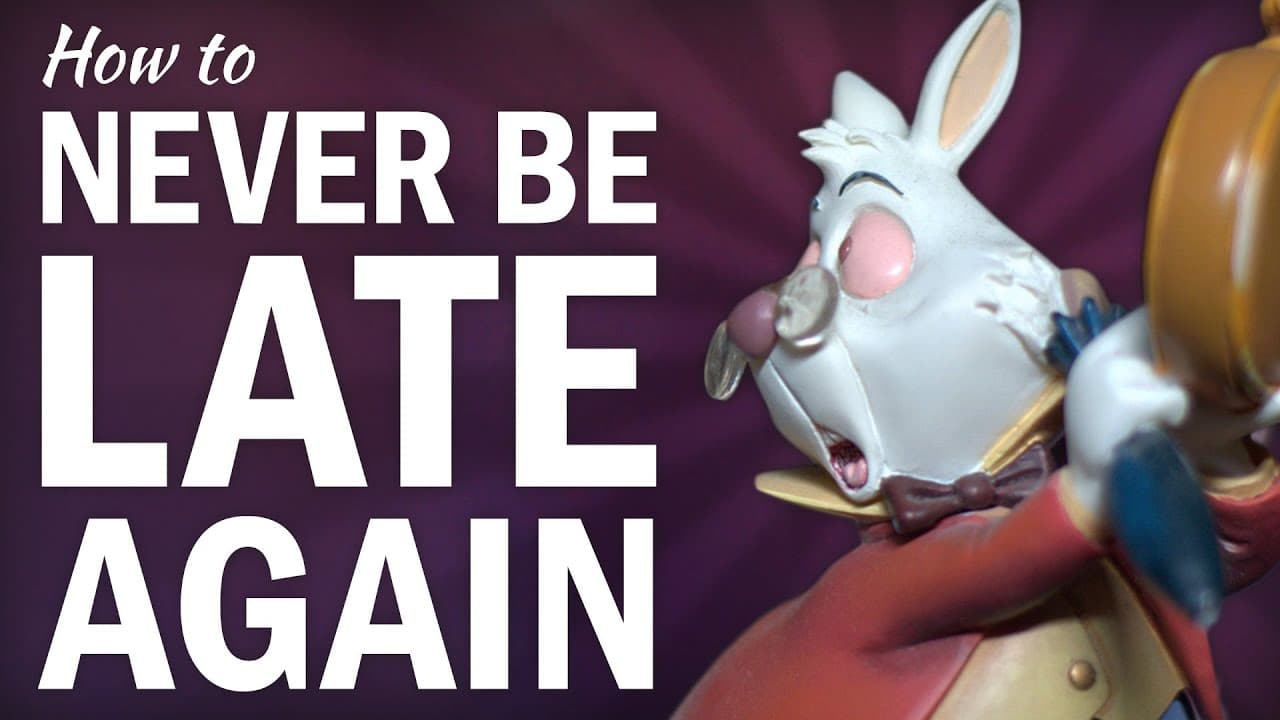
To stop being late, accurately estimate time by visualizing all steps to your next event and using a 'fudge ratio' for adjustments. Simplify your processes by preparing in advance, set strict end times for tasks, and make effective use of a calendar with reminders to ensure you don't forget appointments.
Transcript
Hey, what's going on, guys? So, I got a few questions lately about how to stop being late to things, and I thought this would be a good topic to cover because some of us do have problems getting ourselves to things on time even if we're not jerks who don't respect the time of others, we simply have other problems, little brain bugs that cause us to... Read More
Key Insights
- 🥺 The planning fallacy causes us to be overoptimistic in our time estimations, leading to habitual lateness.
- ⌛ Envisioning the entire sequence of steps to an event can help us make more accurate time estimates.
- 😥 Simplifying processes by doing tasks in advance reduces the number of steps and potential points of failure.
- 😫 Setting an end time for a current task helps prevent getting caught up or distracted, ensuring a smooth transition to the next activity.
- 😫 Efficiently using a calendar and setting reminders can prevent forgetting events and improve punctuality.
- 🙈 The brain tends to focus on the ideal scenario, ignoring potential problems or delays.
- ⌛ Practice and experience can help overcome the tendency to be overoptimistic in time estimations.
Install to Summarize YouTube Videos and Get Transcripts
Explore YouTube Video Summarizer or Get YouTube Transcript Extractor
Questions & Answers
Q: What is the planning fallacy, and how does it affect our time estimations?
The planning fallacy refers to our tendency to be overoptimistic in our time estimates. We fixate on the most significant or time-consuming part of a task, underestimating the overall time required. This often leads to habitual lateness.
Q: How can envisioning the entire sequence of steps help improve time estimates?
Envisioning the entire sequence of steps required to reach an event helps us make more accurate time estimates. By breaking down tasks into subtasks and considering all the steps involved, we can avoid underestimating the time it takes to complete them.
Q: What is a fudge ratio, and how can it be used to improve time estimates?
A fudge ratio is the difference between your time estimate for a task and the actual time it takes. By keeping this ratio in mind and applying it as a revision step to future time estimates for similar tasks, you can improve the accuracy of your estimations.
Q: How can using a calendar efficiently improve punctuality?
Putting events into a calendar immediately after they come up on your schedule helps remove the burden of remembering them. By setting up reminder notifications for events, you can ensure you're aware of them and can plan accordingly.
Summary & Key Takeaways
-
We tend to be overoptimistic in our time estimations, leading to habitual lateness. Envisioning the entire sequence of steps to an event can help us make more accurate time estimates.
-
The planning fallacy causes us to fixate on the most important or time-consuming part of a task, leading to underestimating the overall time required. Breaking down tasks into subtasks can help us make more accurate estimates.
-
Simplifying processes by doing tasks in advance reduces the number of steps and potential points of failure.
-
Setting an end time for a current task helps prevent getting caught up or distracted, ensuring a smooth transition to the next activity.
-
Efficiently using a calendar and setting reminders can prevent forgetting events and improve punctuality.
Read in Other Languages (beta)
Share This Summary 📚
Summarize YouTube Videos and Get Video Transcripts with 1-Click
Try YouTube Summary with ChatGPT & Claude or YouTube Transcript Generator
Explore More Summaries from Thomas Frank 📚

Summarize YouTube Videos and Get Video Transcripts with 1-Click
Try YouTube Summary with ChatGPT & Claude or YouTube Transcript Generator