How Does IVF Help People Have Babies?
TL;DR
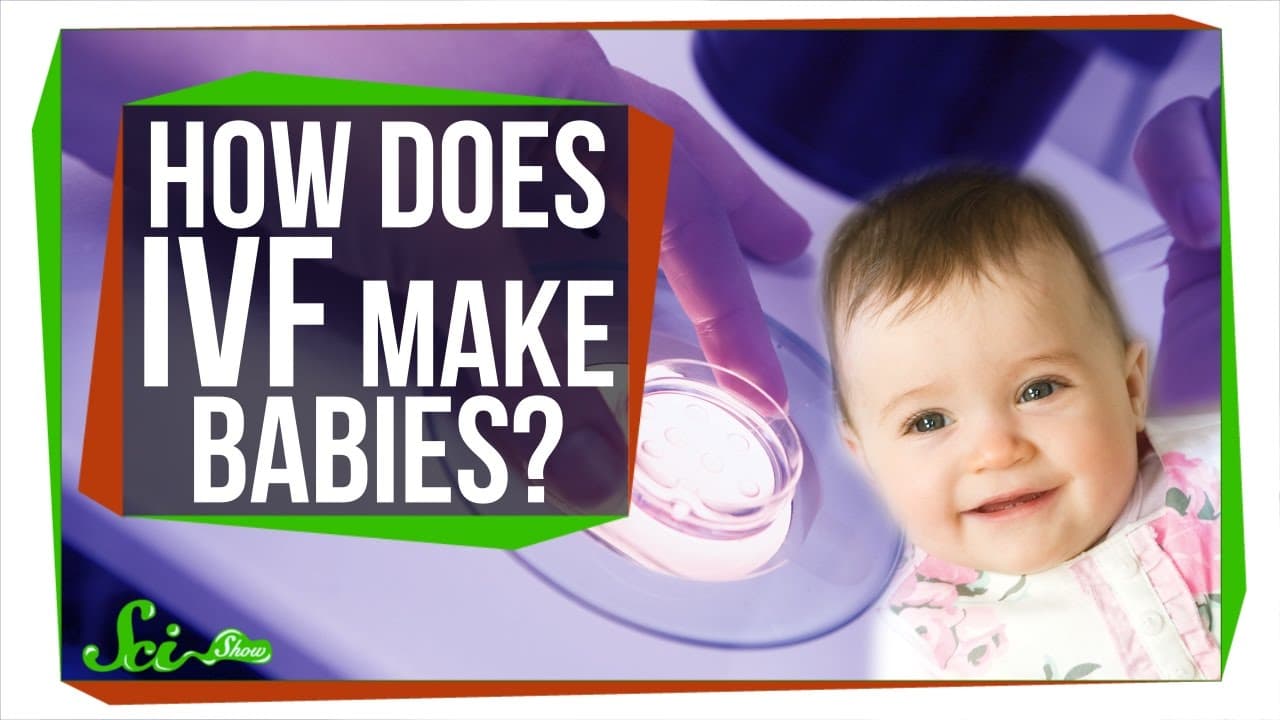
IVF helps individuals conceive by fertilizing eggs in a lab and implanting the healthiest embryos into the uterus. Techniques like ovarian hyperstimulation and blastocyst stage transfer improve success rates and reduce risks of multiple births. Innovations also prevent the transmission of mitochondrial diseases, allowing many who struggle with infertility to become parents.
Transcript
In 1977, for the very first time, a team of British researchers successfully fertilized a human egg in a dish and transplanted the embryo into the mother's body. The mother gave birth to a baby named Louise Brown, who is now almost 40 years old. The doctor who pioneered the procedure won a Nobel Prize for it, in 2010. That procedure is now known as... Read More
Key Insights
- 🥳 The first successful IVF procedure resulted in the birth of Louise Brown in 1977, revolutionizing reproductive medicine.
- ☠️ Advancements in IVF techniques have made the procedure more effective, with improved success rates and reduced complications.
- ☠️ Techniques like ovarian hyperstimulation and blastocyst stage embryo transfer have contributed to higher success rates.
- 🥳 Multiple birth rates have been a concern in IVF, leading researchers to develop strategies to reduce the chances of having twins or triplets.
- 💗 Growing embryos to the blastocyst stage improves the selection process, resulting in more viable embryos for implantation.
- 🪺 IVF has also helped address genetic diseases by replacing the cytoplasm of eggs with a third donor's, preventing the transmission of mitochondrial diseases.
- 👻 The availability of IVF has allowed people who struggle with infertility to become parents.
Install to Summarize YouTube Videos and Get Transcripts
Explore YouTube Video Summarizer or Get YouTube Transcript Extractor
Questions & Answers
Q: How has IVF evolved since Louise Brown's birth?
Since Louise Brown's birth, scientists have made IVF more effective, with fewer complications and improved success rates. Advancements include techniques like ovarian hyperstimulation, blastocyst stage embryo transfer, and addressing mitochondrial diseases.
Q: What is ovarian hyperstimulation in IVF?
Ovarian hyperstimulation is a technique that stops the natural menstrual cycle and causes the ovaries to produce multiple follicles, resulting in the collection of more eggs at once during IVF.
Q: Why do doctors often implant multiple embryos during IVF?
Doctors often implant several embryos during IVF to increase the chances of successful implantation and pregnancy, as IVF does not have a 100% success rate. However, this can lead to multiple births, which has been a criticism of IVF treatments.
Q: How do researchers address the problem of multiple births in IVF?
Researchers have developed techniques to culture embryos to the blastocyst stage, reducing the likelihood of multiple births. By selecting embryos at this stage, the risk of having quadruplets or octuplets is minimized.
Summary & Key Takeaways
-
In 1977, the first successful IVF procedure resulted in the birth of Louise Brown, marking a milestone in reproductive medicine.
-
IVF has evolved over the years, with advancements in understanding the causes of infertility and improving the procedure's effectiveness.
-
Researchers have developed techniques like ovarian hyperstimulation, blastocyst stage embryo transfer, and addressing mitochondrial diseases, leading to better outcomes in IVF.
Read in Other Languages (beta)
Share This Summary 📚
Summarize YouTube Videos and Get Video Transcripts with 1-Click
Try YouTube Summary with ChatGPT & Claude or YouTube Transcript Generator
Explore More Summaries from SciShow 📚


Summarize YouTube Videos and Get Video Transcripts with 1-Click
Try YouTube Summary with ChatGPT & Claude or YouTube Transcript Generator